Caramel reviews Star Wars Encyclopedia of Starfighters and Other Vehicles by Landry Q. Walker

Readers of this blog probably already know that Caramel is a big Star Wars fan. As such, he has already reviewed three books related to this ever-growing movie franchise: 5-Minute Star Wars Stories by LucasFilm Press, A Jedi You Will Be by Preeti Chhibber and Mike Deas, and Ultimate Star Wars: New Edition by Adam Bray, Cole Horton, Patricia Barr, Daniel Wallace, Ryder Windham, and Matt Jones. Today he is talking about yet another book about this alternative universe: Star Wars Encyclopedia of Starfighters and Other Vehicles, written by Landry Q. Walker, and first published in 2018. As usual, Sprinkles is taking notes and asking questions.
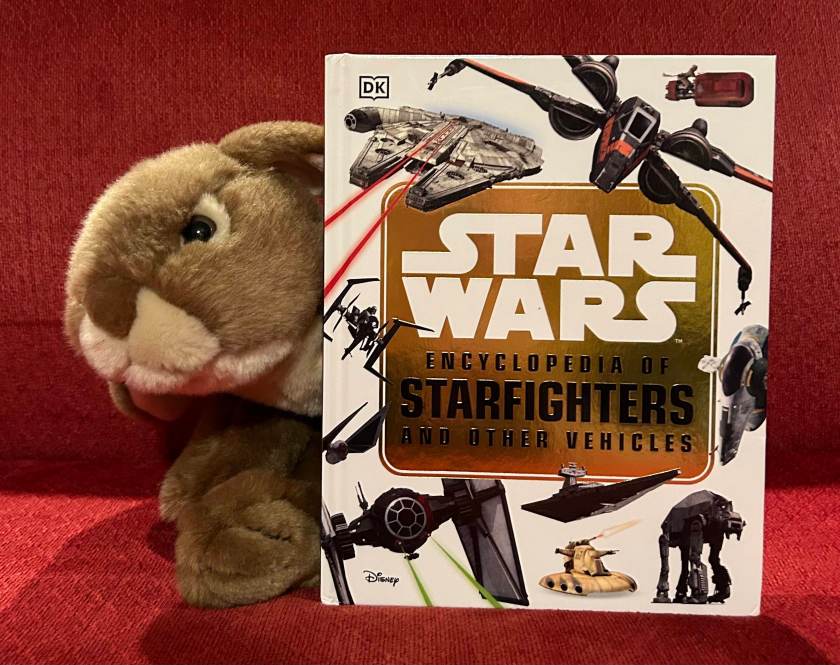
Caramel reviews Star Wars Encyclopedia of Starfighters and Other Vehicles, written by Landry Q. Walker.

Sprinkles: I suppose it is time to talk about yet another Star Wars book. Right Caramel?

Caramel: Yep.

S: So let us get started. Tell us a bit about this Encyclopedia.

C: It is about the many many ships and other vehicles in the Star Wars universe.

S: So right up your alley, then, no?

C: Yep. I like robots, I like space ships, and I like this book!

S: I am glad you enjoyed reading it. Can you tell me a bit more about the book? How many pages is it? Are there lots of pictures in it? How is the content organized?

C: Wait, that is too many questions.

S: Okay, so I will ask one at a time. How many pages is it?

C: It is 205 pages long.

S: It looks much thicker to me! Maybe the pages are made of thick paper?

C: They are made of thick paper, true.

S: Okay, so tell me about the pictures. Are there lots of pictures in the book?

C: Yes. On every page there are about four pictures.

S: Are they drawings or photographs?

C: They look like photos.

S: But some of these things probably do not exist, no? So maybe some are computer generated?

C: Well, even if the ships do not really exist in our universe, they must have models. So the pictures could be the photos of the models.

S: I see. That makes sense.

C: And some of the images are about ships and vehicles in one of the animated series, so those are more like drawn, by hand or by computer.

S: I see.

Caramel is reading Star Wars Encyclopedia of Starfighters and Other Vehicles, written by Landry Q. Walker.

S: So how is the content organized? I mean, are there chapters, sections, parts?

C: There are sections on separate types of ships. Like air, land, water, and space. Of course the space vehicles section is the longest.

S: I see. So when you open a page, what do you see?

C: On each page there is a different vehicle. There are some pictures of it and then there is some writing.

S: What kind of information is available on each vehicle?

C: They write about who uses that vehicle, what are its specifications, like how it works, how fast it goes, what kinds of weapons it might have, and so on.

S: So can you tell me some of your favorites? If the book is split into four types of vehicles, tell me your favorites in each category. So what are your favorite air, land, water and space vehicles?

C: Hmm, let me think a bit. For land, it is either an AAT, MTT, or the AT-M6.

S: Well, that does not mean anything to me.

C: AAT is Armored Assault Tank. MTT is Multi-Troop Transport, and AT-M6 is All-Terrain MegaCaliber 6. It is essentially orbital bombardment cannon on the back of a bigger vehicle called an ATAT.

S: Hmm, that is too many acronyms for me. Also a lot of war machines. Are there no peaceful vehicles in the book?

C: Definitely. There are cargo ships, carrier crafts, freighters and so on.

S: Hmm. Let us move on then. What is your favorite water vehicle?

C: The Bongo! TriBuibble Bongo. It is peaceful! It is a small semi-organic submarine that is unarmed.

S: Why do you like it?

C: I think it is interesting. You can find some pictures and some more information on them here.

S: Those do look cool! Apparently they are each unique because they are made individually.

C: Yep. They are cool. I also like the Kamino Submarine.

S: Why do you like that one?

C: It looks neat!

S: Okay. So tell me your favorite air and space vehicles now.

C: Well, it is kind of hard to pick a single space ship, because there are a lot of them that I like…

S: But if you had to choose one…

C: A Fang Fighter! It has a great capacity to make turns that are impossible for other ships. You can see a picture here.

S: I see. That could be quite useful. How about your favorite air vehicle?

C: I like the TIE Striker. But maybe my favorite is the Fang Fighter. It is a space ship but it can also fly in air!

S: That totally makes sense Caramel. Okay, this has been a rather long review. So let us start wrapping it up. I know that you told me that reading this book made you feel peaceful. Can you explain why?

C: Because I like reading about star ships and thinking about other worlds and space and such.

S: That is cool Caramel. Thank you for sharing. So I think we can count peaceful as one of your three descriptive words for this book then.

C: I would add “colorful” and “shipful”!

S: That last one is not quite a word but I will not argue.

C: Please don’t.

S: Okay, so I have a feeling you will be reading and rereading this book for a while, no?

C: Yes!

S: So what do you want to tell our readers?

C: Stay tuned for more book bunny reviews!
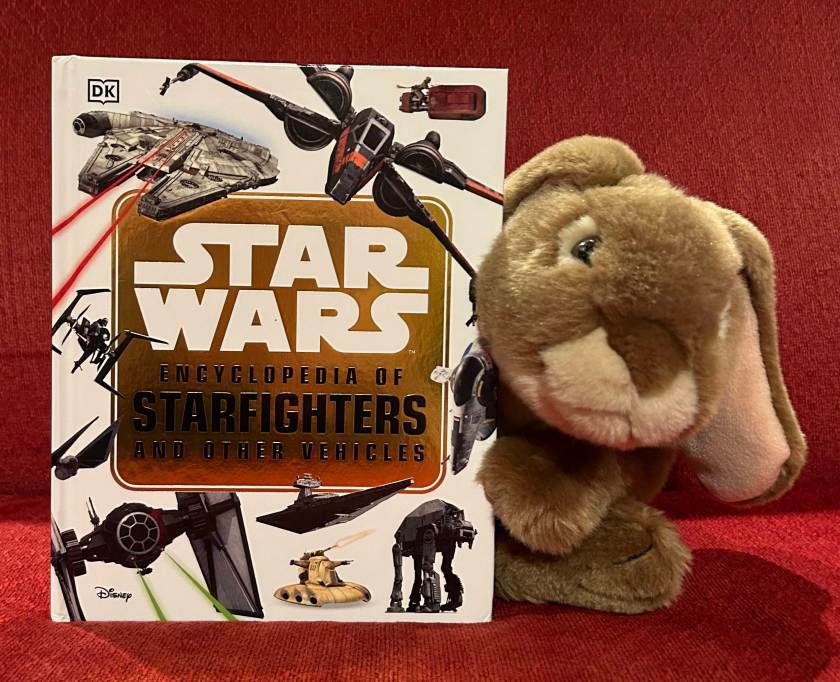
Caramel loved reading Star Wars Encyclopedia of Starfighters and Other Vehicles, written by Landry Q. Walker, and plans to continue to read and reread the book  several more times in the foreseeable future.
Caramel loved reading Star Wars Encyclopedia of Starfighters and Other Vehicles, written by Landry Q. Walker, and plans to continue to read and reread the book several more times in the foreseeable future.

Caramel reviews Best Nerds Forever by James Patterson and Chris Grabenstein

A couple months ago, Annie Bunny, a friend of the book bunnies blog, recommended that the bunnies check out Best Nerds Forever by James Patterson and Chris Grabenstein. They obliged. Each of the bunnies ended up reading the book over their summer break, and today Caramel is talking it over with Sprinkles.

Caramel reviews Best Nerds Forever by James Patterson and Chris Grabenstein.

Sprinkles: So Caramel, tell us about this book a bit. What is it about?

Caramel: The book is about a boy named Finn, who just dies at the very beginning.

S: So the book starts with the main character dying?

C: Yes. And he is also the narrator, so it is kind of weird to be reading a book from a ghost’s perspective.

S: Totally.

C: And it is sad. Finn is only twelve, finishing middle school, and he dies! It is not fair!

S: I can see how you would feel that way. I agree, it is always hard with young people dying. But Finn is pretty lively as a narrator, don’t you think?

C: Yes, he is actually quite funny. But he is dead, and his family and friends are very sad, so the book is very sad, too. And you know I don’t like sad books.

S: I do, but this is kind of like an adventure. Finn wants to figure out what happened to him, and why he died. And he meets a new friend in the afterlife, too. Right?

C: Yes, he meets another kid from his school who also apparently died that year. Her name is Isabella. So he is not alone or lonely. And he can do some strange and fun things, like go through walls or go through people. When he goes through people, they get chills, without understanding why. It is kind of funny actually.

Caramel is reading Best Nerds Forever by James Patterson and Chris Grabenstein.

S: Before we started the post, you told me that the end is your favorite part of the book, because it is a happy ending of sorts. Can you say more?

C: Yes, I’d say it is a happy ending of sorts. It is probably the best ending that could happen because —

S: Okay, that is probably already good enough, we should not be giving too many spoilers…

C: I guess so. Okay. But the end is happy, so I can say that at least.

S: Yes, you sure can. What else would you like to say about the book? Can you give me three words to describe it?

C: I want to say confusing, because I did not really understand the end at first.

S: But then we talked about it, right?

C: Yes, and now I do understand it, and I like the end. My other word would be funny, of course.

S: I definitely agree.

C: And ghostly! Because you know, Finn and Isabella are ghosts!

S: That works for me! Okay, so why is the title “best nerds forever”?

C: Well I think it is because Finn and his friends are big nerds, you know, and they are best friends, so best friends forever, but nerdy, too.

S: Maybe the forever is also referring to him being a ghost now, starting his eternal life.

C: Maybe. People have BFFs, like best friends forever, so if you and your friend are both ghosts and will live forever, you can really be BFFs!

S: Right! All in all, we enjoyed reading this book, right?

C: Yep. I know Marshmallow enjoyed it too.

S: And it was fun to receive a recommendation from a reader bunny, right?

C: Yep. I always like to meet new bunnies! Hi Annie Bunny!

S: I agree. Thank you Annie Bunny!

C: Yes, thank you!

S: Okay, so time to wrap things up. What would you like to tell our readers?

C: Stay tuned for more book bunny reviews!
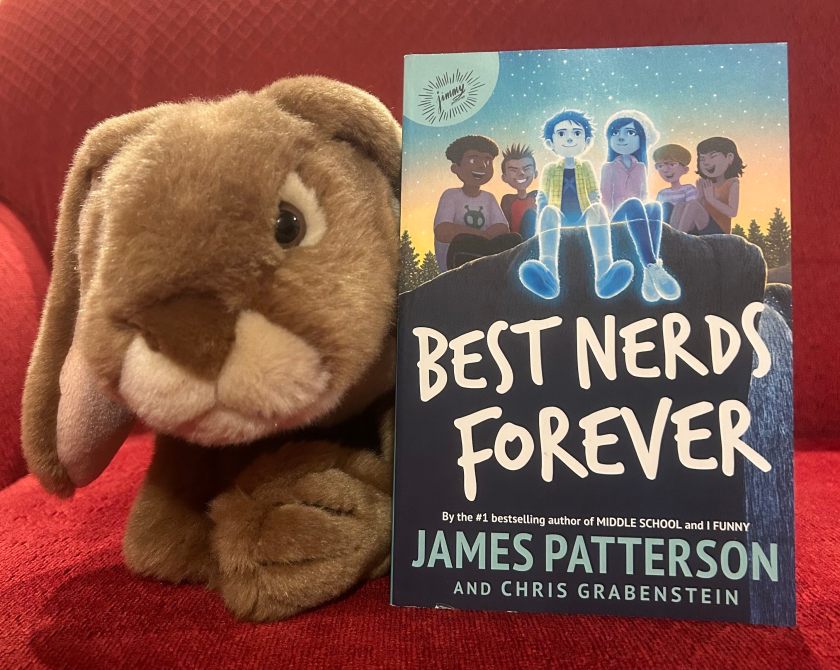
Caramel enjoyed reading Best Nerds Forever by James Patterson and Chris Grabenstein, especially the end!

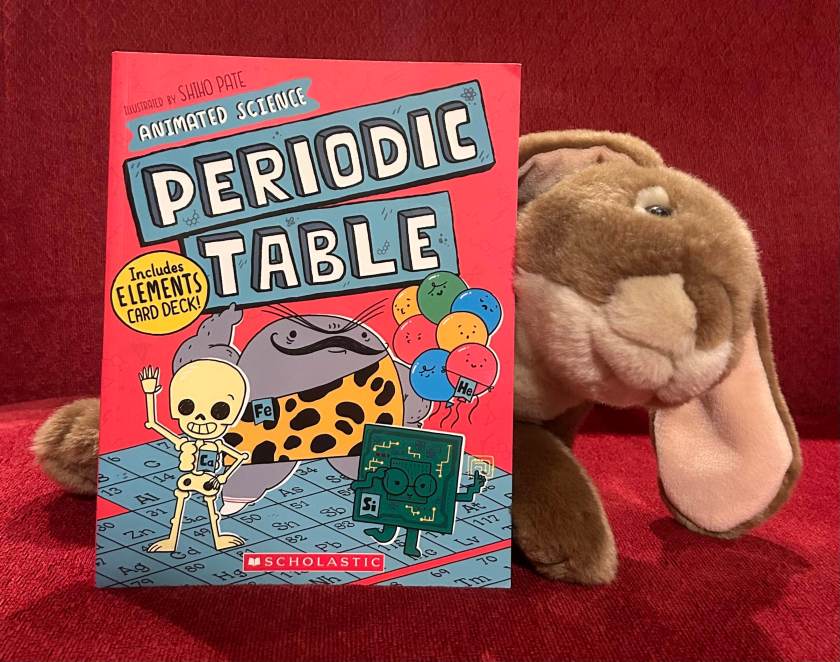
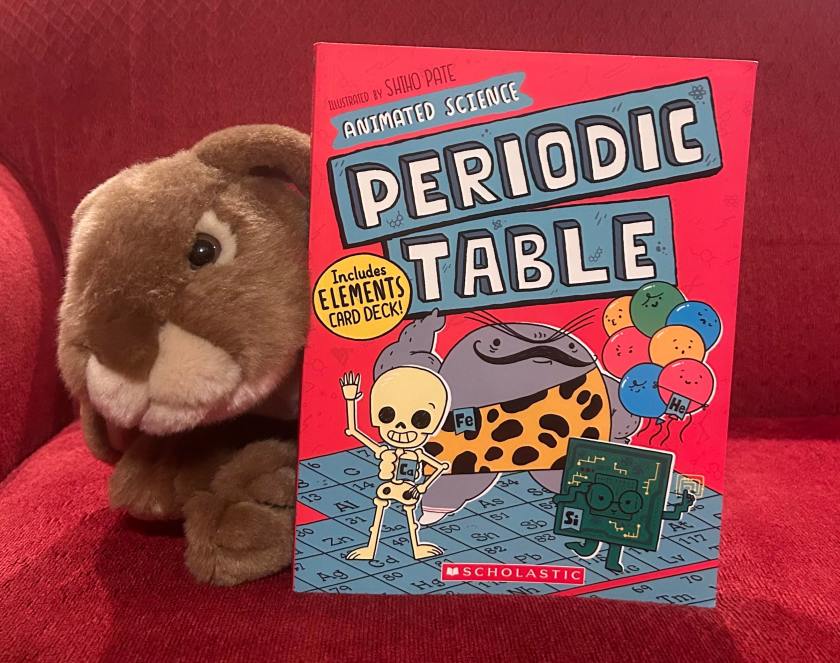
Caramel reviews Animated Science: Periodic Table by Shiho Pate and John Farndon

For his first review back from his summer break, Caramel wanted to talk about Animated Science: Periodic Table, a 2021 book illustrated by Shiho Pate and written by John Farndon. As usual Sprinkles is taking notes and asking questions.

Caramel reviews Animated Science: Periodic Table, illustrated by Shiho Pate and written by John Farndon.

Sprinkles: Welcome back Caramel!

Caramel: It’s great to be back!

S: Yay! Are you ready to talk about books again?

C: Always!

S: So you chose a nonfiction book to talk about today. Can you tell us what it is about?

C: It is about the periodic table, as its title says.

S: So what is the periodic table?

C: The periodic table is a way to organize the elements and the atoms.

S: Yes, you actually talked about it before, when you were reviewing The Elements: A Visual Exploration of Every Known Atom in the Universe by Theodore Gray. Do you remember that book?

C: Yes, of course I do.

S: So how is this book similar ot or different from that book?

C: Well, it is similar because it talks about many different elements and their uses. There are special pages for some of the elements and some of the elements are together on one page, but they talk about each of the elements.

S: That is cool!

C: Yes.

S: Back then, you told me your two favorite elements were titanium and uranium. If you were to pick two new ones now, which ones would you pick?

C: That’s a tough question. But I found some new interesting facts. Can I tell you about them?

S: Sure.

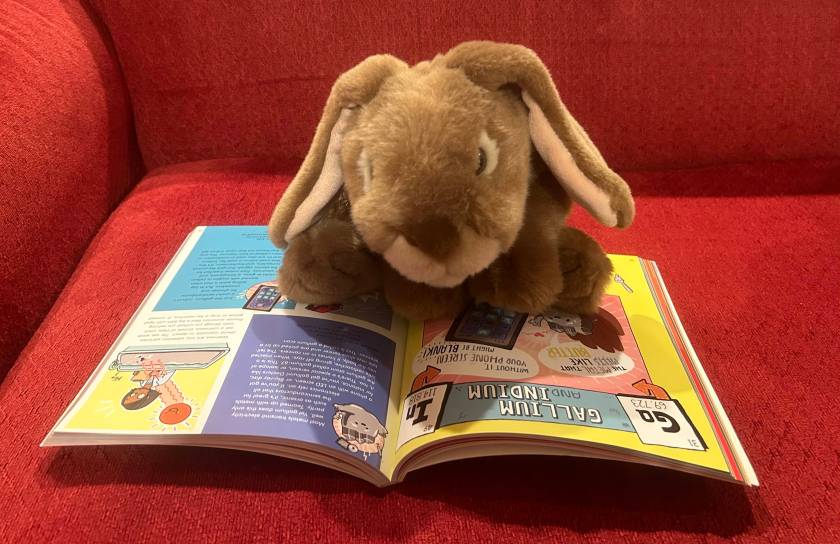
C: For example, Gallium is a metal that melts very quickly, only at 86 degrees Fahrenheit.

S: That is a reasonably warm day in California, no?

C: Yep.

S: That sounds interesting, a metal that can melt at a temperature that we can survive in. Is that what you found interesting about Gallium?

C: Yes. Also the book has very cute drawings, and I like the one for Gallium. It is a melted gray blob and it is very cute!

Caramel is reading about Gallium in Animated Science: Periodic Table, illustrated by Shiho Pate and written by John Farndon.

S: So tell me more about the drawings then.

C: They make them very cute. All the elements have faces and they are different colors and some are wearing clothes.

S: That is funny!

C: Yep. Then there is a green cube that is silicon and he is being sliced up so people can make chips with it. It could be sad or scary, but the cube is looking very serious but not in pain. So maybe he is concentrating.

S: That could be!

C: Also I learned from this book that the Latin name for lead is plumbum, and that is why its abbreviation is Pb.

S: I did not know that!

C: Neither did I.

S: So the book is full of lots of new facts then, right?

C: Yes. So “factful” is one of my three words.

S: Okay, so what are your other words then?

C: Incredibly cute pictures.

S: Hmm, that is three words on its own. But alright, I think we can let it slip by. So do you think other little bunnies would enjoy this book?

C: Yep. Especially if they like cute pictures.

S: Okay, that sounds good Caramel. Let us wrap this up then. What would you like to tell our readers?

C: Stay tuned for more book bunny reviews!
Caramel loved reading Animated Science: Periodic Table, illustrated by Shiho Pate and written by John Farndon and recommends it to all curious little bunnies looking to learn more about the world around us.

Caramel reviews Invented by Animals by Christiane Dorion and Gosia Herba

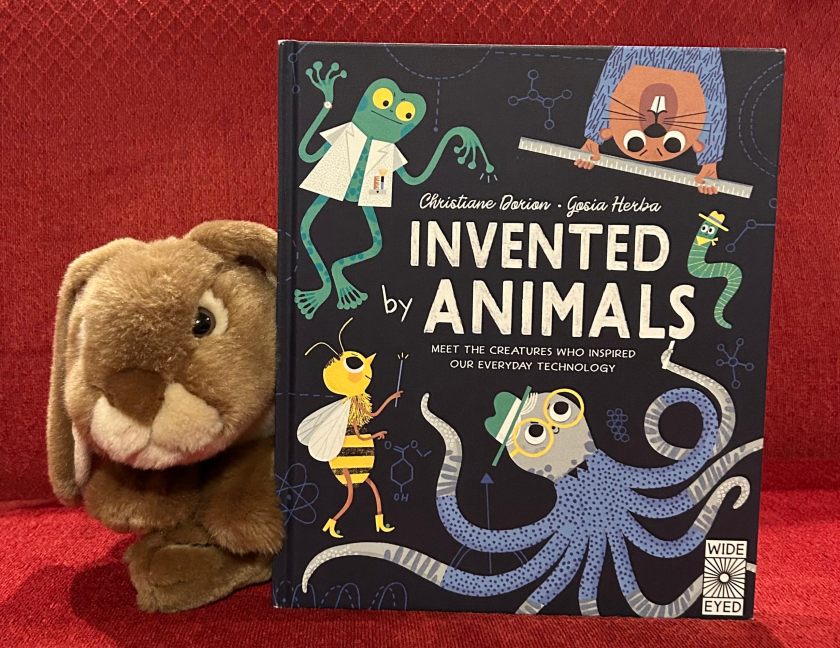
Every summer the book bunnies take the month of July off. For his last review before the summer break, Caramel chose to talk today about a fun book he read recently: Invented by Animals, written by Christiane Dorion, illustrated by Gosia Herba, and published in 2021. As usual, Sprinkles is taking notes and asking questions.

Caramel reviews Invented by Animals, written by Christiane Dorion and illustrated by Gosia Herba.

Sprinkles: So Caramel, tell me a bit about Invented by Animals. It has an inviting subtitle: “Meet the creatures who inspired our everyday technologies.”

Caramel: This book has a lot of different animals telling us about what inventions or ideas for inventions they gave to humans.

S: What is that supposed to mean? Can you give me an example?

C: My favorite is an eagle telling us how his eyeballs work. And how well he sees.

S: Hmm, so it is not that the eagle itself has invented neat eyes, but humans have been inspired by how his eyes work.

C: Yes.

S: That makes sense. Are there any examples of the other kind, where some animal is doing something interesting or has invented something intentionally to solve a problem and the humans are inspired by it to do something themselves?

C: Yes. For example, the paper wasp chews up bark and mixes it with its saliva to create paper. That is one of the ways humans figured out how to make paper themselves. In fact today’s paper is made more or less in that same way.

S: I don’t think humans chew bark to make paper.

C: Nor do bunnies, Sprinkles, I know. But the idea is about the same.

S: I see.

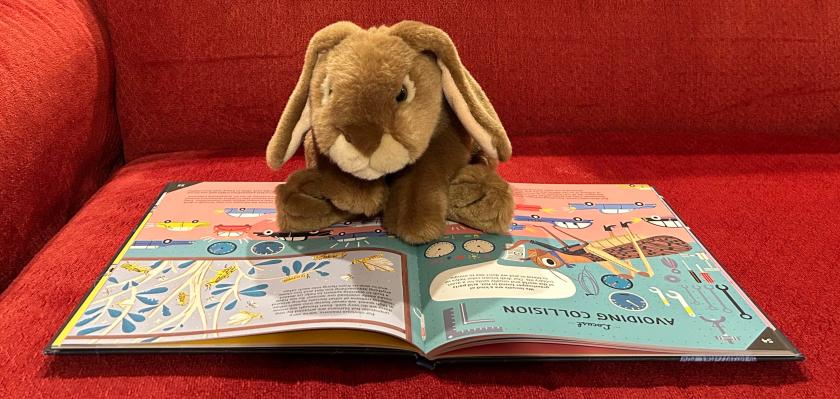
Caramel is reading Invented by Animals, written by Christiane Dorion and illustrated by Gosia Herba.

S: I know you love your facts, Caramel. Did you learn new facts from this book?

C: Yes, a ton! Almost all of the book was new to me.

S: That is awesome, so you must have enjoyed the book immensely.

C: Yes, I did.

S: So give the a three-word description of the book then.

C: Colorful, factful, and nature-ful.

S: Hmm, why don’t we rephrase that and say, full of color, facts, and cool nature?

C: I can work with that!

S: Okay. What else can you tell us about the book?

C: I love the pictures! They are not quite anatomically correct; all animals have mouths on the front of their heads, and eyes and so on, and they are wearing clothes. Some even have shoes.

S: Hmm, so they are anthropomorphized, I suppose.

C: Exactly.

S: So how did that make you feel as a bunny?

C: Well, I have eyes and a mouth in the front of my head, too, so that works for me.

S: I guess those features make the illustrations more friendly and fun, right?

C: Yep. But I wished that they had some things about bunnies. It made me feel kind of excluded.

S: I see. But they could not have something from all animals. The book would be too long.

C: That’s true. But I still kind of wanted a bunny invention there.

S: I can totally sympathize.

C: They had an albatross even. Come on!

S: I understand Caramel. But other than that, you did enjoy the book, right?

C: Yep, very much so. Maybe they can write a second volume, and they can include a bunny or two in that one.

S: We can always hope. Okay, Caramel, this is a good time to wrap up this review. Is there something you want to tell our readers?

C: Stay tuned for more book bunny reviews! We will be back in August!
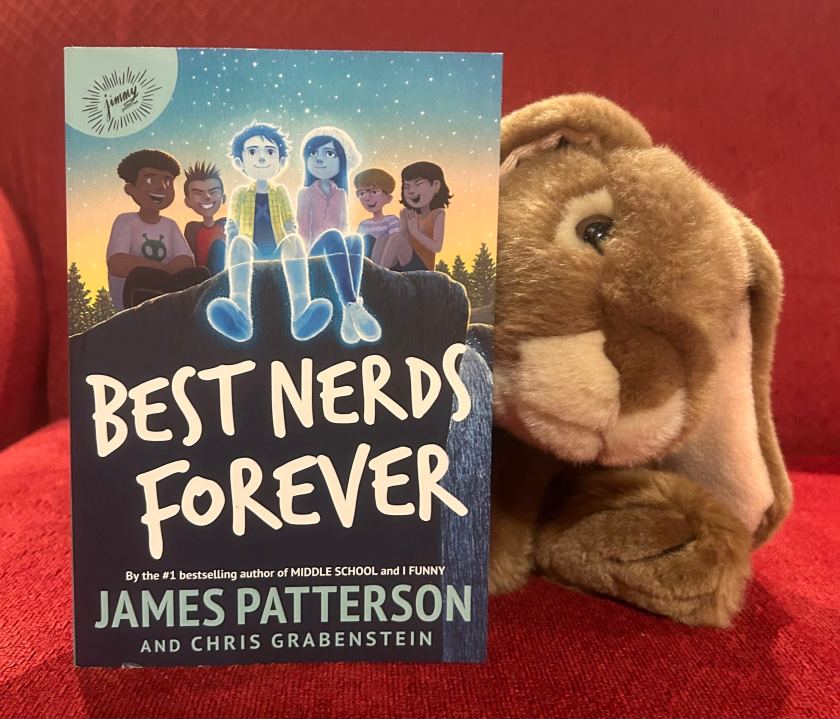
Caramel loved reading Invented by Animals, written by Christiane Dorion and illustrated by Gosia Herba, and recommends it to all young bunnies interested in learning more about the amazing creativity of nature.