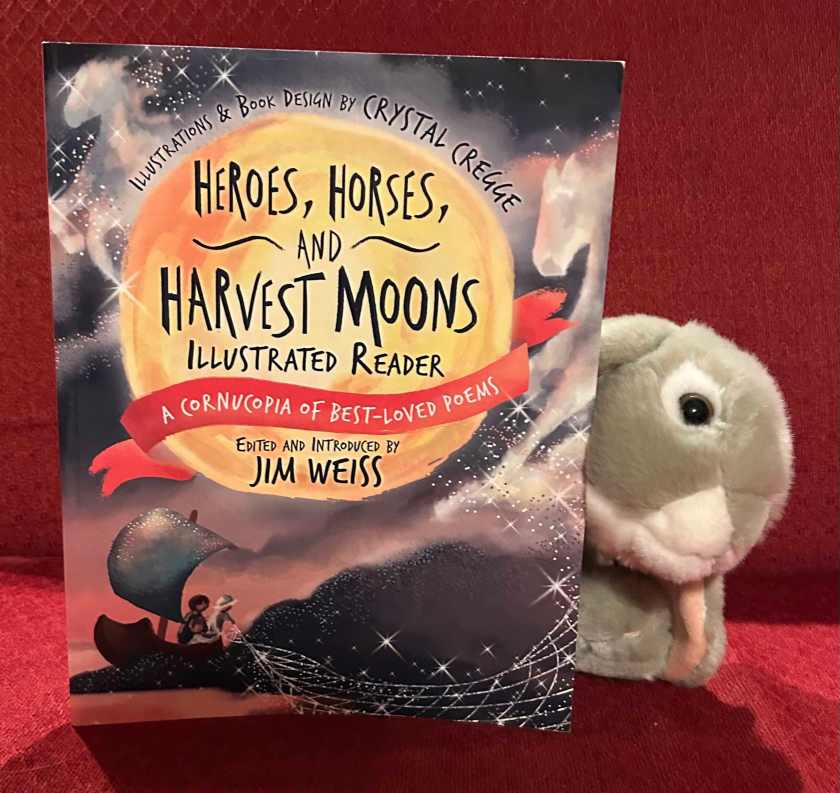
Sprinkles has reviewed several poetry anthologies for the book bunnies blog. Today she is writing about another: Heroes, Horses, and Harvest Moons: A Cornucopia of Best-Loved Poems, edited and introduced by Jim Weiss, illustrated by Crystal Cregge, and published in 2018.
Sprinkles reviews Heroes, Horses, and Harvest Moons: A Cornucopia of Best-Loved Poems, edited and introduced by Jim Weiss and illustrated by Crystal Cregge.
When I first began to look for poetry books for young readers, I did not know there would be so many beautiful options out there. But through the years, I was pleasantly surprised to find several lovely books that fit the bill, all clearly created with much care and love. Today I wanted to share with you one such book: a lovely little collection of poems titled Heroes, Horses, and Harvest Moons: A Cornucopia of Best-Loved Poems.
Heroes, Horses, and Harvest Moons: A Cornucopia of Best-Loved Poems is a paperback large-format book, and in the course of fifty-two pages, covers thirty-one poems and nine nursery rhymes. Most poetry anthologies will not have Mother Goose in their repertoire, but this is a different kind of an anthology. The sounds matter a lot in this book, and the easy rhymes and repetitions of the nursery rhymes included seem to be a natural place to introduce young ones to poetry.
So this could indeed be a first introduction to poetry for a young bunny. There is a little blurb at the beginning about what poetry is; it ends with “I hope you have fun.” This captures the spirit of the book well. These are poems selected not only for being well-known and well-loved, but also a lot of the time, they are fun and fun to read out loud. Christina Rosseti’s “Who Has Seen the Wind?” is almost like a fun little riddle, and would be fun for a young one to read out loud together with their grownup.
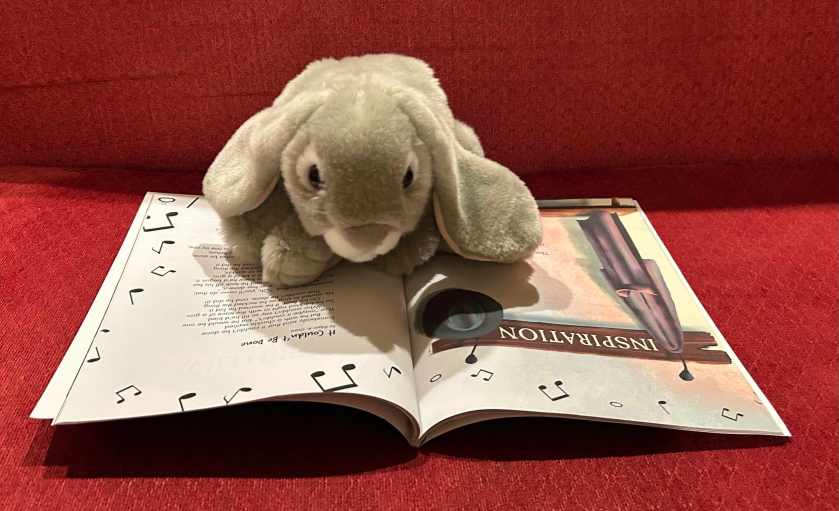
The illustrations on each page add to the fun factor. Carl Sandburg’s “Fog” starting with the lines:
The fog comes
on little cat feet.
is decorated by a city skyline with a crouching gray cat seemingly hiding behind it. The cat is looking curiously on and its tail is making an elegant wave above the city’s trees. All very amusing to explore as one thinks about the words of the poem…
Sprinkles is reading Heroes, Horses, and Harvest Moons: A Cornucopia of Best-Loved Poems, edited and introduced by Jim Weiss and illustrated by Crystal Cregge.
Many of the poems that appear in Heroes, Horses, and Harvest Moons: A Cornucopia of Best-Loved Poems can be found in some of the books I have reviewed before. For example Robert Louis Stevenson’s “Windy Nights” is from A Child’s Garden of Verses. “I Hear America Singing” by Walt Whitman was in two of the anthologies I reviewed. “The King’s Breakfast” and “Jonathan Jo” by A.A. Milne are both from When We Were Very Young. But there are also a lot of new poems here. So one should not worry about complete overlaps. And when it comes to poetry, revisiting an old acquaintance is always welcome!
The poems are loosely organized into whimsical themed sections. The first section is made up of nursery rhymes from Mother Goose. Then comes a section on poems about nature. There are two sections called “Wild Ride”. The first contains “Paul Revere’s Ride” by Henry Wadsworth Longfellow, the second, “The Charge of the Light Brigade” by Alfred, Lord Tennyson. Other sections are titled “All American Poems”, “Unusual Companions”, “Poems That Take Flight”, “Sensible Nonsense”, “Bedtime and Dreamtime”. “Unusual Companions”, for example, contains “The Beanstalk” by Edna St. Vincent Millay, “The Little Elf” by John Kendrick Bangs, and “The Song of the Wandering Aengus” by William Butler Yeats.
All of these sections are preceded by a Foreword by Susan Wise Bauer, directed at parents, with some recommendations on how to use the book. But the recommendations are not simply about just reading the book together with a child and talking about the pictures. There is some discussion of the role of memorization and recitation of poetry, both seemingly lost arts. Older children might recoil at the idea of reciting a poem in front of others, but younger children often enjoy memorizing and reciting rhyming language. If they recited poetry instead of commercial jingles, wouldn’t that be lovely?
The book is accompanied by an audio version of the poems, too, all read by Weiss himself. You can hear a sample on the publisher’s website for the audio companion. Weiss has a very versatile voice and his readings of the poems are a joy to listen to. But I’d say that it will be a whole lot more fun to read it out loud yourself with your little one.
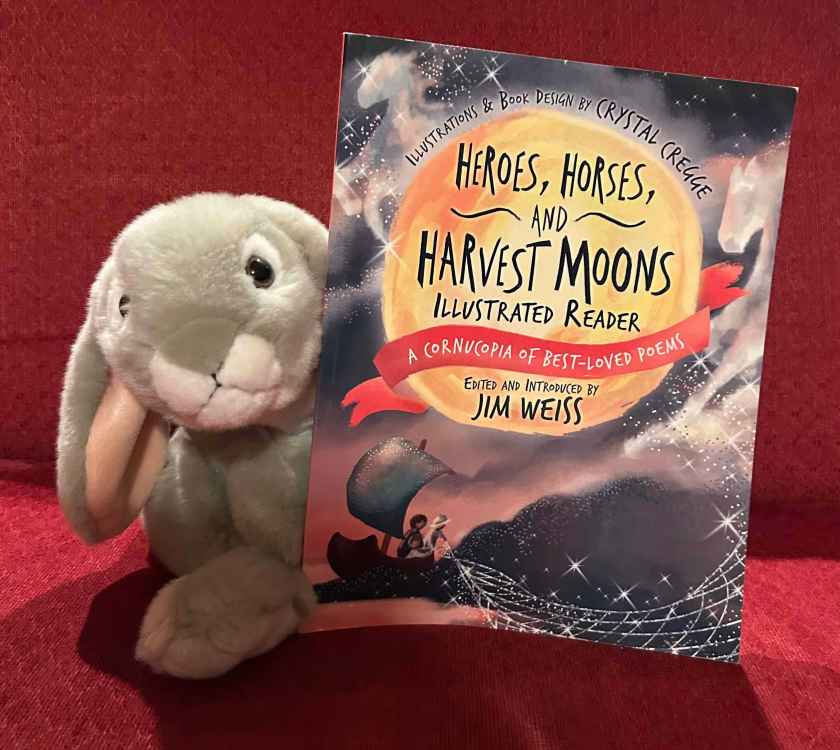
Sprinkles enjoyed reading Heroes, Horses, and Harvest Moons: A Cornucopia of Best-Loved Poems, and recommends it to all young lovers of poetry and their adults.
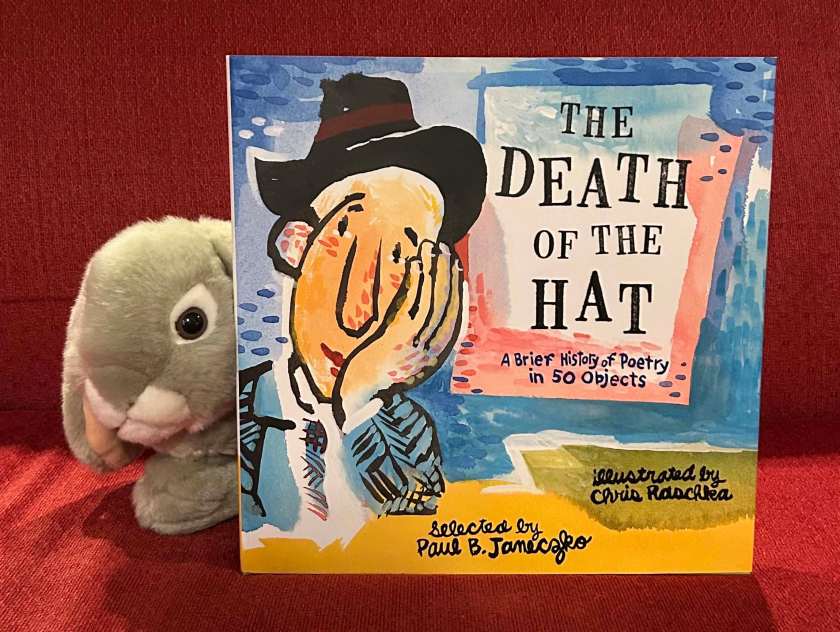
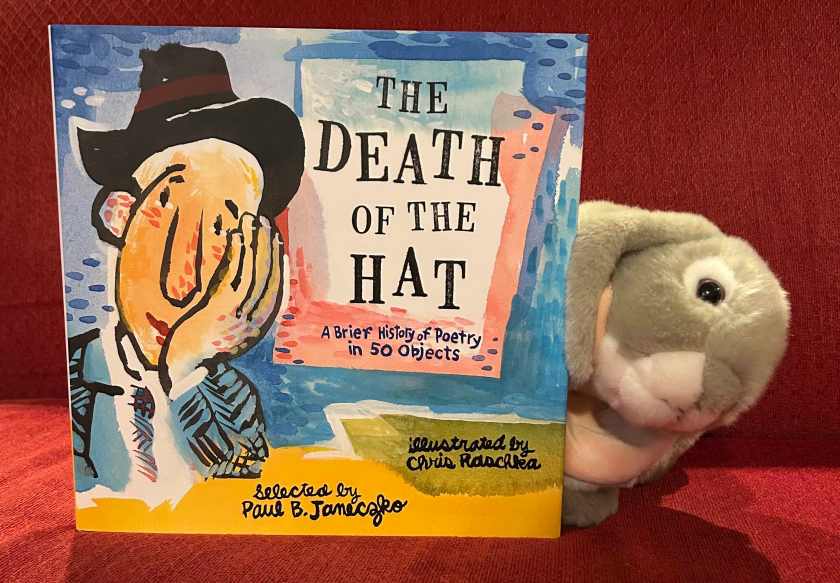
Sprinkles reviews The Death of the Hat: A Brief History of Poetry in Fifty Objects by Paul B. Janeczko and Chris Raschka.
The Death of the Hat: A Brief History of Poetry in Fifty Objects is an interesting collection. The title might give you a hint about what to expect: you might imagine that this will likely be a collection of fifty poems each about a particular object, and the whole collection will likely give us a sense of the history of poetry. And you would be right, mostly.
So yes, most of the poems are about concrete objects, like a hat (the titular poem “The Death of the Hat” by Billy Collins) or a just-finishing candle (a poem by Rumi) or simply the letter E, my favorite (by George Gordon, Lord Byron, who just happens to be the father of Ada Lovelace):
A Riddle, On the Letter E by George Gordon, Lord Byron

The beginning of eternity, the end of time and space
The beginning of every end, and the end of every place.
But there are also quite a few poems which are about nature and natural beings. You can call them objects, sure, but I feel like they do not quite fit the term. Like snowflakes (Henry Wadsworth Longfellow), the midnight frost (Basho), the sun (Ben Jonson), an eagle (Lord Alfred Tennyson), and so on. Still, they are concrete, and I suppose, do make a category that excludes topics like spirituality, romantic love, meaning of life and so on.
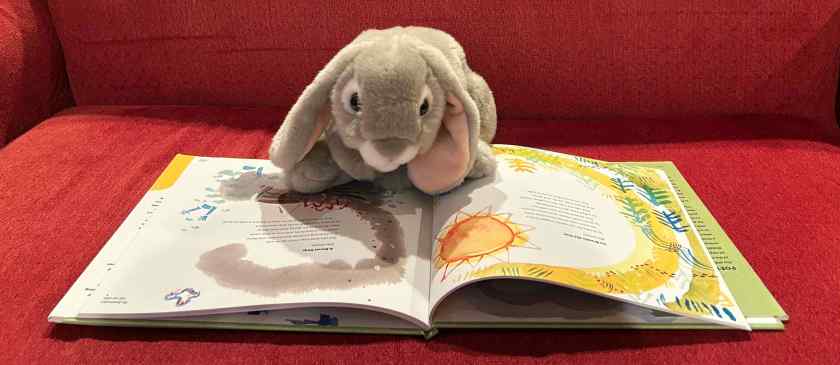
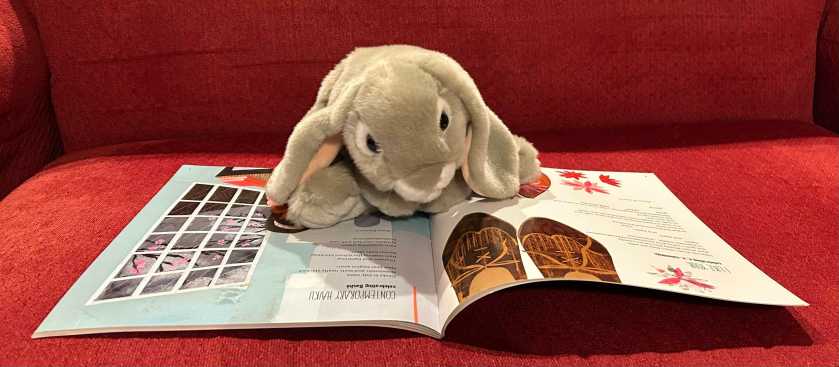
Sprinkles is reading The Death of the Hat: A Brief History of Poetry in Fifty Objects by Paul B. Janeczko and Chris Raschka.
The history bit is worth mentioning. The time periods are described at the beginning; the curator of the collection, Paul B. Janeczko, in his introduction gives us a quick recap of the history of Western poetry, mainly focusing on what can be gleaned in poetry written in English. This is helpful and provides the reader some guidelines as they dive into the book. But then we find several poems that were translated into English! Now this is exciting, the poems are all exquisite themselves, but assigning to them the Euro-centric (or rather English-centric) period names feels a bit off then. For example, when you are reading poems from “the Renaissance”, you do not expect to find Basho from Japan, Emperor Le Thanh Tong from Vietnam or Kim Ku from Korea. The timelines work of course (1500s-late 1600s), and I was really excited by the diversity of the poets in the book. But the time period names still disoriented me a bit.
The book is a delight nonetheless, and I recommend it highly to any bunnies young or old. Especially if you want to enjoy some beautiful poetry in company of inspiring water colored sketches on each page. The illustrations by Chris Raschka definitely add an extra something to the book, sometimes whimsical, sometimes elegant, but always interesting, to each page. All in all, a wonderful collection to be read and savored.
Sprinkles enjoyed reading The Death of the Hat: A Brief History of Poetry in Fifty Objects by Paul B. Janeczko and Chris Raschka and recommends it to all current and future lovers of poetry, young and not-so-young.
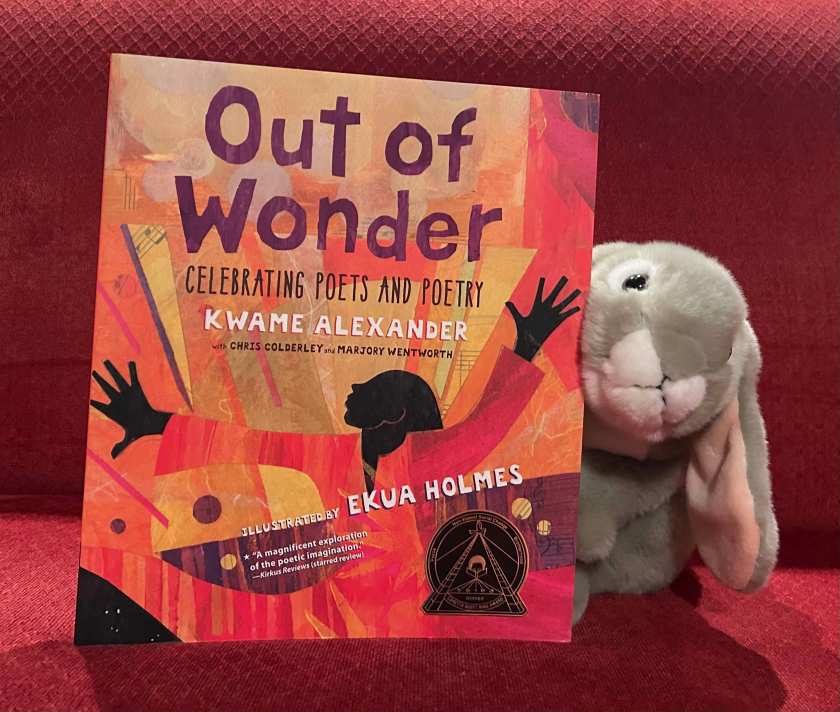
Today Sprinkles reviews Out of Wonder: Celebrating Poets and Poetry by poets Kwame Alexander, Chris Colderley, and Marjory Wentworth. Illustrated beautifully by Ekua Holmes, this poetry collection was first published in 2017.
Sprinkles reviews Out Of Wonder: Celebrating Poets and Poetry by Kwame Alexander, Chris Colderley, and Marjory Wentworth.
I have already reviewed a handful of poetry books through the years for the book bunnies blog. Most of these reviews were about individual books, but earlier this year, I have also reviewed three anthologies. The book I am reviewing today can also be viewed as an anthology of sorts, though it is a very particular type. Out Of Wonder presents twenty poems from three distinct poetic voices: Kwame Alexander, Chris Colderley, and Marjory Wentworth. And each poem is an homage to a specific poet that had a significant impact on the poet writing about them.
The book begins with a preface written by Alexander, where he introduces us to the project: through poems inspired by individual poets, the three authors of this book aim to introduce to the young reader the depths and breadths of poetry. Alexander writes:
“The poems in this book pay tribute to the poets being celebrated by adopting their style, extending their ideas, and offering gratitude to their wisdom and inspiration.”
Following this description then, it should not surprise the reader that the poems in the book are organized into three parts.
Part I, titled “Got Style?”, offers us six poems, written in the styles of Naomi Shihab Nye, Robert Frost, e. e. cummings, Bashō, Nikki Giovanni, and Langston Hughes. It is a great idea indeed to start with a style focus like this; these poets have particularly distinct styles, and the six poems honoring them manage to showcase to the young reader what possibilities exist for poetic form.
The book ends with a list of biographies of the twenty poets celebrated in it, so the curious reader can learn a bit more about these poets if desired. But of course the really curious bunnies will also want to check out poems by these poets. To that end, most of the links I provided above to the poets go to the Poetry Foundation page on them where you can find at least a couple sample poems.
Sprinkles is reading Out Of Wonder: Celebrating Poets and Poetry by Kwame Alexander, Chris Colderley, and Marjory Wentworth.
All twenty poems in Out Of Wonder are accessible to young readers, but they do not underestimate them. Each poem stands on its own, with its distinct style and voice. Alexander’s “Jazz Jive Jam” celebrating Langston Hughes dances even!
These are all really appealing poems. For example Marjory Wentworth’s “In Every Season” celebrating Robert Frost leaves resonances in one’s palate which complement the experience of reading his “Stopping by Woods on a Snowy Evening”. Chris Colderley’s “For Our Children’s Children” celebrating Chief Dan George is striking in its simplicity–here is an excerpt:
Let the shadows
of drifting clouds
warm your cheek
and whisper softly:

Share the earth
with all creatures.
Love them, and they
will love you back.
Kwame Alexander’s “I Like Your” celebrates e. e. cummings in a style that reflects the latter’s very own–here is the beginning of this lovely poem:
I like my shoes when they are with
your shoes. Mostly the comes. Leastly
the goes. I carry your footsteps(onetwothreefour)
in between today(...)tomorrow.
Each and every one of these poems is a joy to read. And each is accompanied by beautiful illustrations by the talented Ekua Jolmes. Most poems thus get a full two-page spread and the illustrations are as distinct and striking as the poems themselves.
This is not a book to read from cover to cover in one sitting. Read one poem, look at the beautiful illustrations accompanying it, check the bio of the poet celebrated by the poem that is provided at the back of the book, and then finally, if you have the time, go find some poems by the same poet to see if you will find a new favorite of your own.
***
If you would like to know a bit more about the book, you should probably know that it has its own Wikipedia page! And you can also view the book trailer on Youtube:
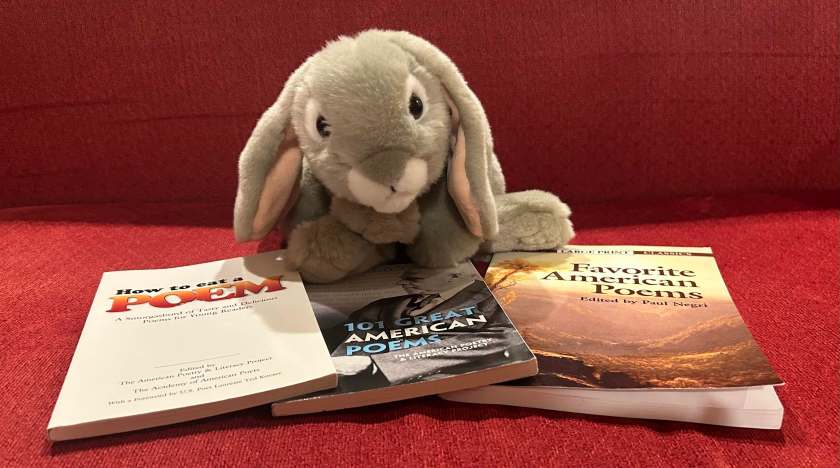
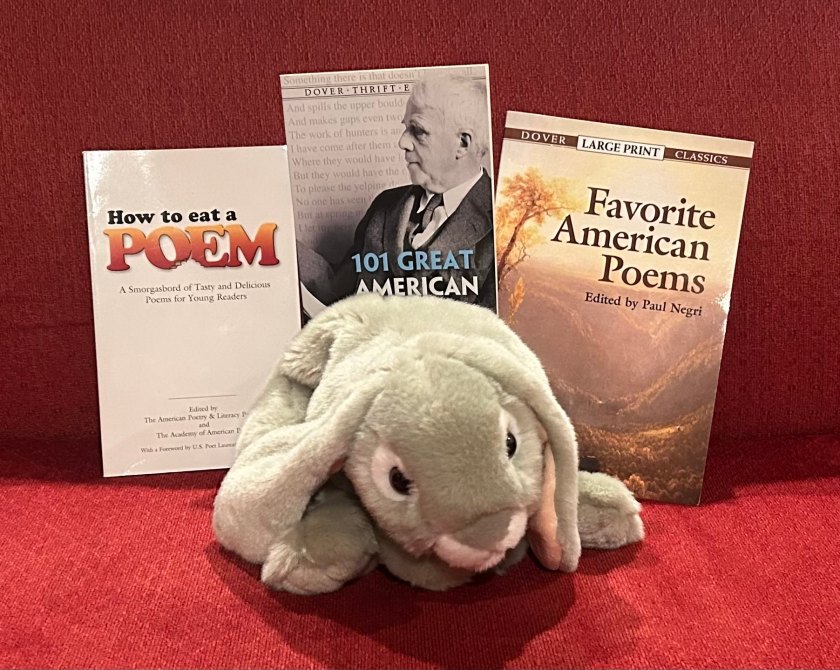
Today Sprinkles reviews three poetry anthologies that can help young bunnies get acquainted with a great many wonderful poems all at once: 101 Great American Poems collated by the American Poetry & Literacy Project, Favorite American Poems edited by Paul Negri, and How to Eat A Poem: A Smorgasbord of Tasty and Delicious Poems for Young People edited by the American Poetry & Literacy Project and the Academy of American Poets.
Sprinkles reviews 101 Great American Poems collated by the American Poetry & Literacy Project, Favorite American Poems edited by Paul Negri, and How to Eat A Poem: A Smorgasbord of Tasty and Delicious Poems for Young People edited by the American Poetry & Literacy Project and the Academy of American Poets.
How poetry comes into one’s life will differ from one bunny to another. But hopefully some day you find yourself interested in a poem. A poem that makes you think differently or feel very strongly about something. And that makes you think, hmm, maybe I could enjoy this poetry thing. But there is a whole wide world of poetry out there. Where do you start? Anthologies might help. So today I want to share with you some thoughts about three poetry anthologies that young readers might find of interest.
The first one I will write about is 101 Great American Poems, collated by the American Poetry & Literacy Project, and published originally in 1998 by Dover. Maybe you are aware that Dover is a publisher that specializes in republishing classical works that have been out of print for a while. However, 101 Great American Poems is a new anthology, first published by Dover. In fact all three books I am reviewing today are published by Dover in the same manner. I am glad Dover does publish original works, too, especially because they are often clean books sold at very reasonable prices.
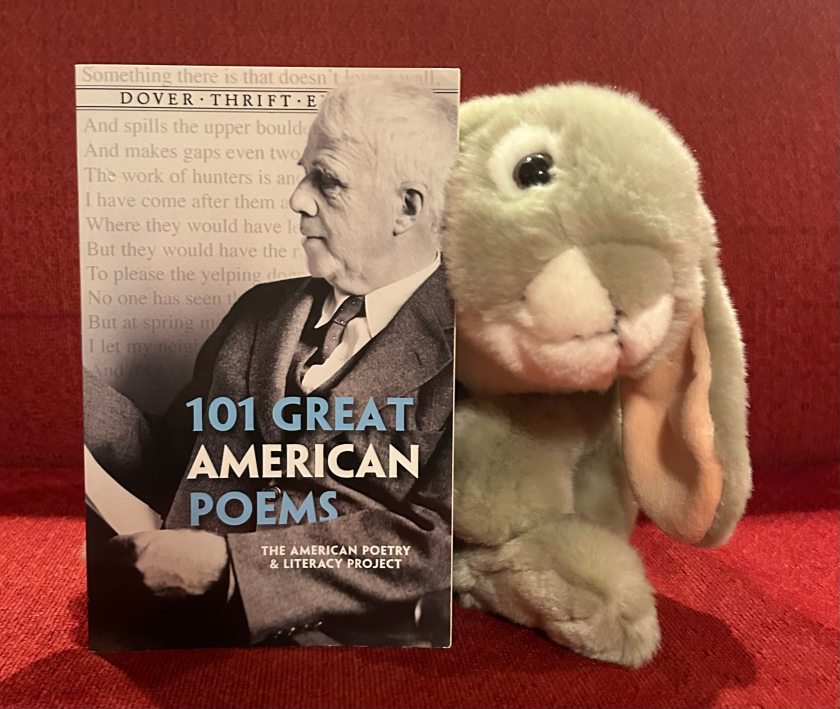
Sprinkles reviews 101 Great American Poems collated by the American Poetry & Literacy Project.
Anyways, let us get back to 101 Great American Poems. As you can tell, the book is a collection of one hundred and one poems from thirty-nine American poets ranging from colonial times to early twentieth century. The poems are organized by their authors, who themselves are organized according to their birth years. So the book starts with a poem “To My Dear and Loving Husband” by Anne Bradstreet, who was born in England in 1612 and was one of the early colonialists in America, and ends with “The Unknown Citizen” by W.H. Auden who was born in England in 1907 and wrote this poem in 1939 soon after he moved to the United States. Each poet is introduced with a couple sentences of biographical context, and then we are offered one to ten poems from each. About seventeen poets have one poem under their names (including one from Abraham Lincoln, who one might or might not have expected to find in a poetry anthology), while two have ten (Emily Dickinson and Robert Frost). Most other folks are represented by two to three poems.
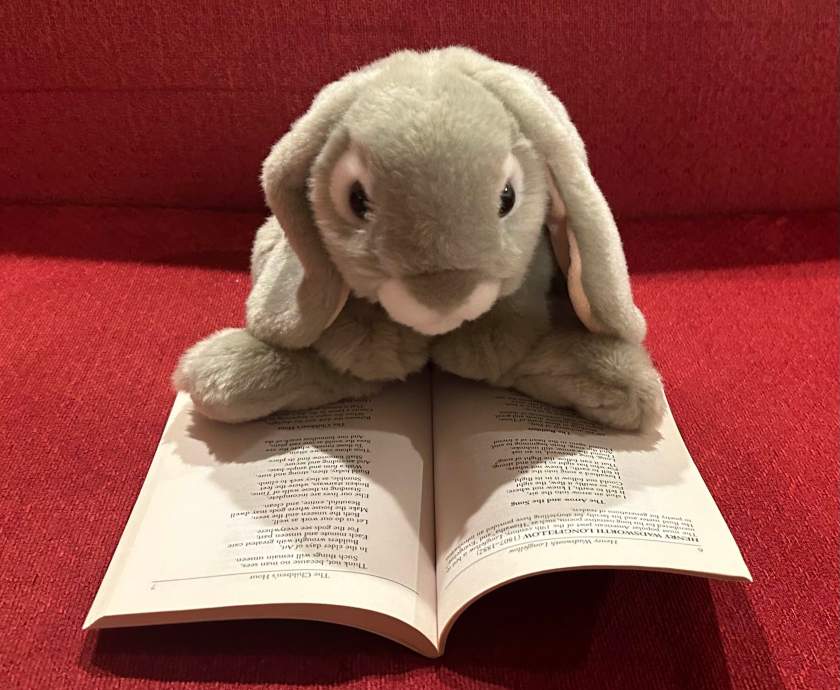
Sprinkles is reading 101 Great American Poems collated by the American Poetry & Literacy Project.
We have here a collection of mainly classical American poetry. Well-known poet names like Ralph Waldo Emerson, Henry Wadsworth Longfellow, Edgar Allan Poe, Walt Whitman, Emily Dickinson, Gertrude Stein, Robert Frost, Carl Sandburg, Wallace Stevens, William Carlos Williams, Ezra Pound, Marianne Moore, T.S. Elliot, E.E. Cummings, and Langston Hughes are accompanied by names that some of us might not be as familiar with. And even from those names that might be familiar, we might get new poems, that might not have shown up in our own studies of poetry in school but will open up whole new worlds for us if we let them.
In the introduction to 101 Great American Poems, the poet Joseph Brodsky is quoted to have said that “Books find their readers, and if not, well, let them lie around, absorb dust, rot, and disintegrate. There is always going to be a child who will fish a book out from the garbage heap.” The introduction ends: “Books wear out. Great poets pass away. But the spirit of poetry is indestructible.” This book is a neat collection that could help a young person reach in and find that one poem (or three) that will bloom new flowers in their heart.
***
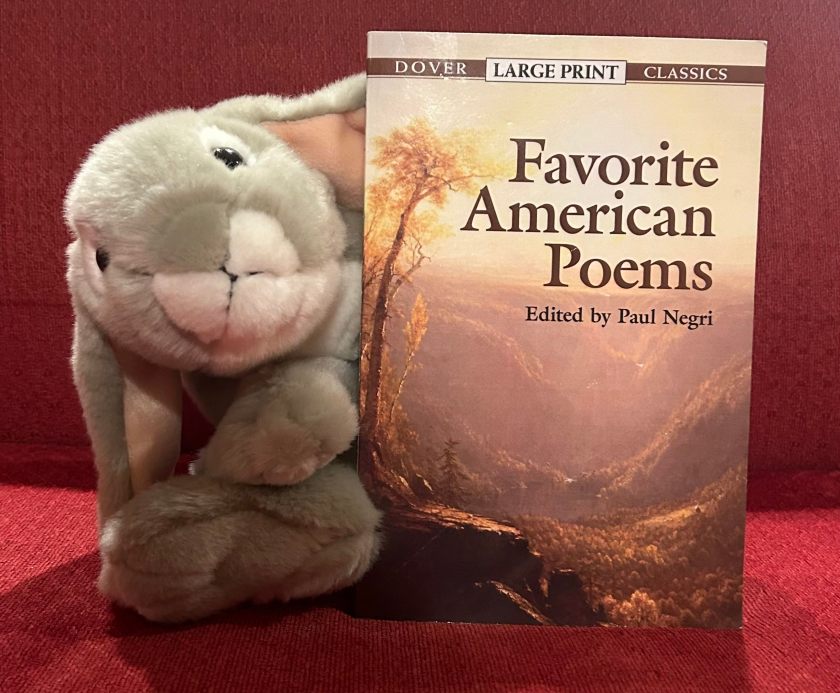
Next up, I want to say a few words about Favorite American Poems, edited by Paul Negri. First published in 2002, the version I read is a large-print one, “designed for those who need or prefer large print and meets the standards of the National Association for the Visually Handicapped.” I must say that having quite poor eye sight myself, I find large-print books very much more accessible. And for a poetry book, the format works really well, even if you do not often need large print.
Sprinkles reviews Favorite American Poems edited by Paul Negri.
The book is organized again in terms of the poets, and the poets are listed once more in the order of their birth years. There is much overlap in between these two books, and so you will not be surprised to hear for example that the first poet presented is Anne Bradstreet again, with her “To My Dear and Loving Husband”. This one showcases thirty-four poets, and the big names in the previous book show up all here too. But this book has poems from John Greenleaf Whittier, Jones Very, Henry David Thoreau, Julia Ward Howe (“Battle Hymn of the Republic” had to appear of course!) and James Whitcomb Riley, who did not show up in 101 Great American Poets. On the other hand, we do not get to read poems from Abraham Lincoln, Sara Teasdale, Robinson Jeffers, Marianne Moore, Archibald MacLeish, E.E. Cummings, Jean Toomer, Langston Hughes, Countee Cullen, and W.H. Auden.
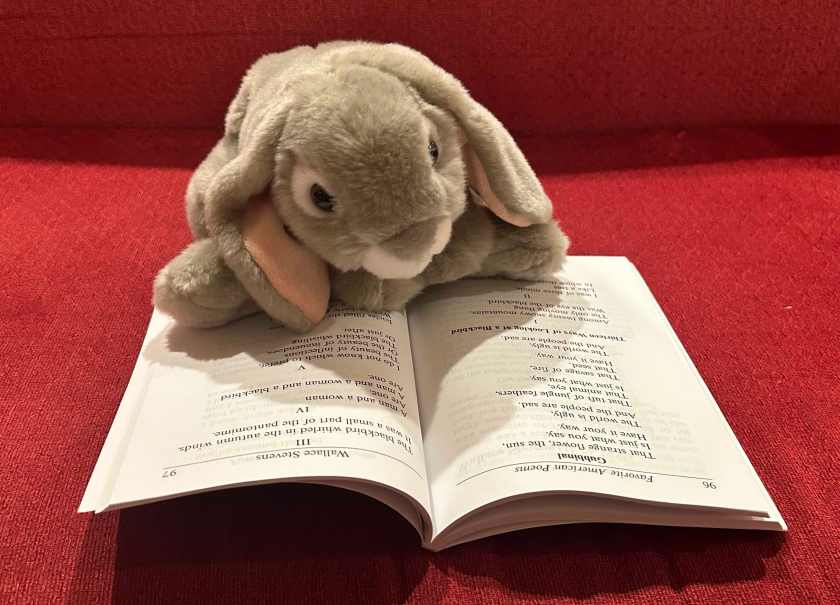
Sprinkles is reading Favorite American Poems edited by Paul Negri.
Biographical notes of the overlapping poets are mostly if not all identical. Poem selections also overlap but not completely. For example the same ten poems from Emily Dickinson, the same seven from Walt Whitman, and the same five from Edgar Allan Poe show up in both books, but both Oliver Wendell Holmes and Ell Wheeler Wilcox are represented by two poems in Favorite American Poems while only one per is showcased in 101 Great American Poems. Favorite American Poems seems to showcase more poems for the same poets in general, while 101 Great American Poems perhaps tries to be more selective.
***
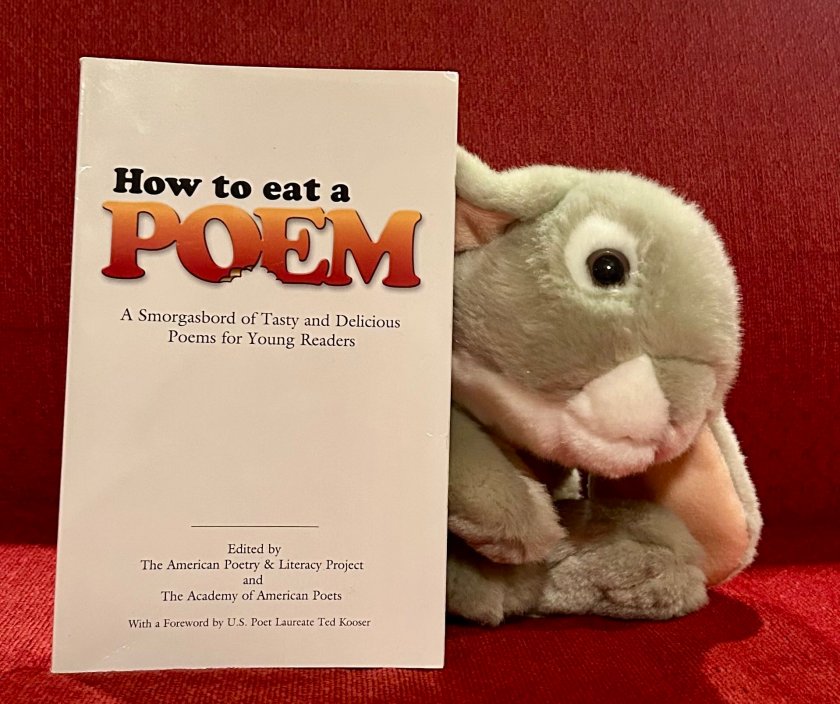
The third book I will talk about is How to Eat A Poem: A Smorgasbord of Tasty and Delicious Poems for Young People, edited by the American Poetry & Literacy Project and the Academy of American Poets. First published in 2006, this book is more explicitly directed towards young readers and it shows, not only in the title but also in the way the poems are organized and presented.
Sprinkles reviews How to Eat A Poem: A Smorgasbord of Tasty and Delicious Poems for Young People, edited by the American Poetry & Literacy Project and the Academy of American Poets.
Unlike the first two books I reviewed above, How to Eat a Poem is organized around themes. The seventy poems in the book are categorized into four groups. The first group is titled “Magic Words: Poems about poetry, books, words, and imagination”. This section contains the poem that gives the book its title: “How to Eat a Poem” by Eve Merriam. The second group is collected under the title: “My Heart Leaps Up: Poems about the beauty of the natural world”. This section starts with William Wordsworth’s poem “My Heart Leaps Up When I behold” which gives the section its title. It also contains four simple and beautiful haiku as well as several famous poems like “The Tyger” by William Blake and “When I Heard the Learn’d Astronomer” by Walt Whitman. This is also where “The Desert is My Mother” by Pat Mora appears side by side with its Spanish version.
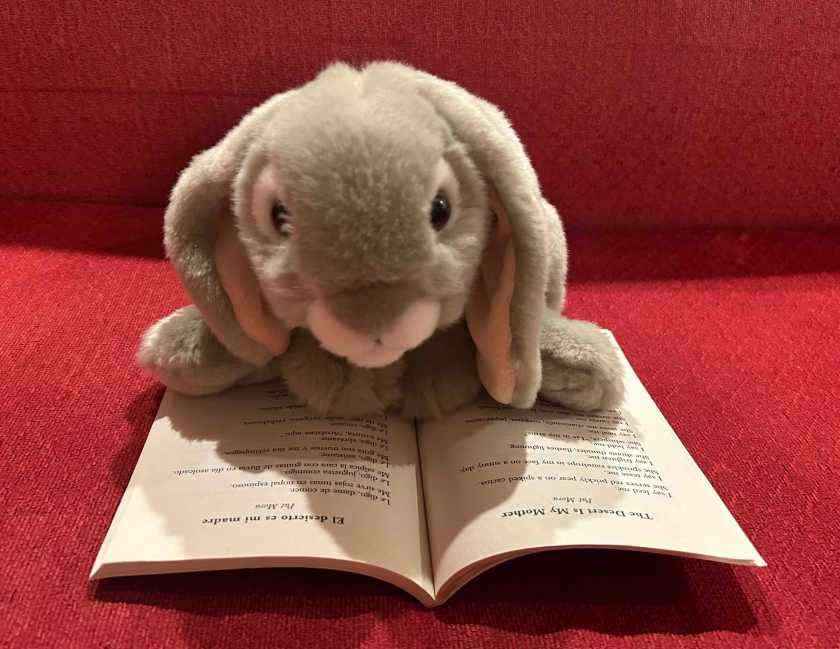
Sprinkles is reading “The Desert is My Mother,” and its Spanish version, by Pat Mora in How to Eat A Poem: A Smorgasbord of Tasty and Delicious Poems for Young People, edited by the American Poetry & Literacy Project and the Academy of American Poets.
The third section is titled “I Think Over Again My Small Adventures: Poems about travel, adventure, sports, and play”. In here we find the poem that gives the section its title: “I Think Over Again My Small Adventures”. a poem of Native American origin with its original composer unknown. Here we also find a poem by Shel Silverstein (“Sick”), another by Langston Hughes (“Harlem Night Song”) and another by Elizabeth Bishop (“One Art”). The last thematic section is titled “Hope is the Thing With Feathers: Poems about love, friendship, sadness, hope and other emotions,” and as you might imagine, it contains Emily Dickinson’s “Hope is the Thing with Feathers”. It also contains Edgar Allan Poe’s “Annabel Lee”and several others that explore a wild range of emotions. The poets in this book are a lot more diverse, in their national, ethnic, and historical origins. And the goal seems to be to show to the young reader that poetry is fun and worthwhile.
***
Overall I think all three books do well what they set out to do. 101 Great American Poems starts with the poet Joseph Brodsky asserting that “poetry must be available to the public in far greater volume than it is.” In Favorite American Poems, we are told that “we read poetry because at its best, it lives and sings.” And as we are told in the foreword to How to Read A Poem, poet Ted Kooser tells us that poetry “should be fun”. I believe these ideas are very well represented by each of these books.
I think the youngest bunnies may benefit from starting with How to Eat a Poem, and any bunny may decide to pick one or the other between 101 Great American Poems and Favorite American Poems. But make sure you get your paws on at least one of these books, and leave them lying around in the house. The young paws will eventually reach them and start reading. And then their journeys into the world of poetry will really take off.
Sprinkles recommends that readers check out at least one of the three books mentioned here: 101 Great American Poems collated by the American Poetry & Literacy Project, Favorite American Poems edited by Paul Negri, and How to Eat A Poem: A Smorgasbord of Tasty and Delicious Poems for Young People edited by the American Poetry & Literacy Project and the Academy of American Poets.
 BookBunnies