Marshmallow reviews We Should All Be Feminists by Chimamanda Ngozi Adichie

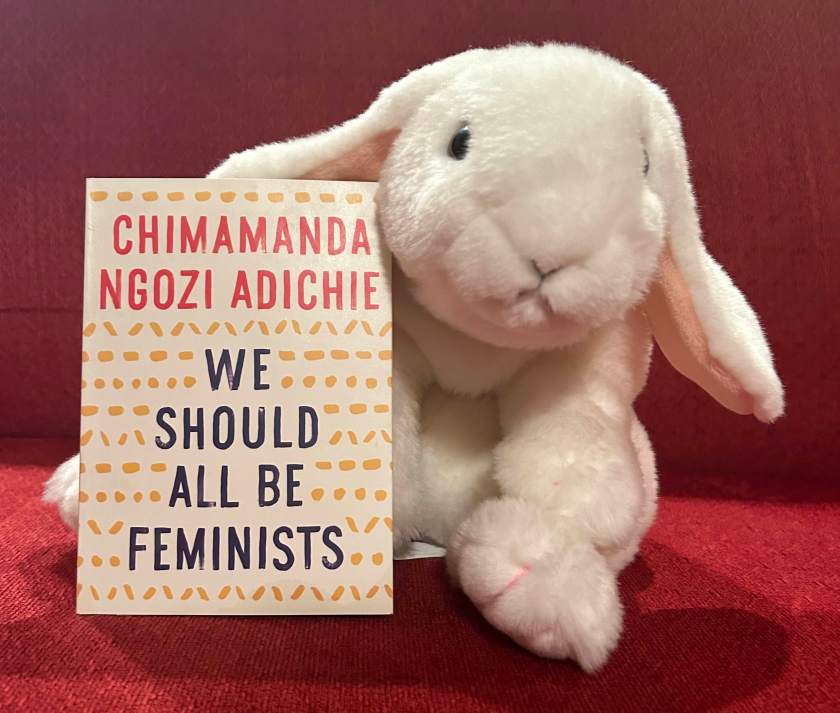
Today Marshmallow picked up a short little book from the book bunnies’ home library: We Should All Be Feminists by Chimamanda Ngozi Adichie, first published in 2014. Below she shares some of her thoughts on this little book.
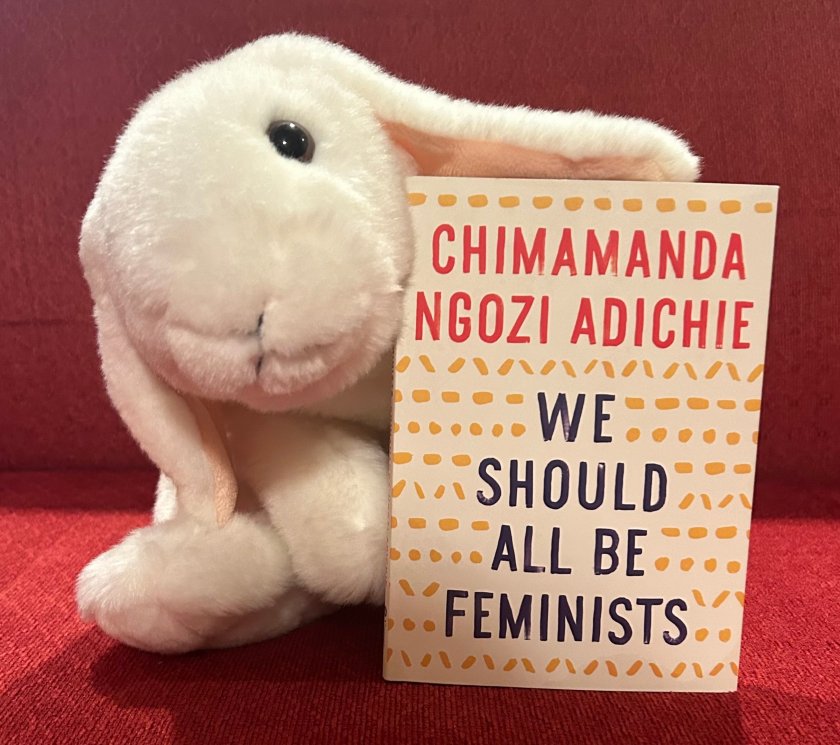
Marshmallow reviews We Should All Be Feminists by Chimamanda Ngozi Adichie.

Marshmallow’s Quick Take: If you are feeling up for a short, non-fiction book with an important message, then this might be the book for you.

Marshmallow’s Summary (without Spoilers): I’d like to start off by saying that this book is adapted from Chimamanda Ngozi Adichie’s TEDx talk which is also titled “We should all be feminists”. I would recommend watching the video of her talk before or after reading this book.

In this book, Ngozi Adichie covers her experiences as a feminist. She explores what it means to be a feminist, how we can raise feminist children of both genders, and how we can strive towards a future where we are all feminists. 

The author starts off by talking about her first encounter with the word “feminist”. The first time she was called a feminist, the word “feminist” was something akin to terrorist, used as an insult and an accusation. However, as we follow her, we learn that feminism is nothing to be afraid of and that instead it should be something we all should strive for.

Ngozi Adichie points out something insightful in this book when she states that the word “feminist” is often associated with the idea of being un-feminine. Ngozi Adichie writes that she enjoys wearing high heels and shiny lip gloss, even though she is a feminist. The author emphasizes that being a feminist doesn’t mean that you are unfeminine; it simply means that you believe that men and women deserve equal rights and prospects in life. The author specifically examines the treatment of women and men in Nigeria, offering examples and anecdotes from her personal experience. Though her examples were mostly from Nigeria, she does allow us to recognize that many women around the world are often ignored and silenced. 

The author also talks about how men fit into feminism. She says that being a feminist doesn’t mean believing in female superiority; it means believing in female equality. Ngozi Adichie writes that ideas of masculinity also feed into the unjust sexism that exists in all cultures. Ngozi Adichie talks about how we must change the perspectives on gender, for both genders, for the sake of women and men. 
Marshmallow is reading We Should All Be Feminists by Chimamanda Ngozi Adichie.

Marshmallow’s Review: I really liked this book. I completely agreed with practically everything in this book and felt verified by some of her statements. As a female bunny, I think books like this are important for change, especially this book. This book is very short and concise. The writing style is fresh and engaging, easy to follow and easy to understand. Yet the simplicity is most successful because of the way the author is so persuasive.

We Should All Be Feminists is a great book to give to someone who might not recognize the issues that women still face today. This is a very important message for everyone because feminism isn’t about pushing men down at all. It’s about focusing on what we have in our brains, rather than what sex chromosomes we have. 

Overall, We Should All Be Feminists is very meaningful, easy to understand, and appropriate for all ages. I would recommend that everyone reads this book or at least watch the TEDx version of it

Marshmallow’s Rating: 100%

Marshmallow rates We Should All Be Feminists by Chimamanda Ngozi Adichie 100%.

Caramel reviews Buns Gone Bad by Anna Humphrey and Irma Kniivila

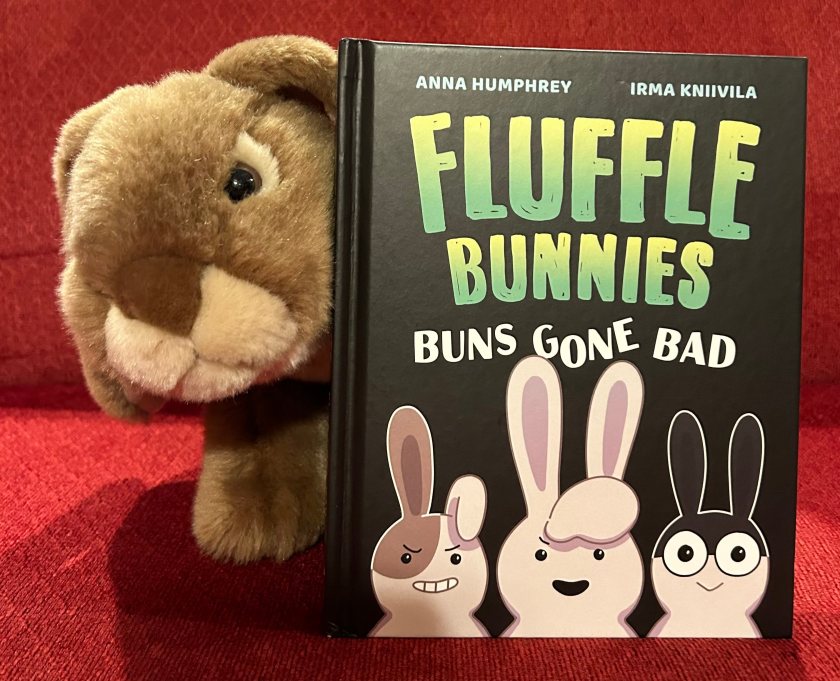
Today Caramel reviews Buns Gone Bad, by Anna Humphrey and Irma Kniivila, the first book in a new graphic novel series called Fluffle Bunnies, coming out later this month. As usual, Sprinkles is taking notes and asking questions.

The book bunnies received this book as an advance review copy.

Caramel reviews Buns Gone Bad, written by Anna Humphrey and illustrated by Irma Kniivila.

Sprinkles: So Caramel, you got yourself a new graphic novel series.

Caramel: Yep.

S: Why don’t you start by introducing us to the Fluffle Bunnies, who are apparently going to go bad in this book?

C: These are three little bunnies. They are called Biggie, Boingy, and Flop, and they are really nice and cuddly. But then they decide to be TUFF bunnies.

S: Tell me more. What does that mean?

C: That means that they turn evil.

S: Wait, evil? I had thought this would be kind of like the Bad Guys books. So they would be bad in some ways but actually be cute deep inside.

C: This is kind of the opposite of the Bad Guys books actually. These guys start as cute little bunnies and then they go rotten. In Bad Guys, it’s the opposite; they are bad guys who turn good.

S: Well, I like cute little bunnies, and even mischievous little bunnies, after all, you are one. But evil ones? I am not sure that I like that…

C: Well, they are not really evil. So what happens is that their mother leaves for a trip, so the little bunnies are left defenseless, so the other animals try to take advantage of them, and so the little bunnies decide to toughen up. So they are not really evil, but they are tough. I said that before. They want to be TUFF. I guess they don’t know how to spell tough. Unlike me.

S: I see. So then they are not bad bunnies; they just learn to stand up for themselves.

C: Kinda. But they go a bit beyond just that. They take over the park. They go a little bit too far, maybe.

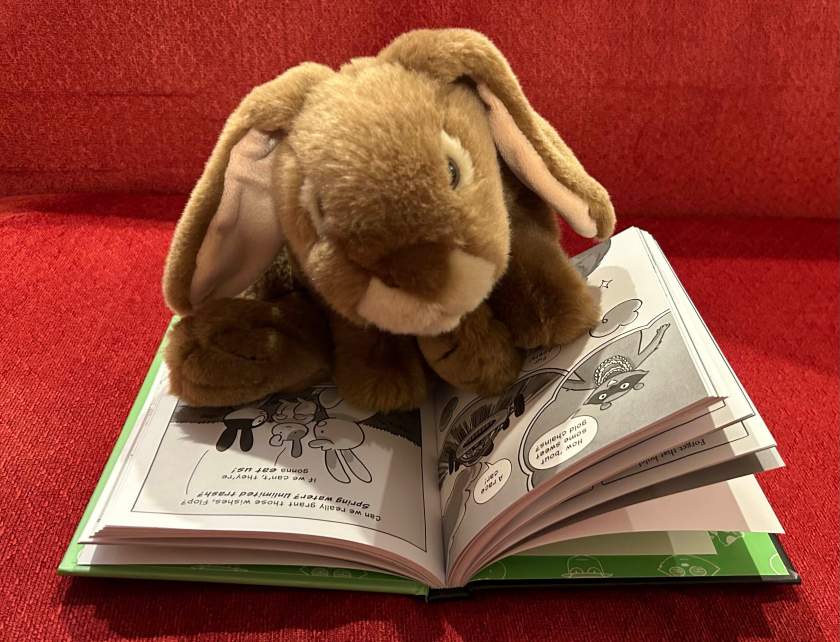
Caramel is reading Buns Gone Bad, written by Anna Humphrey and illustrated by Irma Kniivila.

S: That is interesting. And kind of funny, I must admit. Three little bunnies taking over a park.

C: It is funny, but it is also fun. Think of it Sprinkles; you, me and Marshmallow having our own park. Wouldn’t it be awesome? Of course the three bunnies in the book are all siblings. And you are our mommy. And you have not left home to go to Brazil to learn jujitsu.

S: Well, learning jujitsu could be really awesome. And Brazil is the heart of Brazilian jujitsu so that makes sense. Remember, years ago, you and Marshmallow tried to learn Brazilian jujitsu?

C: Yes, and that was a lot of fun. So maybe, I can understand the mommy bunny. But the three little bunnies go a little cuckoo when she leaves, so maybe she should have taken them along.. Oh well. If she did take them along, this book would not be written, and I would not have had all the fun I had reading it.

S: So you enjoyed the book then?

C: Yes. It is really funny. The way the bunnies take over is really hilarious.

S: And how about the pictures? They look like they are all black and white. Or rather all grayscale. That is, there are different shades of gray, but no other colors.

C: Yes. But that’s fine. The bunnies are very funny all the same.

S: So would you read more adventures of the Fluffle Bunnies? This is the first book of a series apparently.

C: Yes. I would. But this is a very new book, so I am afraid a second book might not come out too soon.

S: I guess we will just have to wait.

C: Yes, unfortunately. I really do not like waiting.

S: I know Caramel, but sometimes waiting is worth it.

C: Yes I guess.

S: So if you were to describe the book in three to five words…

C: Funny page-turner about three scrappy bunnies. Here I am using the “North American informal” meaning of the word “scrappy”. Like in the musical Hamilton. That’s where I heard it first.

S: I guess it is good we looked that word up together, Caramel. We also looked up the word “fluffle” right?

C: Yes, it means a group of bunnies. I really like it!

S: Me too. Okay, so let us wrap up this review then. What would you like to tell our readers?

C: Stay tuned for more book bunny reviews!

Caramel loved reading Buns Gone Bad, written by Anna Humphrey and illustrated by Irma Kniivila, and he can hardly wait for a second book in the series so he can read more about these "scrappy" little bunnies.
Caramel loved reading Buns Gone Bad, written by Anna Humphrey and illustrated by Irma Kniivila, and he can hardly wait for a second book in the series so he can read more about these “scrappy” little bunnies.

Marshmallow reviews The Bluest Eye by Toni Morrison

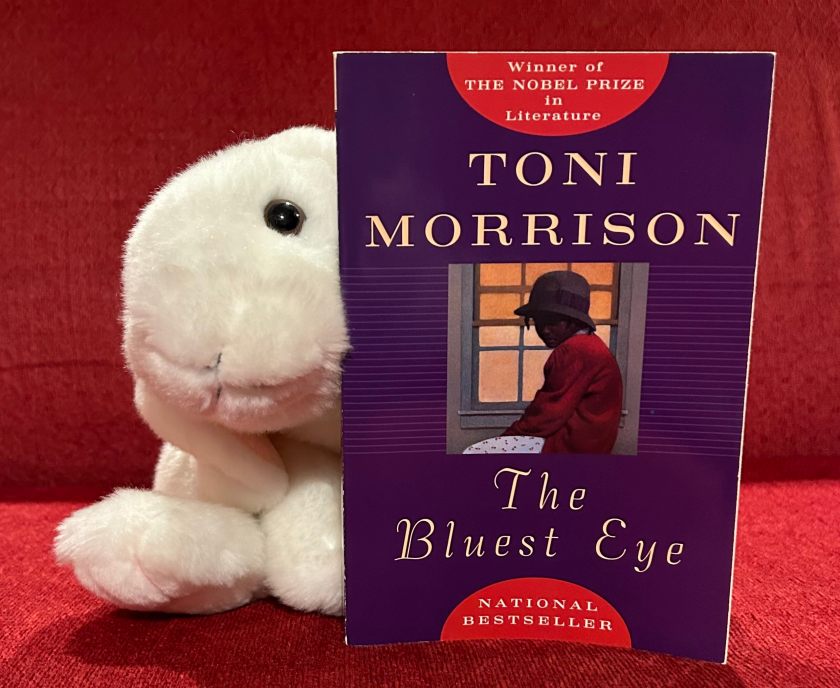
Today Marshmallow reviews The Bluest Eye by Toni Morrison, first published in 1970. Sprinkles is taking notes and asking questions.

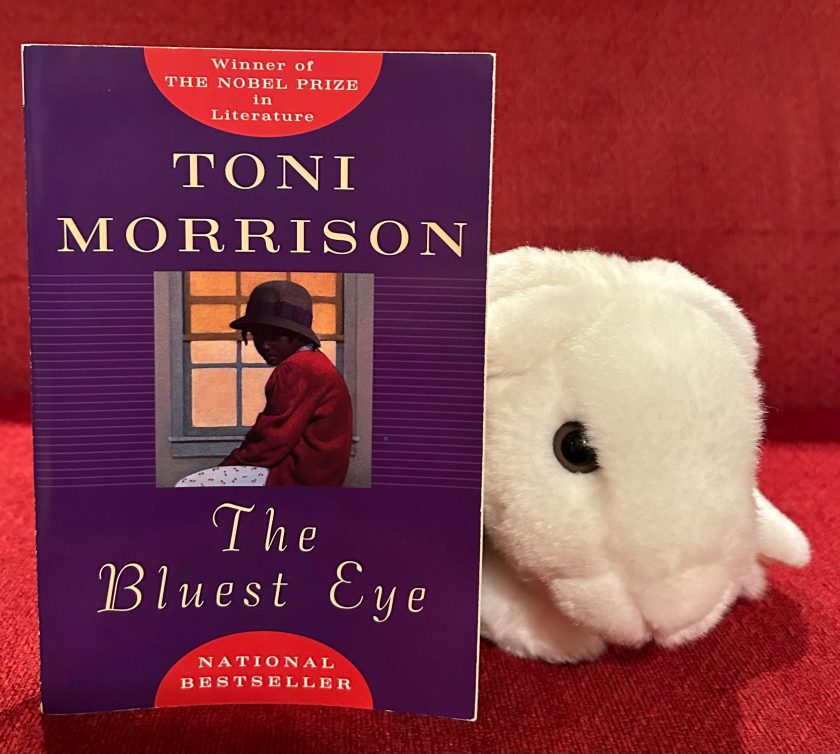
Marshmallow reviews The Bluest Eye by Toni Morrison.

Sprinkles: So Marshmallow, you always start your book reviews with what you call a quick overview. Can you give us one for this book, too?

Marshmallow: If you want to read about three young black girls growing up after the Great Depression and amidst internalized and externalized racism, then this is the book for you.

S: Okay, I think that is a good start. So tell us a bit more. Who are the three girls?

M: The main character is eleven-year-old Pecola Breedlove, and she is a foster sister to the other two girls, Claudia and Frieda MacTeer, who are nine and ten, and live with their parents. Pecola and Claudia are close, and a lot of the book is told from Claudia’s perspective. But we also have flashbacks and so on to events in Pecola’s life that Claudia could not have witnessed.

S: Okay, so tell me more. Why is the title The Bluest Eye?

M: Because Pecola wants to have the bluest eyes in the world. She thinks that she is ugly because a lot of people tell her she is, and she thinks that if she had blue eyes, she would be beautiful too.

S: I see. That must be very hard for a young girl of course.

M: That is not all that is hard in her life though. Her parents are both alive but they are not able to take good care of her. Her father is abusive and violent. Her mother does not support and protect her. The MacTeers on the other hand are a more supportive family for their children and Pecola, too, at least most of the time.

Marshmallow is reading The Bluest Eye by Toni Morrison.

S: I know this book has been banned in some school districts. Do you know why?

M: I think it is mainly because of two very sexually explicit scenes, which are also violent and abusive. And there are other parts where children are sexualized, and so on.

S: Hmm, I can see how those types of scenes would make a lot of people concerned about a book, especially for younger folks. How did you handle them?

M: I think the book is really hard to read, emotionally. When I was reading the book, I had to put it down several times. That is why it took me a really long time to read the book even though it is not very long and the author’s voice is fluid and captivating.

S: And yet you persisted and finished the book.

M: Yes, because I know it is an important book, and I know the author is trying to tell us something important.

S: What do you think she is trying to tell us?

M: I think she is trying to portray the chaos and the evil that results from racism. She says: “I felt compelled to write this mostly because in the 1960s, black male authors published powerful, aggressive, revolutionary fiction or nonfiction, and they had positive racially uplifting rhetoric with them that were stimulating and I thought they would skip over something and thought no one would remember that it wasn’t always beautiful.” So even though black people survived and often thrived despite the terrible oppression of racism they had to face, there were also people who did not survive, who were broken, and Toni Morrison wanted to make sure that we would not forget that.

S: I can see why you persevered Marshmallow. Sometimes we need to read difficult and heart-wrenching text to make sure we do not forget. But from what I am hearing you say, this book is probably not appropriate for young bunnies even though the main characters are young themselves.

M: Yes, definitely. I don’t think Caramel should read it yet for example. But for bunnies who are older and a bit more mature, it might be more appropriate.

S: You have read and reviewed Chains, Forge, and Ashes, the three books of the Seeds of America series, which were also about racism, or maybe more accurately, slavery. I think those books were also hard to read in some ways, but this one seems like it was a lot more challenging.

M: Yes. Possibly because in those books, even though there is a lot of pain and heartbreak, the main characters eventually overcome some of their challenges, and there is some sense of triumph, kind of like the writings Toni Morrison is referring to in the quote above. But in The Bluest Eye, both the life and the identity of Pecola are shattered. She does not survive her challenges. There is no redemption, only pain. Okay, there is some beauty too, in the book; there is solid love and affection, in the lives of Claudia and her family. But what happens to Pecola is traumatizing, and she does not survive the trauma.

S: I get that Marshmallow. Thank you for sharing your thoughts on this book. So do you have some last words to say about it?

M: I think this could be a good book to read for bunnies who are willing to face the full ugliness of racism and how it hurts people’s self-worth.

S: Thank you. So let us wrap this up then. What do you want to tell our readers?

M: Stay tuned for more amazing reviews from the book bunnies!

Marshmallow appreciated reading The Bluest Eye by Toni Morrison, though she thinks that it might be appropriate for only older bunnies.

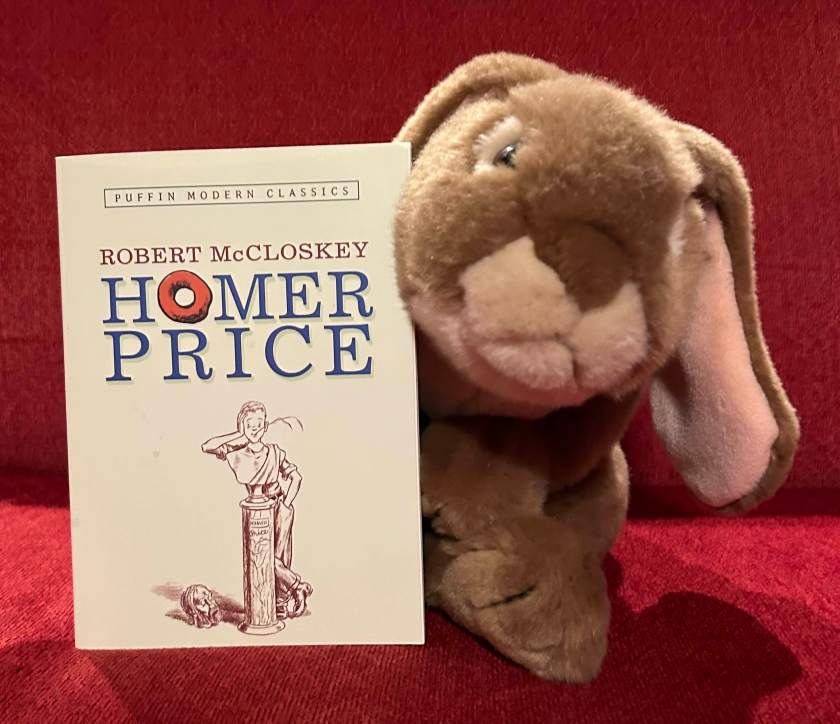
Caramel reviews Homer Price by Robert McCloskey

Today Caramel reviews Homer Price, a book by Robert McCloskey first published in 1943. As usual, Sprinkles is taking notes and asking questions.

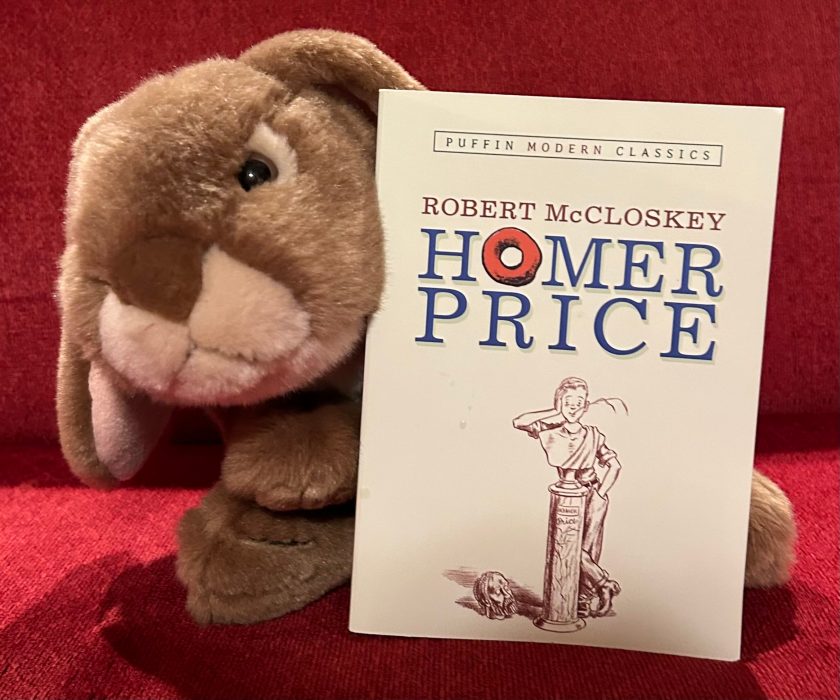
Caramel reviews Homer Price by Robert McCloskey.

Sprinkles: So Caramel, tell me about this book.

Caramel: This book is about a kid named Homer Price. Homer does many different things, like helping his uncle in the lunch room, which I think is essentially a restaurant, and building radios. This one is actually cool.

S: So Homer is a curious kid, and the book is about his adventures?

C: Yes. Or you could say his misadventures. A lot of unfortunate things happen. But in the end, he always comes out on top.

S: So you must like that, right? You like happy-ending books.

C: Yep. And Homer is a good kid. He is lucky but also pretty clever. And he likes to help other people.

S: Sounds a bit like you, Caramel.

C: Well, I don’t know how to build radios.

S: I bet you would like to give it a try.

C: Yes, I think I would.

S: Well, the summer is here, and school will be out soon, so maybe we can look into that.

C: I’d like that!

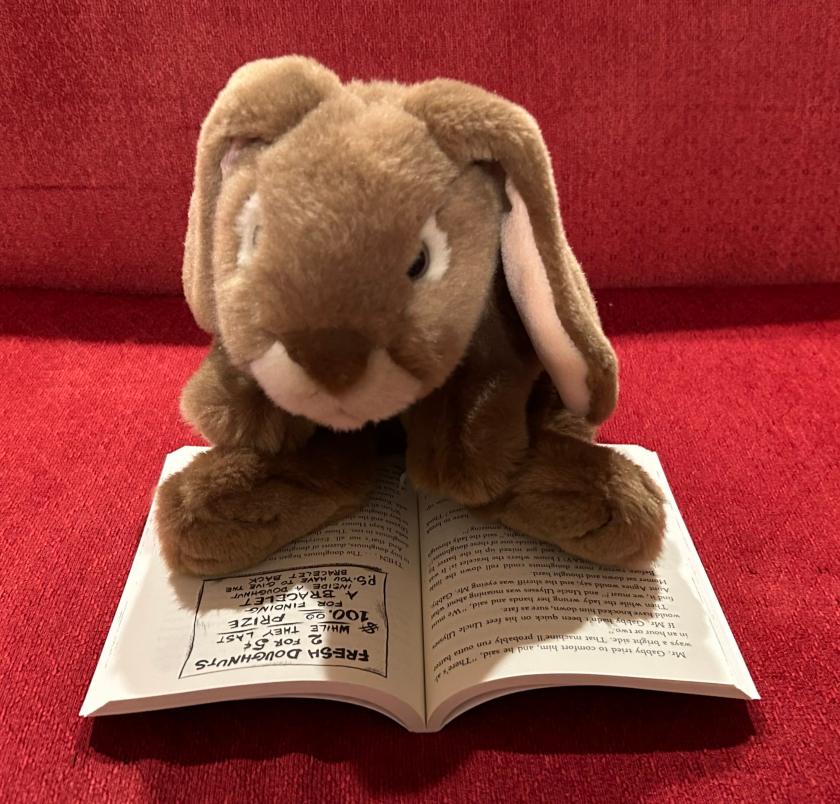
Caramel is reading Homer Price by Robert McCloskey.

S: Okay, so tell me a bit more about the book.

C: There are six chapters in the book. Homer has a different adventure in each. The chapter titles are “The Case of the Sensational Scent”, “The Case of the Cosmic Comic”, “The Doughnuts”, “Mystery Yarn”, “Nothing New Under the Sun (Hardly)”, and “Wheels of Progress”. I think I like “The Doughnuts” the most.

S: Tell me more.

C: I think it is the funniest part of the book. There is this machine that makes doughnuts, and something goes wrong, and it does not stop, so it keeps making doughnuts nonstop.

S: So there is an unending supply of doughnuts? That does not seem like a terrible situation!

C: I like donuts too, but I guess you could have too many doughnuts. Anyways eventually it stops, so they have to figure out a way to sell all the doughnuts.

S: What was funny about the chapter?

C: How they panic about the unstopping doughnut machine! That was very funny. And there are pictures here and there in the book. The ones in this chapter are pretty funny. And you can see the doughnuts all over the place!

S: I see. I thought you might also enjoy the Cosmic Comic one.

C: Yes, I did. In that chapter, Homer and his friend Freddy go to meet Freddy’s favorite comic book superhero. And hilarity ensues.

S: That is a funny way of saying things Caramel! But so the book sounds like it is light and light-hearted.

C: Yes.

S: You know that this book was written quite a while ago, right? Does it show its age?

C: Not really. I mean there are no computers and cell phones around but otherwise the stories just sound like they could happen today too. Though a $100-award back then would probably be much bigger than it is today. That is from “The Doughnuts”.

S: I see. Okay, so if you were to describe this book in three to five words …

C: Hilarious, timeless adventures of a clever little boy.

S: That will do! So let us wrap this up then. What would you like to tell our readers?

C: Stay tuned for more book bunny reviews!

Caramel enjoyed reading Homer Price by Robert McCloskey and learning about Homer's quirky adventures.
Caramel enjoyed reading Homer Price by Robert McCloskey and learning about Homer’s quirky adventures.