Caramel reviews A Kids Book About Empathy by Daron K Roberts

Last week Caramel reviewed A Kids Book About Change by David Kim. This week he reviews a second book from the A Kids Book About series: A Kids Book About Empathy, written by Daron K. Roberts. As usual Sprinkles is taking notes and asking questions.
Caramel reviews A Kids Book About Empathy by Daron K. Roberts.

Sprinkles: Okay Caramel, now that we read A Kids Book About Empathy together, let us talk about it.

Caramel: A Kids Book About Empathy is about empathy, as you can tell from the title. The author tells a story about when he was in fourth grade and then asks a lot of questions.

S: Well, he suggests some questions to ask when you are trying to show empathy to someone, no?

C: Yeah, I suppose that is correct.

S: So the book is about empathy. Can you tell me what that is?

C: Empathy is putting yourself into somebody else’s shoes. Not literally.

S: Yes, that’s a joke the author makes, right? He says not the real shoes, because that would be gross.

C: It is disgusting!

S: Well, not really. Sometimes when Marshmallow grows out of a pair of shoes, you could wear them if they fit.

C: Yeah, I guess that is true.. Still I think that is not what the author means.

S: So what does putting yourself in someone else’s shoes mean?

C: It means thinking about what they might be feeling and trying to understand and help them go through the catastrophe they are going through…

S: Yes, that is a good description, but it does not really have to be a catastrophe for someone to need some empathy.

C: Yeah, just hard times would be enough.

Caramel is reading A Kids Book About Empathy by Daron K. Roberts.

S: So what does the author suggest us to do when we see a friend who is in a difficult situation?

C: He lists four things to do. First take a deep breath.

S: Why do you think that is?

C: You need time to calm down as well as they, probably.

S: Yes, and probably to remind yourself how you are supposed to proceed next. Because if you don’t stop and take a breath, you might dive in and do or say things that may hurt rather than help.

C: Yes I think so. Then the second step is to listen.

S: How so?

C: Listen to them explain the situation or tell you whatever they want or need to tell you.

S: That is good. So give them some space to open up as they find fit. I like that. Then what comes next?

C: Ask questions. And the fourth is imagine. I don’t really get it though.

S: Hmm, do you get the asking questions part?

C: Sort of. Mostly.

S: So you ask questions that help you understand the person and help the person open up and share what they need. Right?

C: Yeah. I think so. But I don’t understand the imagining part.

S: Maybe read that part again?

C: Okay here it is:

“Maybe the exact same thing happened to you, or maybe you’ve never even had a dog. Try to imagine, and put yourself in their shoes to feel what they feel.”

Daron K. Roberts, A Kids Book About Empathy.

S: So does that make sense? Do you understand why imagining can be a good thing to do?

C: I guess it makes sense to try and help them…

S: or at least have them feel heard. When you try to imagine what they might be feeling, you may not solve their problems, but at least maybe they will feel like someone is on their side.

C: Yes, exactly.

S: Okay, so did you learn something new from this book?

C: I knew what empathy meant, more or less, but I did not know the four steps. I didn’t know exactly how to show it to my friends.

S: I like those four steps too Caramel.

C: I wish I had read this book earlier. One of my classmates’ grandmother died and I didn’t know what to do.

S: Do you think you know what to do now?

C: Yep. I will take a breath, listen, ask questions and then I put myself in their shoes.

S: Yes, you could imagine how difficult it would be to lose someone you love.

C: Yes, I don’t like to think about such things. But empathy says I have to try if I want to be a good friend.

S: Yes. I agree. Empathy can be hard for many reasons, but one of the reasons is that it can also lead us to difficult places. Still I am glad we read this book together Caramel. What three words would you use to describe this book?

C: Three words… Colorful, because it is colorful. Helpful. And empathy. That’s a word!

S: Yes, you used those two words, colorful and helpful, for the book about change!

C: Yes, because both words work for both books!

S: I agree. So let us wrap this up now. What do you want to tell our readers?

C: Stay tuned for more book bunny reviews!
Caramel appreciated reading A Kids Book About Empathy by Daron K. Roberts together with Sprinkles and encourages other little bunnies to read it together with a favorite big bunny.

Marshmallow reviews The Clockwork Crow by Catherine Fisher

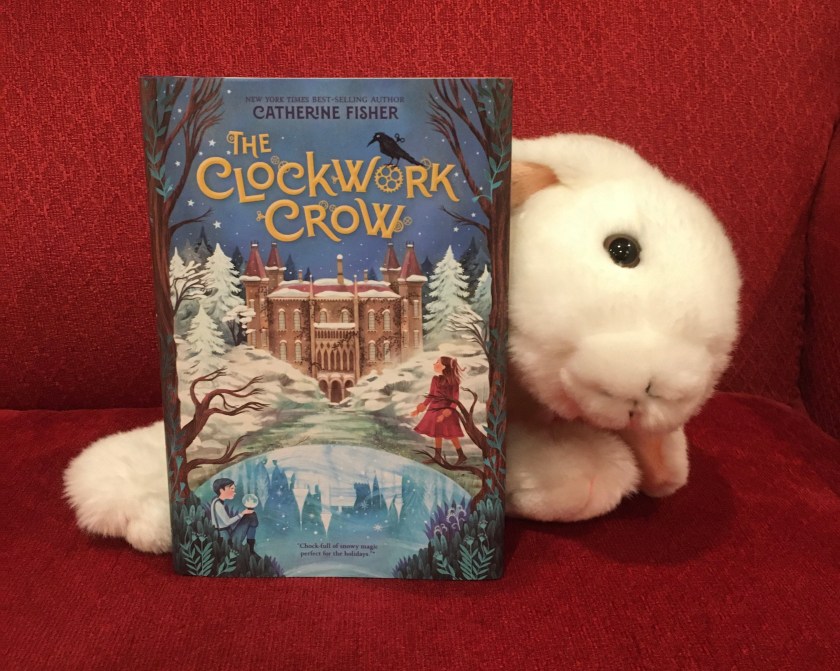
This week Marshmallow reviews The Clockwork Crow by Catherine Fisher.

Marshmallow reviews The Clockwork Crow by Catherine Fisher.

Marshmallow’s Quick Take: If you like books about mythology, and if you are open to being a little scared, then this might be the book for you. 

Marshmallow’s Summary (with Spoilers): Seren Rhys is an orphan and so has been alone without a family for her entire life. Now that is about to change. She is now going to go live in Wales with her godfather, Captain Jones, and his wife, Lady Mair, and their son, Tomos, in their large house called Plas-y-Fran. While she waits at the train station, a tall, thin man comes and asks her if she can hold on to a package he is carrying, and that if “They” get him, she should not, no matter what, leave it there. When he doesn’t come back, she takes the package with her to Plas-y-Fran.

When Seren arrives at Plas-y-Fran, there are not many people, and the people there are not very welcoming. Seren senses that something is wrong but cannot tell what. On top of this, Captain Jones has gone somewhere to do something, Lady Mair is in London, and Tomos is nowhere to be seen. No one is talking about him, but it is clear that he is not with his parents.

Life in Plas-y-Fran is not turning out to be what Seren imagined. She is alone again: she doesn’t have anyone to play with, and her godfather and his wife aren’t there. And there is something wrong: whenever she tries to learn anything about Tomos, she is scolded or the topic is changed. As she investigates more, she thinks that “They”, magical creatures that steal children from people who took “Their” land, took Tomos. Whatever happened, it is clear that Tomos is gone, and no one is looking for him anymore (because they already looked and couldn’t find him).

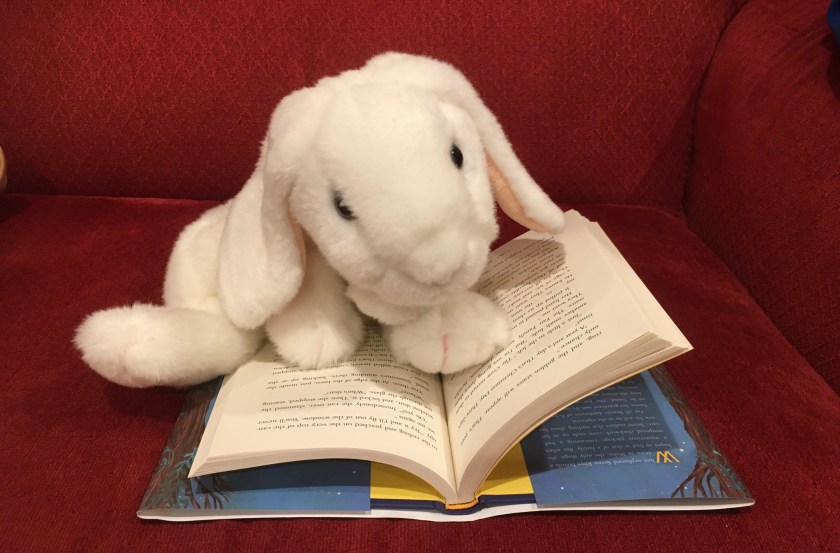
Marshmallow is reading The Clockwork Crow by Catherine Fisher.

Marshmallow’s Review: I think that this is a great book, but I must say that I think it is best for ages 9 or 10 and up. This is because, first of all, the plot might confuse younger bunnies, and second, this book is a bit creepy. I, myself, was kind of scared reading it. It would be especially scary for younger bunnies because the bad guys, the magical people or “faeries” who take children seem to do bad things to them, like taking their soul. This is one book I would NOT recommend reading at bedtime, or when it is dark, or any time close to night, as apparently that is when the bad guys (“faeries”) try to steal the children. In fact it might be a good idea for parents to read it first to see if they want their child to read it. 

The characters are very well developed, they are very realistic, and they are relatable. The author, Catherine Fisher, is very good at creating suspense at the climax of the book. I was not able to put the book down until I had finished it, thus the reason I read part of it at night, and I really do not recommend doing that.

The Clockwork Crow is part of a series, only the first book of a trilogy. However, I think that it also works well as a stand-alone book, as there isn’t really a cliffhanger at the end. Still I think I want to read the second book in the series just in case. But first of all, I look forward to rereading The Clockwork Crow

Marshmallow’s Rating: 100%.

Marshmallow rates The Clockwork Crow by Catherine Fisher 100%.

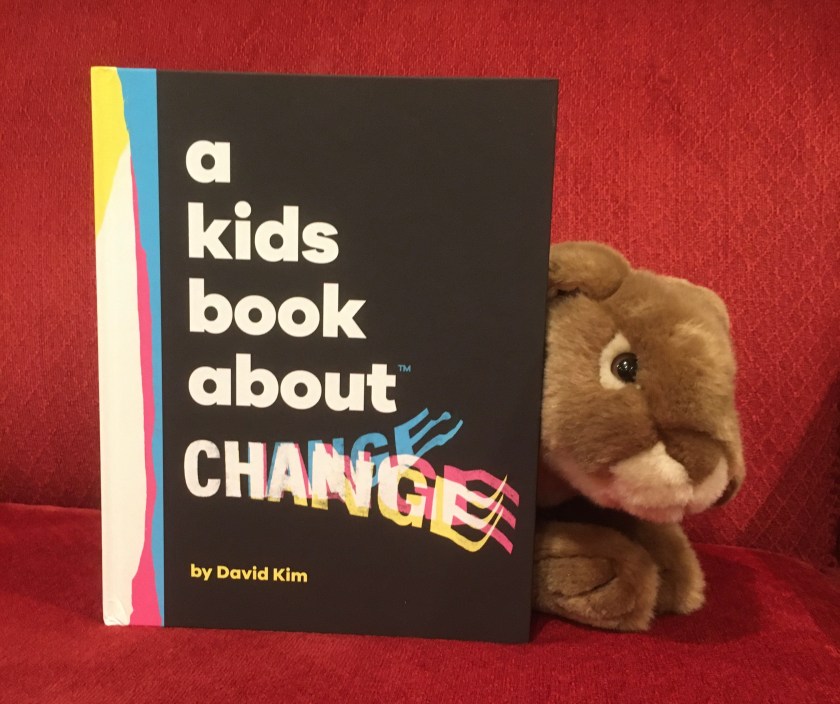
Caramel reviews A Kids Book About Change by David Kim

Today Caramel wanted to talk about a book he read in the A Kids Book About series: A Kids Book About Change by David Kim. As usual Sprinkles is taking notes and asking questions.

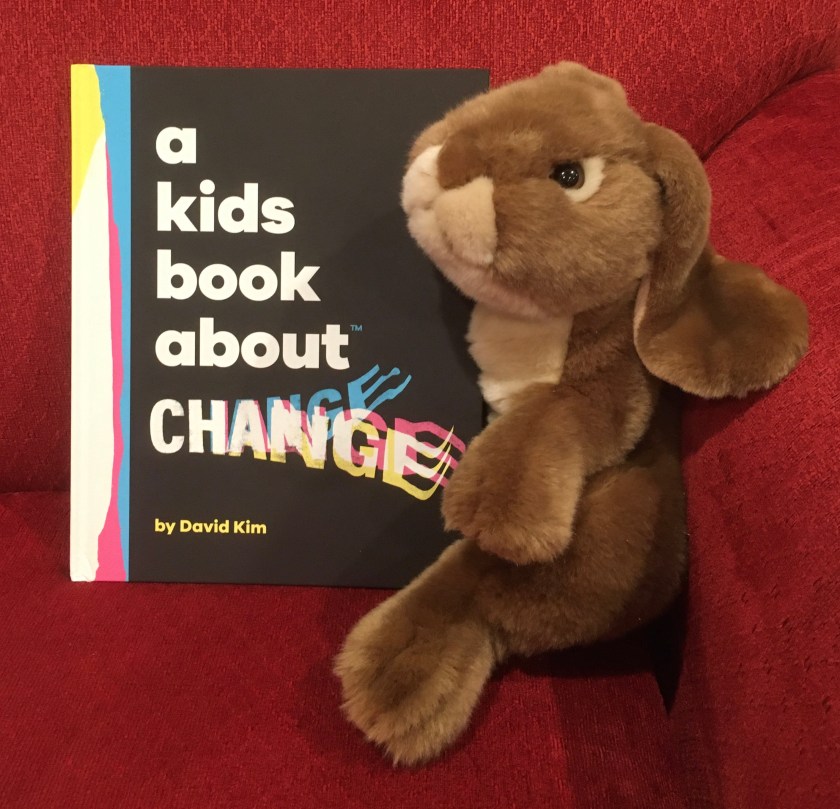
Caramel reviews A Kids Book About Change by David Kim.

Sprinkles: So Caramel, tell me about this book.

Caramel: This book is in the first person.

S: What do you mean?

C: The author says things like “I did blah blah”.

S: So yes, the author is talking about his own experiences and using the “I” pronoun. He is also using the “you” pronoun a lot, right?

C: Yes. He is talking to the reader, asking questions, like, “When a change happened were you scared or excited?” and so on.

S: So what is the book about then?

C: Well, it’s about change, it says so in the title. He talks about how things changed in his life when he was a kid.

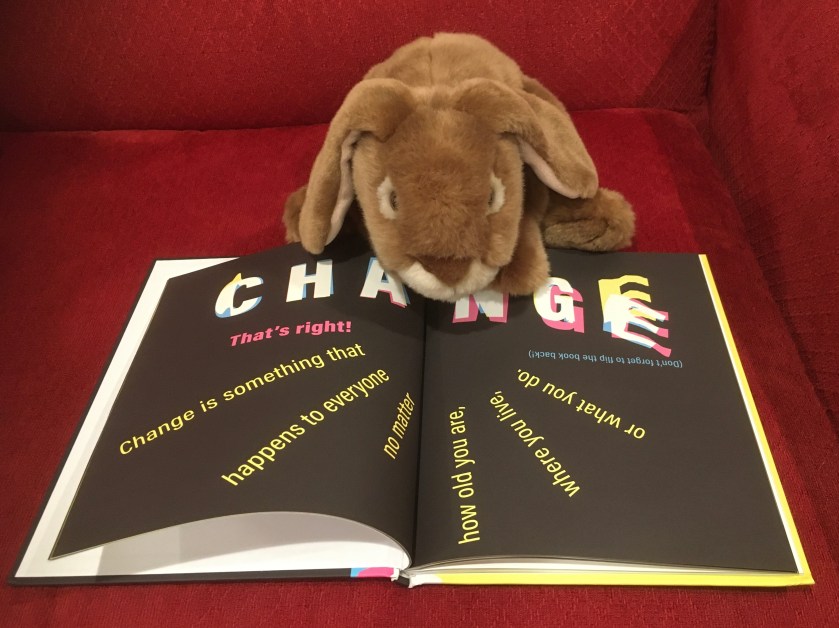
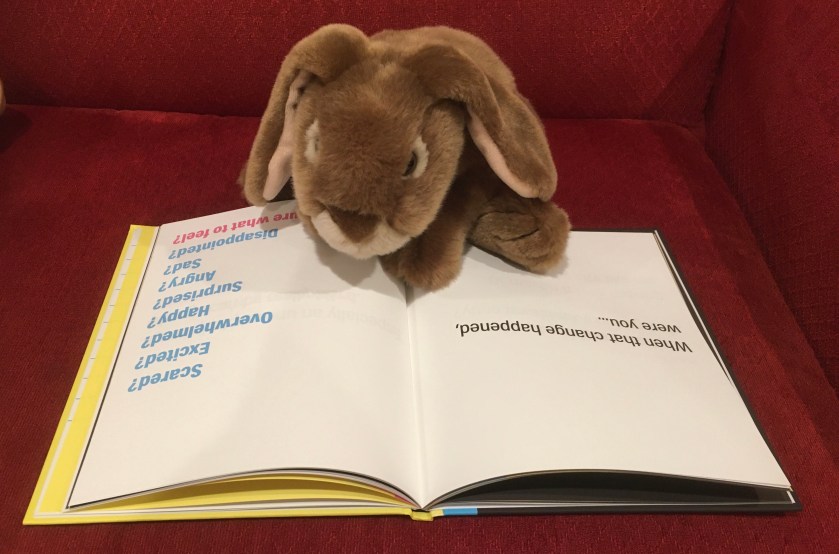
Caramel is reading A Kids Book About Change by David Kim.

S: And then he asks the reader to think about times when things changed for them, right? Can you think of a time when something changed in yours?

C: Sure. Every single day!

S: What do you mean?

C: In every bunny’s life something changes every single day.

S: For example…?

C: I read a different book almost every day.

S: But the book is about somewhat more important changes, I think.

C: Yes I guess so.

S: So can you think of a big change that affected you?

C: Being born.

S: I doubt you remember that though. So anything closer to today?

C: Distance learning. When the pandemic hit, my school (and it is also Marshmallow’s school) moved to distance learning.

S: Yes, that was a big change. So the author of the book wants you to think about this change. How did you feel? He lists a bunch of words for you to think about: Were you scared? excited? Sad?

Caramel is reading A Kids Book About Change by David Kim.

C: I was sad. I am still sad. I miss being with my friends in our school.

S: I know. It is very hard. What does the book suggest you do when you are going through a change?

C: We can “resist change” or “ignore change”, but the author wants us to “embrace change”.

S: Hmm, what does that mean?

C: I think it means don’t fight it, take it.

S: Hmm, so what does it mean in your case, about moving to distance learning?

C: Eventually I started liking some parts of it actually. My teacher makes things a lot of fun, and she sometimes gives us little gifts when we go to pick up materials. And we also start school a bit later, which is nice, I get to sleep more! I also can share some of my Lego things which I could not take to school before.

S: But you still miss your friends and your teacher, a lot, don’t you?

C: Yes.

S: But you have embraced this change, I think. You are trying to see the good things, and trying not to get stuck complaining about the bad things.

C: Yes, and we are doing this so we can all stay healthy.

S: So then, this seems to resonate with the moral of this book. What would you say that that is? What is the main message of this book?

C: Don’t fight against change…

S: … and I think another important message is to talk to people who will listen when you are worried about a change.

C: And in my case that was you Sprinkles.

S: Thank you for sharing with me Caramel. I think you are handling this big change as well as any little bunny can. Did reading this book make you think of anything else?

C: What do you mean?

S: How about impermanence?

C: No, not impermanence, again!

S: I know. You and Marshmallow always complain when we are listening to wakeup videos on our meditation app, and they turn out to be about impermanence. Here is one we liked, about the seventy-two microseasons in traditional Japanese calendar:

“Mindfulness and impermanence — There are 72 Japanese micro-seasons in a year, each lasting about 5 days. With names like “mist starts to linger” or “east wind melts the ice,” these micro-seasons root people in their surroundings and focus on the repeated patterns of nature’s cycles.” YouTube video from the Headspace channel.

C: They are all about impermanence! And especially Marshmallow does not like that.

S: Yes, but the point of those videos is almost the same as this book, right? That change is always happening, and to everyone?

C: Yes, in those videos they say: “an idea so important to mindfulness: impermanence, that is, that everything is changing in our minds, our bodies and the world around us.”

S: So change is the only constant, as an old philosopher once said. Then we’d better get used to it, and learn how to handle it well.

C: Impermanence is permanent!

S: Yes, that is true. So let us wrap this up then. What doesn’t change in our reviews is that I ask you to give me three words that describe this book.

C: Yes, you do always ask me that! Let me see. Colorful, because the letters are colorful.

S: It almost reminds me of The Book With No Pictures that you had reviewed before.

C: True. There are not many pictures in this one, either. There is only a picture of a bowl with some Korean food in it and a plate with a sandwich.

S: Yep, that is kind of why I thought of that book you reviewed before. Okay, you need to give me two more words…

C: Helpful… and impermanence!

S: I guess that last one needed to make it in, right? Okay, then. Let us call it done. What do you want to say to our readers as we end?

C: Stay tuned for more book bunnies reviews!

Caramel appreciated reading A Kids Book About Change by David Kim, and recommends it to all other little bunnies who might be facing changes in their lives (which is actually every single one of them, so yeah, this is a good book for all little bunnies...)
Caramel appreciated reading A Kids Book About Change by David Kim, and recommends it to all other little bunnies who might be facing changes in their lives (which is actually every single one of them, so yeah, this is a good book for all little bunnies…)

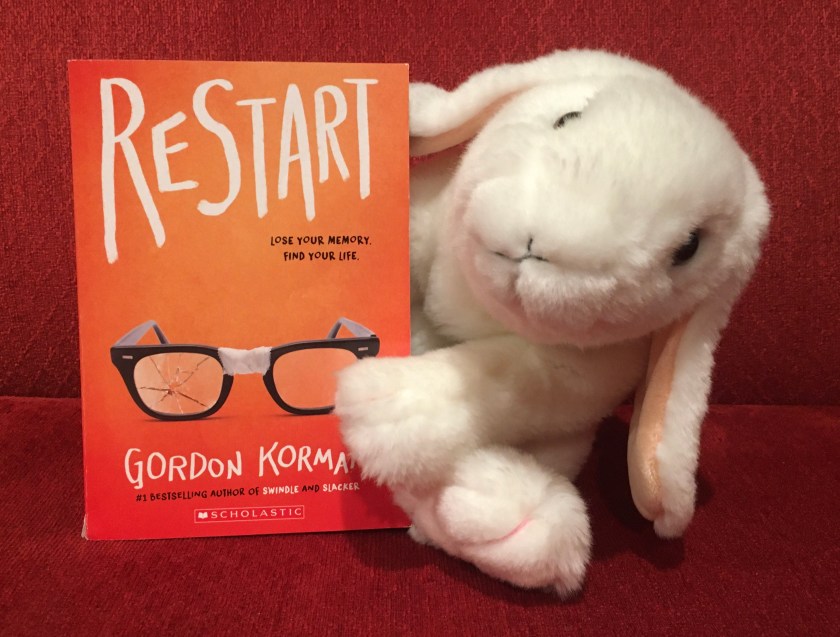
Marshmallow reviews Restart by Gordon Korman

Last year Marshmallow reviewed The Unteachables, a 2019 book by Gordon Korman. This week she reviews an earlier book by the same author: Restart, which was first published in 2017.

Marshmallow reviews Restart by Gordon Korman.

Marshmallow’s Quick Take: If you liked some of Gordon Korman’s other books, such as The Unteachables, or if you want to read books about kids having second chances with friends at school, then this might be the book for you.

Marshmallow’s Summary (with Spoilers): After falling off of the roof of his house, Chase Ambrose’s memory “just [goes] out the window.” He remembers how to do most things, like talking and walking, but he doesn’t know his family or his friends. He doesn’t even know his own name. All he remembers is a little blond girl in a blue dress. When he returns to his high school, it is clear that some people think of him as a hero, and some people try to avoid him as much as possible, as they are really scared of him.

At school, his “best friends” complain about the community service that they must do as a result of having damaged a school piano. When he learns this, Chase starts to wonder who he really was and who he is going to be. At lunch, he sits with a kid named Brandon who is very scared of him. At some point, Brandon realizes that Chase actually has amnesia. Many people don’t believe that Chase has amnesia at the beginning, either because they can’t believe it because they were very close to him so they do not want to believe it — this is true for Chase’s best friends, Bear and Aaron, who were two of Chase’s accomplices in their bullying of Joel Weber — or because they hate him so much and do not trust him — this is the case for Shoshanna Weber, Joel Weber’s twin sister.

Shoshanna hates Chase so much that when she sees him in Heaven on Ice, a local frozen yogurt place, she goes up to him and dumps her frozen yogurt on his head. In fact, the piano that Chase, Bear, and Aaron damaged by putting cherry bombs in it, was the same piano that Joel was playing on, resulting in him almost going into cardiac arrest. Chase eventually learns that Joel and Shoshanna’s parents had to move Joel to a different school because of Chase’s bullying. So Chase has to decide who he wants to be and who he was does not seem to be so great.

Marshmallow is reading Restart by Gordon Korman.

Marshmallow’s Review: I really enjoyed reading Restart. The characters are particularly realistic and they are also relatable. I do not know who my favorite character is, because I like all of them. The book is written from the perspectives of different characters. For example, one chapter might be told from Chase’s point of view and the next one might be coming from another person, for example, Brandon or Shoshanna.

Though Restart is a great book, I think that it is best for 8 and up, as the plot might be confusing for younger bunnies. The plot is not particularly complex, but younger bunnies might be confused especially if they don’t know what amnesia is. And the author uses a bad word.

I think the central theme of amnesia in Restart is interesting, though I personally wouldn’t want to have amnesia at all, and the author, Gordon Korman, does a very good job of telling it. I think it was kind of sad that Chase forgot everything about his family and friends, but when it turns out that he will get his memory back eventually, he turns out to become a nicer person, and gets new friends. In the end, in this book, it seemed like having amnesia turned out to be a good thing for him. (Again, for him.)

I think that bigger bunnies might also enjoy Restart, and I am trying to get Sprinkles to read it too. 

Marshmallow’s Rating: 95%.  

Marshmallow rates Restart by Gordon Korman 95%.