Marshmallow reviews You Know, Sex by Cory Silverberg and Fiona Smyth

Marshmallow is reading about growing up and this week she wanted to talk about a recent book she read about puberty, growing up, and sex written for young people who are around her age: You Know, Sex: Bodies, Gender, Puberty, and Other Things by Cory Silverberg and Fiona Smyth. Sprinkles is taking notes and asking questions.
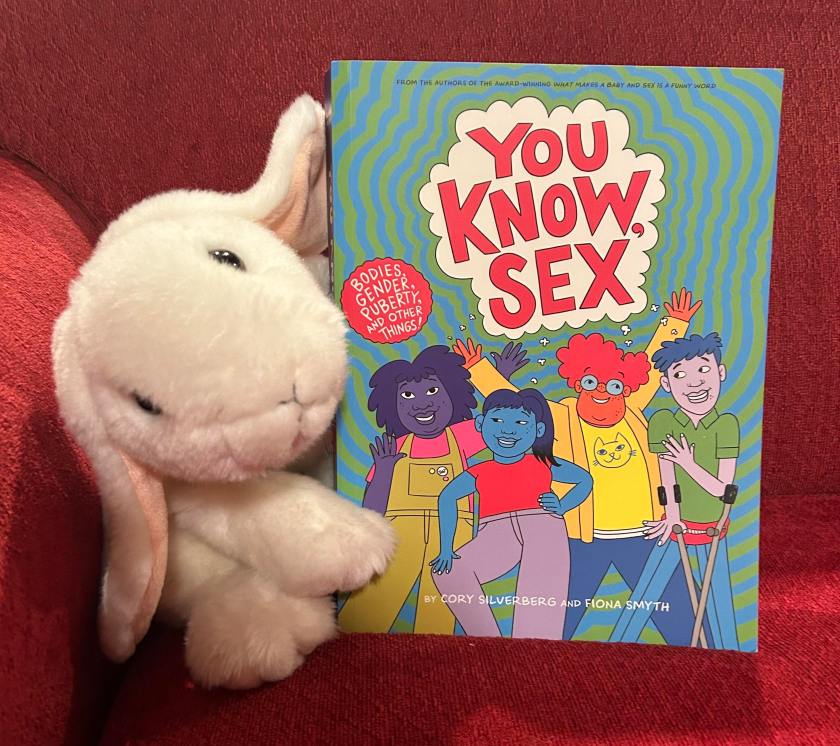
Marshmallow reviews You Know, Sex: Bodies, Gender, Puberty, and Other Things by Cory Silverberg and Fiona Smyth.

Sprinkles: First of all, as we begin this review, I want to thank you for reading this book, Marshmallow. After reviewing a collection of books about where babies come from, I had intended to write a post about a handful of books about puberty next. And one of the books I chose was this one, a huge, 432-page tome written in graphic novel form. But when I began to read it, I realized that my personal discomfort with the form (due to my poor eyesight) would mean I would probably not be able to give it its full due. So thank you for helping me out and checking the book out on your own.

Marshmallow: Well, that’s alright, Sprinkles. It was an interesting read.

S: That’s good to know. Can you tell us a bit about the specifics of the book?

M: Sure. You already said it is big, and has 432 pages. And you said it is written as a graphic novel.

S: The two who wrote this book also were the writer and the illustrator of What Makes A Baby?, one of the books I read for that review of books about where babies come from. And the pictures have the exact same style.

M: Yes, there are people with many different skin colors, like orange and purple and green and blue, and many different shapes and sizes.

S: Does that work well?

M: Yes, it is interesting. I think the people all look quite unique.

S: Well, I guess that makes the book more realistic, right? We are all quite different from one another.

M: Yes.

S: So tell us more about the book.

M: There are eleven chapters. They are titled: What is Sex? Bodies, Gender, Puberty, Feelings, Consent, Talking, Relationships, Reproduction, Touching, and Safety.

S: So the book covers a lot of ground.

M: Yup. It is also very contemporary.

S: What do you mean by that?

M: It has some ideas which I think are contemporary. They talk about gender identity and sexual orientation, transgender and non-binary people, and people having relationships with multiple partners.

S: The last one does not sound too contemporary to me. Polygamy and polyamory have been around for a long time. They have not always been accepted or legal though. I guess the authors are trying to teach the reader to be open minded about different arrangements.

M: I am not sure all readers would be too open to all of these ideas at this point.

S: I agree with that. Actually I too find some of these ideas challenging, especially polygamy. Though rabbits are typically not monogamous, according to Wikipedia, “scientific studies classify the human mating system as primarily monogamous, with the cultural practice of polygamy in the minority”. In any case, it is good to learn about how different people can relate with others.

M: Well, the book does not talk so much about polygamy as polyamory. But yes, it is good to learn about these different things.

Marshmallow is reading You Know, Sex: Bodies, Gender, Puberty, and Other Things by Cory Silverberg and Fiona Smyth.

S: They also talk about the changes a young bunny goes through in puberty, and more generally about biology and mechanics of sexual reproduction, right?

M: Well, yes. There are also very vivid depictions of things. They make an effort to show all kinds of things, so that the reader does not end up assuming that a body part has to look in one specific way. And they show people doing all kinds of different things together or alone.

S: I did look through the pages a lot, too, and I’d say there really are a lot of illustrations that some parents may not be comfortable with.

M: The self-discovery and self-exploration parts might also be kind of touchy topics for some folks, I’d imagine.

S: I did see a section on pornography, and that too is a very challenging topic. Perhaps grownup bunnies should read this book together with their young ones when they feel like the conversations about the various themes and issues that come up will be constructive.

M: I’d agree with that.

S: What were some of the other topics in the book? What topics did you find were most important?

M: They talk a lot about relationships, and I thought it was useful to learn about that. They talk about consent and power in relationships, and sometimes how people talk about being with people as a competition.

S: Yes, I did see that page about how sometimes people talk about “scoring” and the book instead encourages young people to think about “trust, respect, justice, joy, and choice”.

M: Yes, I did find those parts useful. All in all, it is an interesting and useful book, but I think grownups should probably check it out before sharing with their little ones.

S: Agreed. So what would you tell our readers as we wrap up this review?

M: Stay tuned for more amazing book bunny reviews!
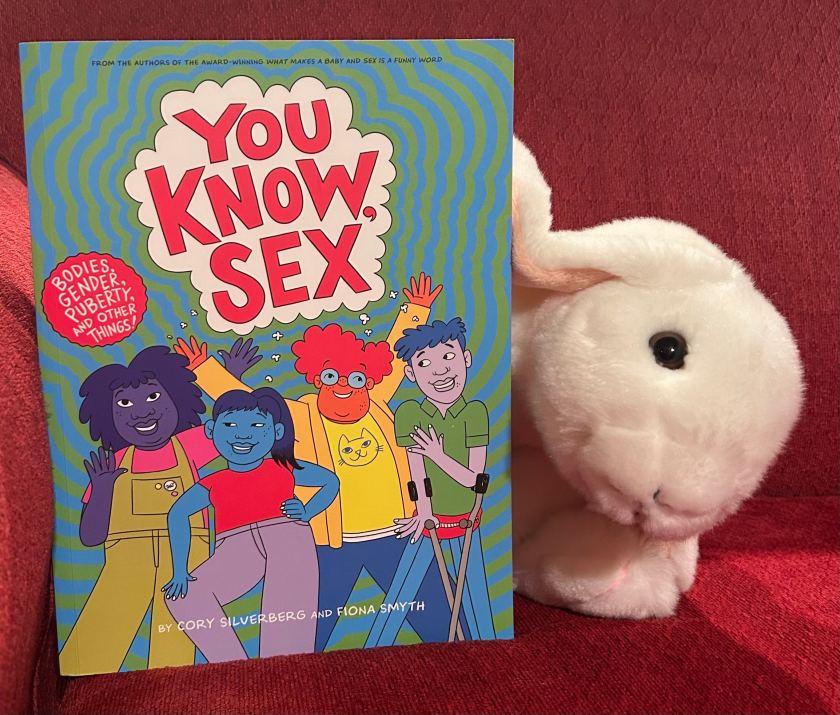
Marshmallow appreciated reading You Know, Sex: Bodies, Gender, Puberty, and Other Things by Cory Silverberg and Fiona Smyth, and she thinks all growing bunnies should read a book along these lines; she also suggests grownups check it out before sharing with their little ones.

Caramel reviews Robot by Roger Bridgman

Caramel loves everything about robots, and he loves books about facts. Today, therefore, he wanted to share with our readers a book on robots that he has read: Robot, written by Roger Bridgman. As usual, Sprinkles is taking notes and asking followup questions.

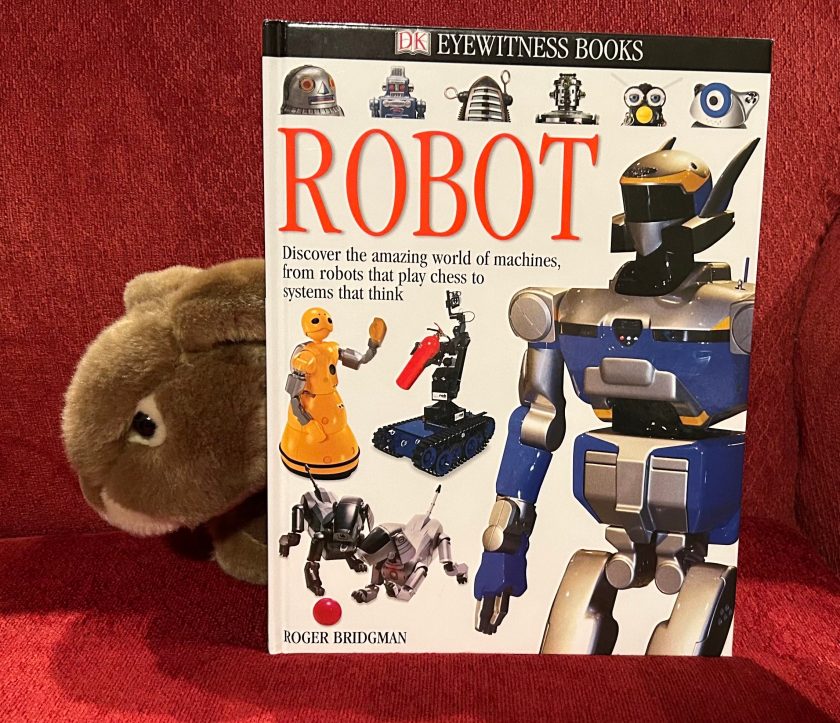
Caramel reviews Robot by Roger Bridgman.

Sprinkles: Caramel, here we are, ready to talk about a whole book about robots!

Caramel: Robots! Yay!

S: I know you like robots.

C: That’s an understatement. I love them!

S: I know! You reviewed a two-book series about a robot and her travels (The Wild Robot and The Wild Robot Escapes by Peter Brown), and you told us that then too. So let us get started. What do you want to tell us about this book?

C: This is a book about robots and tons of good facts about them.

S: Tell me one.

C: Let’s see. Did you know that there is a robot that looks like a shark and researchers use it to study sharks? It helps them “film sharks without disturbing their natural behavior”.

S: That’s pretty cool.

C: And did you know that they have a robot that can climb up on walls and actually walk on the ceiling?

S: That’s cool, too. Kind of like ants and bugs and flies.

C: Yes.

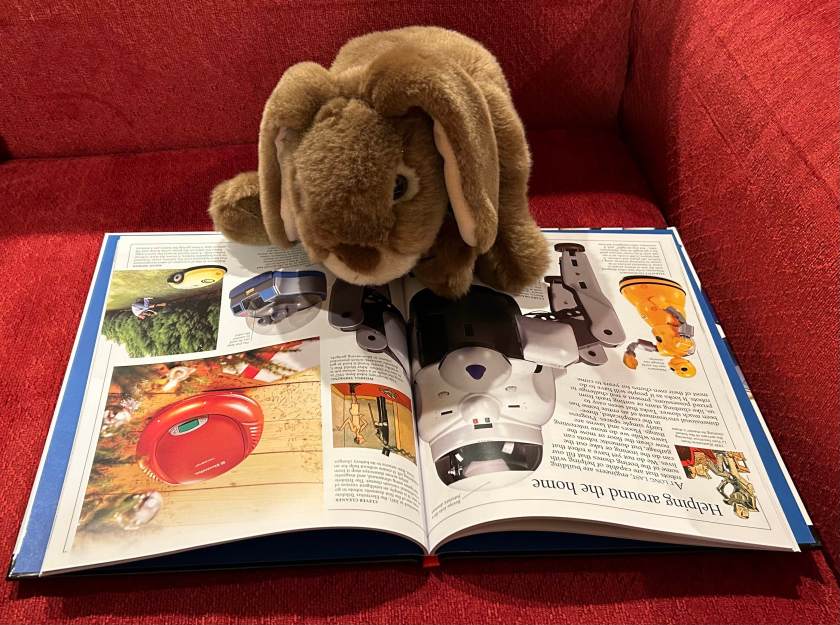
Caramel is reading Robot by Roger Bridgman and learning about robots that can help around the home.

S: So there are a lot of different types of robots in this book, right?

C: Yes. There are robots that can help around the home. Then there is a two-page spread on robots that move, one on robots that sense. And another on artificial intelligence. There is a section on robots in the industry and in space and under water.

S: That is pretty cool.

C: There is also a section on fictional robots and robots in art. Like C3PO from Star Wars. But they also have a mistake there! They put a picture of a Dalek, from the Doctor Who universe, but Dalek are not robots. They do say they are mutants, but they should not have put them in a book on robots!

S: I guess people make robot Dalek to play with, though, right?

C: Yes. I even saw a remote-control Dalek once. So maybe that is why they put a picture in the book.

S: I suppose that makes sense.

C: They also have sections on machines with feelings, which is kind of like that Wild Robot I read about.

S: That is interesting! I’ve always thought the feeling part is quite hard to implement. But also, this is a relatively old book, right? It was first published in 2004. A lot must have changed since then, I’d presume.

C: Yep, I think so. In fact we should probably put here that video about robots which behave like animals. That seemed really new!

S: I agree. That video is brand new, only two weeks old now. So here it is:

“Biophysicist Reacts to Animal Inspired Robotics”, YouTube.

C: I like this video a lot! We should see it again.

S: Sure. Let us finish the review first. I know you knew a lot about robots already. What did you learn from this book Caramel?

C: Well, you are right that I knew a lot of things about robots before, so I knew a lot of the things in the book. But I did not know about the shark-shaped robot. And there were just so many different robots! It is a pretty awesome book and I liked it very much.

S: I can see that! I have been observing you looking carefully at the pages of the book over and over again. You have read it all already, but you still enjoy looking at it.

C: Yes. I like robots! And I told you; these are cool robots!

S: That’s wonderful Caramel. So what three words would you use to describe this book?

C: Factful, colorful, and robotful. There are a lot of facts, a lot of colorful pictures, and lots of robots!

S: I cannot argue with that reasoning! Okay, then let us wrap this review up. What do you want to tell our readers?

C: Stay tuned for more book bunny reviews!

Caramel loved reading and reviewing Robot by Roger Bridgman, and he looks forward to learning more and more about robots as he grows up.

Marshmallow reviews Great Expectations by Charles Dickens

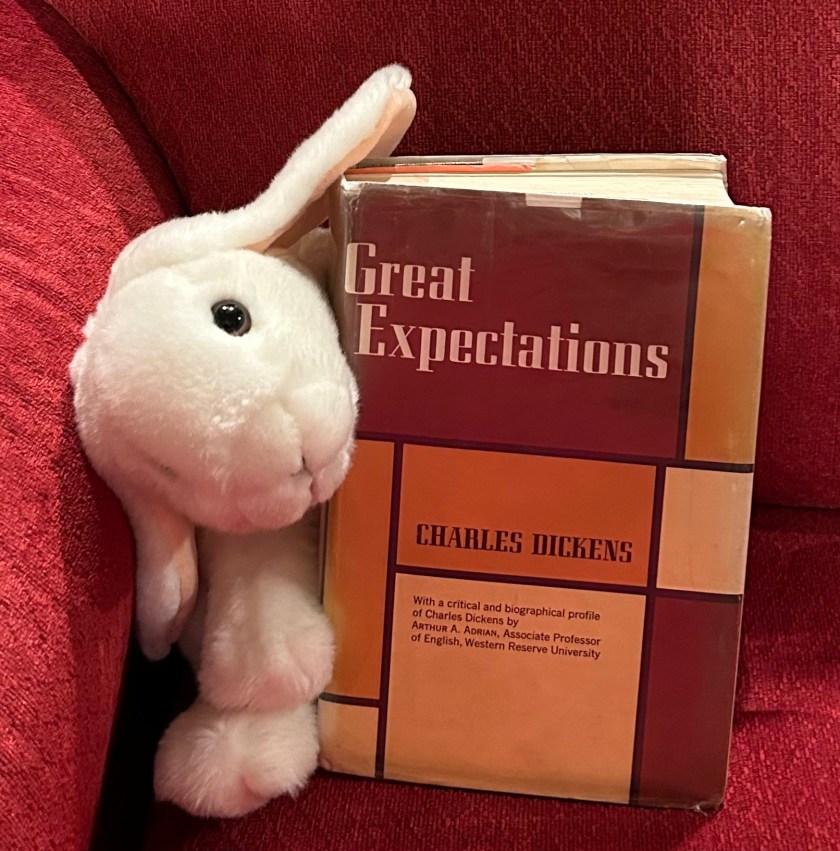
Marshmallow found a copy of a Charles Dickens novel, Great Expectations, in her classroom library and decided to check it out. Just like many other novels by Dickens, Great Expectations was first published as a serial, weekly from 1860 to 1861, and then came out as a single three-volume book in 1861. Below Marshmallow shares her thoughts on this classic.

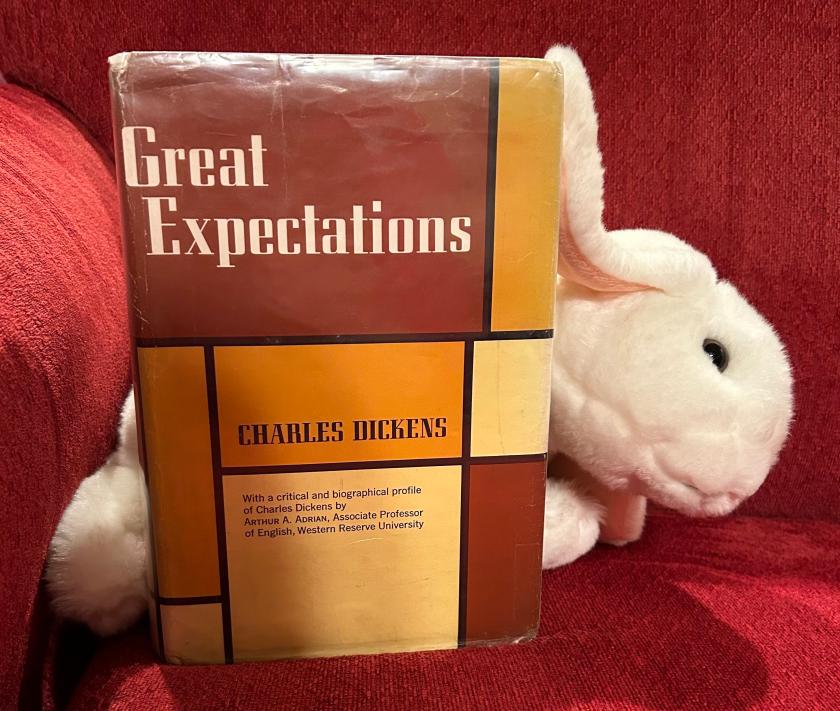
Marshmallow reviews Great Expectations by Charles Dickens.

Marshmallow’s Quick Take: If you like books that are set in past time periods or if you enjoy coming-of-age stories, and if you are up for a really long read, then this might be the book for you. 

Marshmallow’s Summary (with Spoilers): Philip Pirrip (nicknamed Pip) is an orphan in the mid-early 19th century in Kent, England. His parents are dead but his much older sister (Georgiana Maria, though she is always referred to as Mrs. Joe) takes care of him. Unfortunately, she disciplines him very harshly, which was the norm back then. She is married to a blacksmith, Joe Gargery, who is kind and whom Pip views as a father figure. The story starts when Pip is around seven and he is visiting the graves of his parents and other siblings. There he unexpectedly meets an escaped convict who threatens to kill him unless he brings food and tools. Pip does so, but then soldiers arrive and ask Joe to mend some shackles. Pip comes with the soldiers and they find the convict fighting with another convict. The first one says that he stole the things that he ordered Pip to steal.

After this bizarre event, the narration moves on and we skip ahead a few years. In a couple years, a rich elderly woman is looking for a young boy to come visit her. Pip is chosen and so he starts going to her house every now and then. This woman is Miss Havisham who has an adopted daughter named Estella. Miss Havisham is a strange woman: she was supposed to be married, but when her fiancé left her at the altar, she froze everything where it was. She was still wearing her wedding dress and the clocks were all stopped to the time she learned she was abandoned. Miss Havisham raised Estella to be her revenge on the male part of the human species. Estella was raised to be heartless and break mens’ hearts. And Pip was to be her first victim. Pip falls in love with Estelle, leading to a great heartbreak throughout Pip’s life. 

Many years later, when Pip has been training to be a blacksmith, like Joe, he is given money to allow him to become a gentleman and he travels to London. It is presumed that Miss Havisham was the one who gave him the money. Pip’s life transforms many times into different things. This book follows his life through most of it from a young age to his older years. 

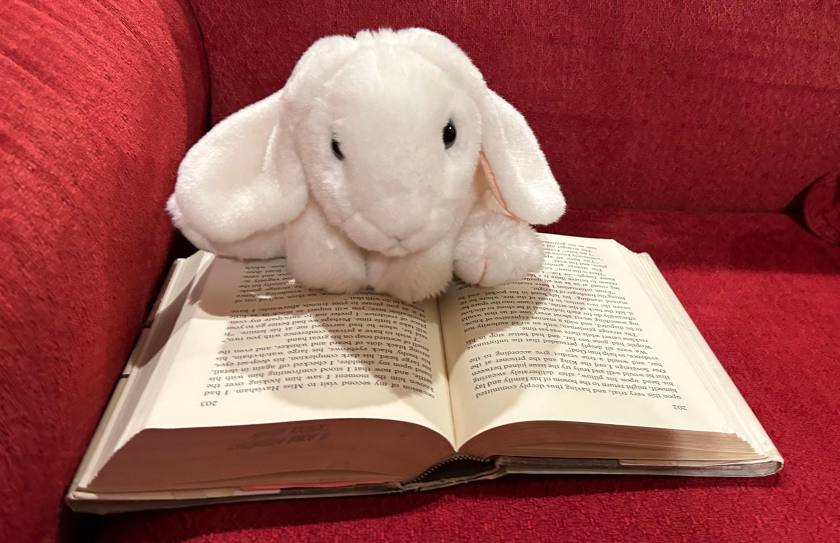
Marshmallow is reading Great Expectations by Charles Dickens.

Marshmallow’s Review: Great Expectations is a highly regarded book by the famous author Charles Dickens. I found it fascinating. I thought it was remarkable how it covered almost the entire life of one person. I also appreciated that there were so many twists and turns. I honestly did not expect what happened at the end. 

However, I would say that it is very difficult to read since it was written in a different time period where people wrote differently. Secondly, it is very complicated because there are so many characters and so many things happen to them at different times. I understood most of the book when I read it, but I missed some things because of the confusing language. I had to go back and reread and think things through a bit.

All in all I am glad to have read Great Expectations. It was my first Dickens book, and it is amazing to me that he wrote it and published it weekly first. It is such a big project! And there are so many things to keep track of because it is Pip’s entire life!

Marshmallow’s Rating: 95%.

Marshmallow rates Great Expectations by Charles Dickens 95%.

Caramel reviews Somebody to Love by Valerie June

The book bunnies’ household is very rarely without music, but the bunnies have not really reviewed too many books that engage with it. The one main exception is Change Sings: A Children’s Anthem written by poet Amanda Gorman and illustrated by Loren Long, which was reviewed by Caramel about a year ago, and involved music at its heart. Today Caramel reviews another picture book, Somebody to Love, written in 2022 by the singer Valerie June and illustrated by Marcela Avelar, which has music all throughout.

The book bunnies received this book as a review copy.

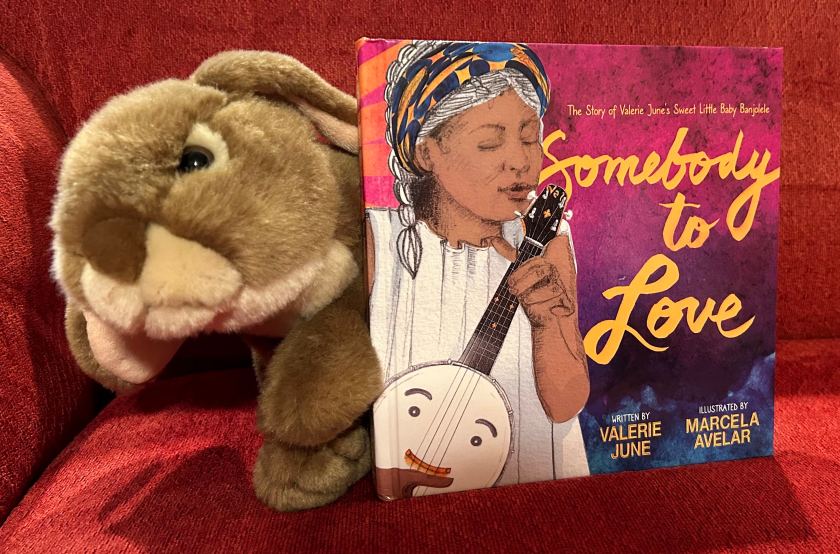
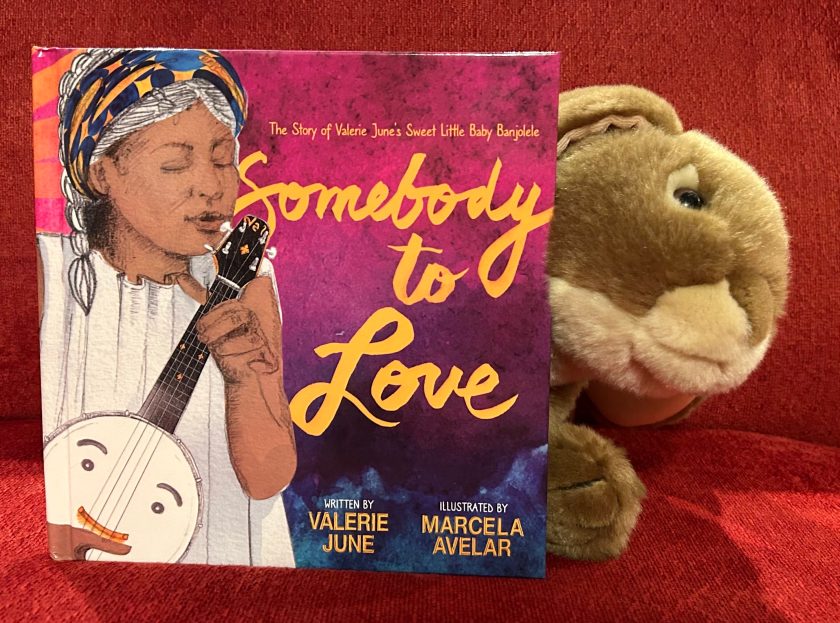
Caramel reviews Somebody to Love written by Valerie June and illustrated by Marcela Avelar.

Sprinkles: Caramel, here we are. Yet again, talking about a new book. What do you want to tell us about this one?

Caramel: This is a book about a banjolele.

S: What’s that?

C: It’s like a ukulele mixed with a banjo. It is a small musical instrument with four strings. And there is a girl in the book named Valerie June who is given one of these instruments.

S: So this is the author, right?

C: I think so. She is a singer and she wrote this book about a song she sings with her banjolele called “Somebody to Love”. Can we put a video of her singing her song here?

S: Sure Caramel. Here it is:

Valerie June sings “Somebody to Love” (2013, YouTube).

S: Do you like the song Caramel?

C: Yes she has a beautiful voice.

S: How about the banjolele?

C: Yes. It has a very distinctive voice.

S: I know you are a lot more musical than me Caramel. But even I could appreciate her voice. And the single instrument makes the piece focus a lot more on her voice I think. But do you think she wrote the book to just have more people learn about her and her song?

C: Maybe. Who knows? But I think she wrote it because she wanted to tell people the story of her banjolele.

S: How so?

C: In the book Valerie takes the banjolele to a park to play music with other people. But the banjolele is too weak and cannot sing a whole song. But technically she should be able to strum and make the sounds she wants so it cannot be the banjolele who is not able to sing so I am not sure I understand.

S: Well, I think it is a bit more symbolic than that.

C: I guess that makes a lot more sense. But what could she mean by the banjolele not being able to sing long enough? Only humans and birds can sing.

S: Well, tell us what happens when the banjolele cannot sing. Maybe that will help us figure it out.

C: She gets embarrassed and puts it away for a very very long time.

S: But then …

C: She finds it again and somehow it plays then and a whole song too. And finally Valerie and the banjolele can sing together.

S: And that is the “Somebody to Love” song, right?

C: Yep.

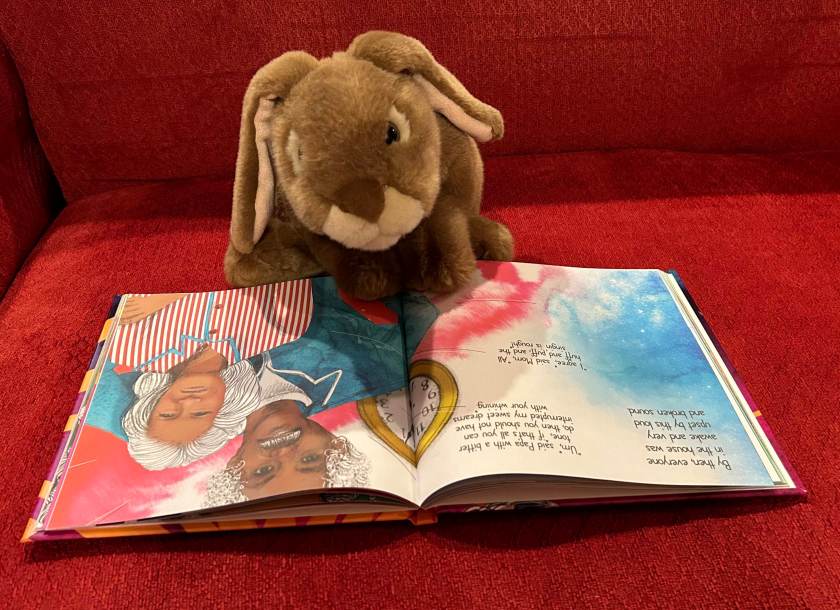
Caramel is reading Somebody to Love written by Valerie June and illustrated by Marcela Avelar.

S: So the banjolele had a dream, a song to sing, but at the beginning it could not live up to its dreams. And nobody stood up for it, everyone made fun of it. Right?

C: Yes, but in the end, Valerie gave it another chance and they could sing together.

S: So what happened to the dream of the banjolele?

C: It became a reality. The banjolele became famous. And now people listen to it and Valerie sing together.

S: So what do you think the book is really about?

C: Dreams! You can have dreams and people do not always support you, but you can still hold on to them!

S: Yes, I think so!

C: Hmm, and it makes a lot more sense now, because at the end, there is a whole page listing proverbs about dreams from many different places. My favorite is the Mexican one, which is Soñar no cuesta nada. It means dreams don’t cost a thing.

S: I like that!

C: Yes. So dreaming does not cost you anything, so you can have as many dreams as you want, and some of them will come true as long as you believe in them.

S: I like that too!

C: At the end of the book there is a part where the author talks to the reader about Martin Luther King Jr. and his “I have a dream” speech.

S: What do you know about that speech?

C: I know it moves a lot of people and people should have listened to him more. But he does talk about dreaming for a better America.

S: And Valerie June says that as a black woman artist she learned the power of dreams from him. So she wrote this book to tell young bunnies all about having dreams and believing in them.

C: I think I understand the book much better now.

S: I think we both do. So how would you describe the book in three words?

C: Colorful, musical, and dreamy.

S: I like those words Caramel! So I think this is a good time to wrap up this review. What do you want to tell our readers?

C: Stay tuned for more book bunny reviews!

Caramel enjoyed reading Somebody to Love written by Valerie June and illustrated by Marcela Avelar and listening to the song with the same name. He recommends the book to all little bunnies who have a dream but are scared they won't be able to achieve it.
Caramel enjoyed reading Somebody to Love written by Valerie June and illustrated by Marcela Avelar and listening to the song with the same name. He recommends the book to all little bunnies who have a dream but are scared they won’t be able to achieve it.