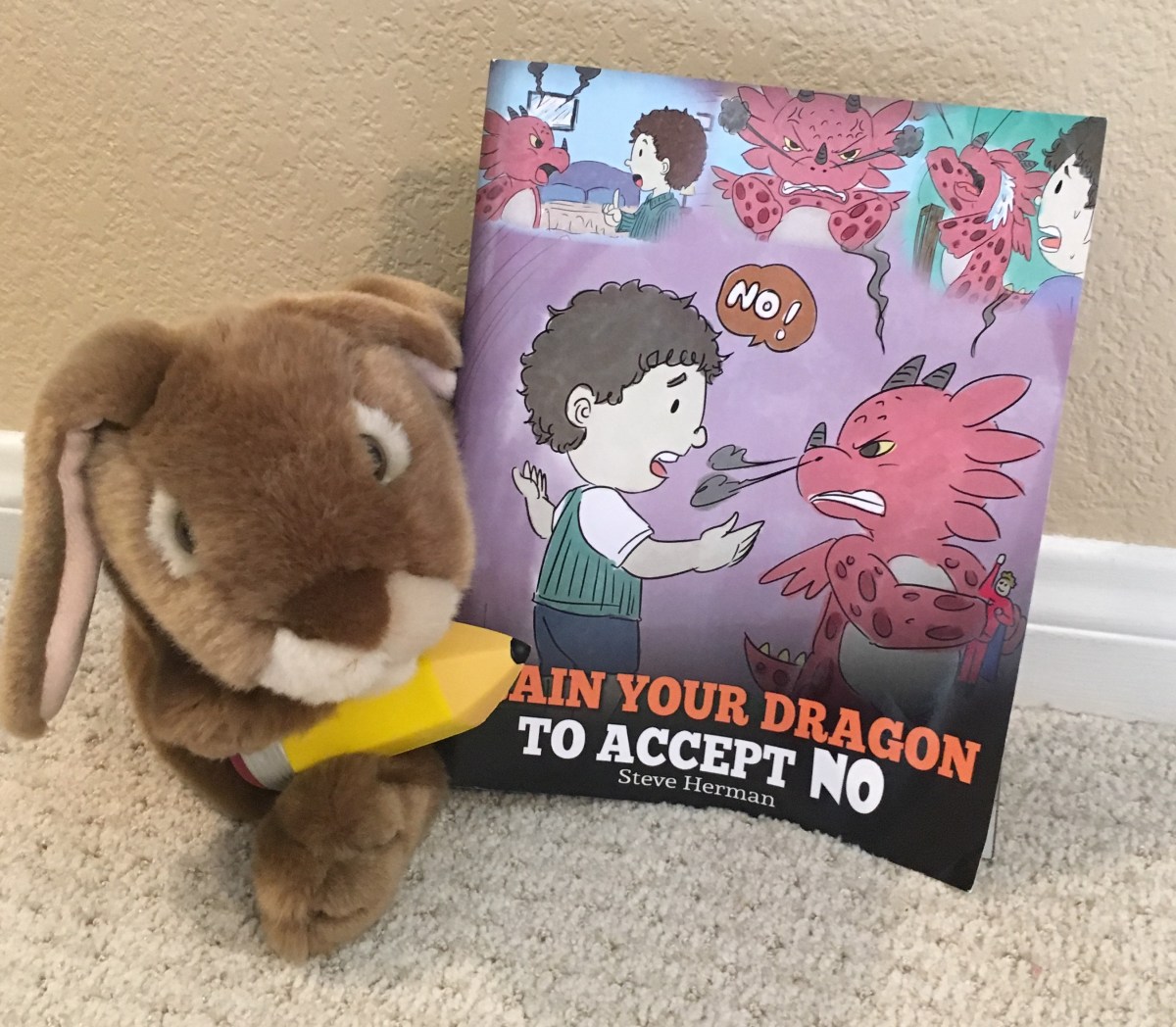
Caramel reviews Train Your Dragon To Accept NO by Steve Herman

Both of the younger book bunnies have been enjoying the How To Train Your Dragon series; Marshmallow even reviewed one of her favorites in the book series: How to Steal A Dragon’s Sword (Book 9) by Cressida Cowell. Below Caramel shares his thoughts about a book that initially got into our shopping cart because it had the “train your dragon” phrase in its title, but then we read it and enjoyed it (especially the illustrations) immensely: Train Your Dragon To Accept NO, by Steve Herman. As usual Sprinkles is taking notes and asking followup questions as needed.
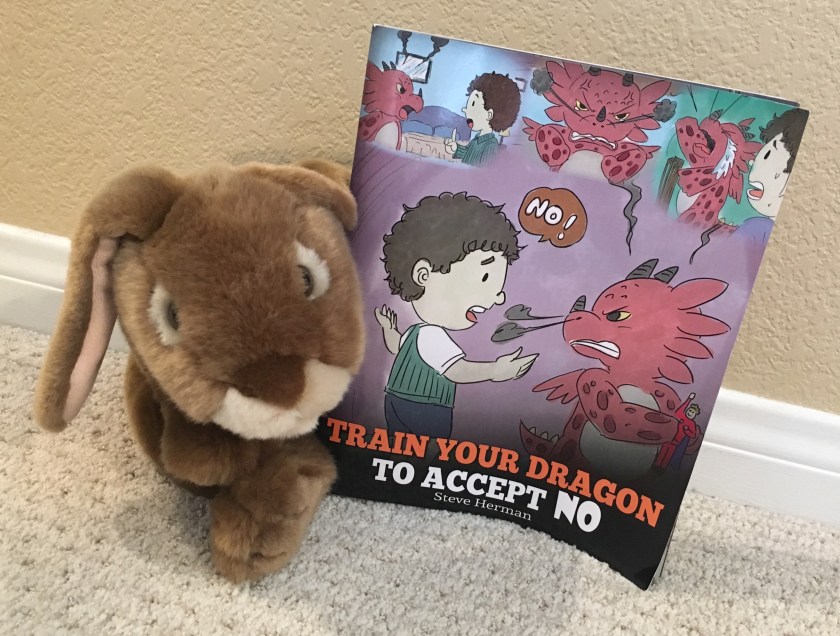
Caramel reviews Train Your Dragon To Accept NO by Steve Herman.

Sprinkles: So Caramel, what do you want to tell us about this book?

Caramel: The book is about a boy named Drew and his pet dragon Diggory Doo.

S: So what do they do, Drew and Diggory Doo?

C: Drew teaches Diggory Doo how to stop his anger sometimes.
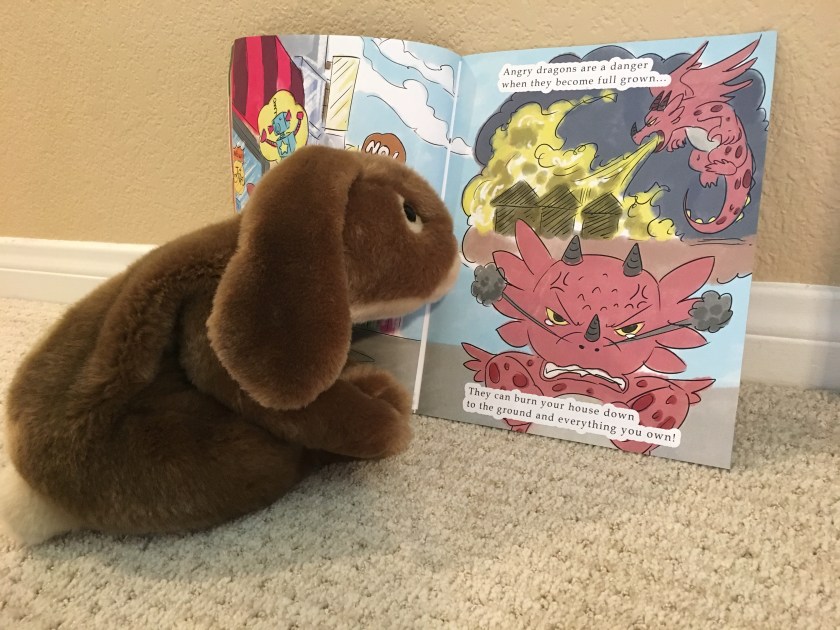
Caramel is looking at one of his favorite pages in Train Your Dragon to Accept NO by Steve Herman, where we learn about what happens when a dragon gets angry and cannot control his emotions.

S: Hmm, that sounds promising. Tell me more.

C: Diggory Doo gets angry when you tell him no. Like once he wanted chocolate pie at dinner time. And Drew said no. So Diggory Doo got super duper angry.

S: Why did he get angry?

C: He really wanted chocolate pie. I would too. Wouldn’t you?

S: Hmm, I like chocolate a lot but I don’t love pie. So I’m not so sure. But apparently Diggory Doo likes chocolate pie. Why did Drew say no to him?

C: Hmm, let me see. Ok, here is what Drew says:

“If you’d taken just a minute
and not behaved your worst,
You’d know that you could have
your pie-just eat your dinner first!”

So Drew said no, because he first had to eat his dinner, so he had to eat the healthy stuff first.

S: This sounds familiar. Sometimes you want to eat things that I want you to postpone until after dinner, right?

C: Yes, sometimes I want to eat grapes and you tell me to eat my mac and cheese first.

S: And do you like that?

C: No, I don’t, not at all.

S: So do you scream at me?

C: Yes, sometimes.

S: And how does that work out for you?

C: Terrible! I don’t get any grapes then.

S: Hmm, so what is the point of the book then?

C: To teach little dragons, and little bunnies too, to accept no.

S: But it’s not that easy, is it?

C: Nope.

S: Does Drew have some suggestions for Diggory Doo when he hears the no and is about to get angry?

C: Yes. Here it is:

“Before you throw a tantrum,
take a breath and count to ten….
… Then slowly, slowly breathe it out,
then do that once again.”

S: That sounds like a good idea. So when you are about to get really angry because someone said no to you, you are supposed to stop and take a deep breath and count to ten. And then breathe it out, and do this whole breathing thing again. Do you think it might work?

C: Hmm, I don’t know. Next time I get mad, I’m going to try it.

S: That sounds like a plan. And a good place to wrap up our review.

C: Yes! Let me say my usual words: Stay tuned for more reviews from the Book Bunnies!
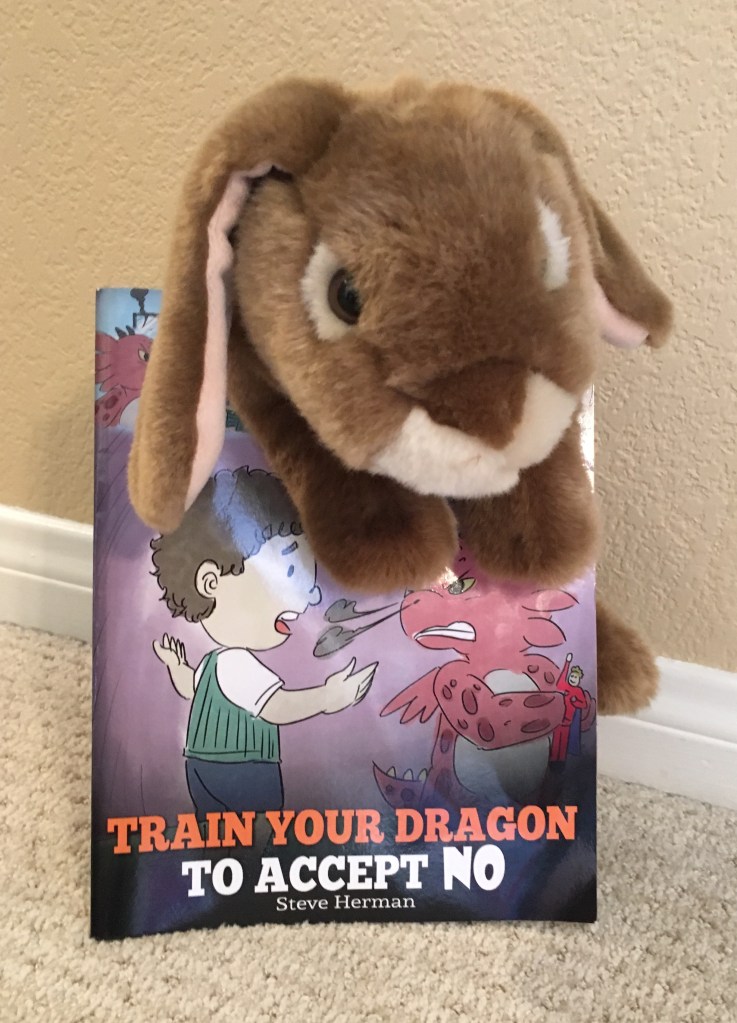
Caramel enjoyed reading Train Your Dragon To Accept NO by Steve Herman and thinks he might actually try the advice given there about calming down when someone says no.

Marshmallow reviews Make Your Own Optical Illusions by Clive Gifford and Rob Ives

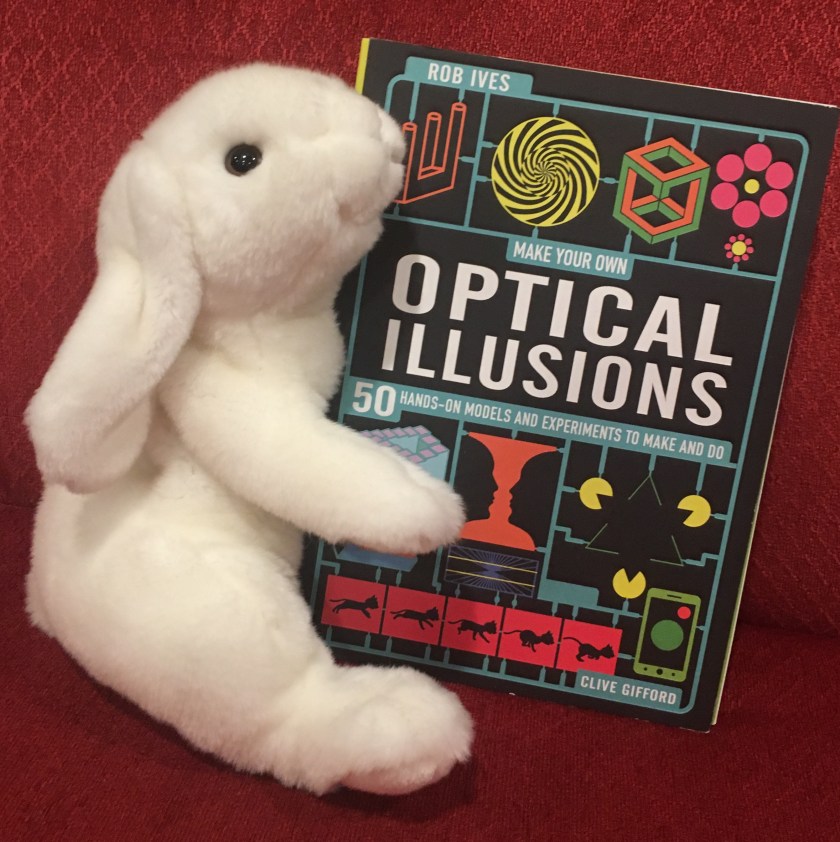
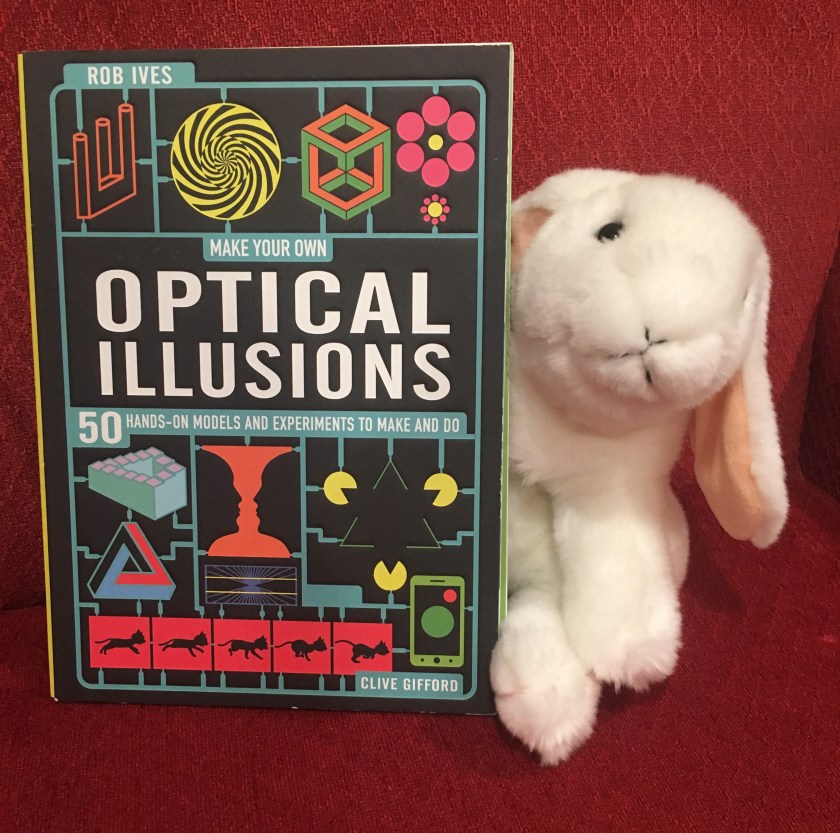
This week Marshmallow reviews a neat activity book written by Clive Gifford (text) and Rob Ives (paper engineering): Make Your Own Optical Illusions: 50 Hands-On Models and Experiment to Make and Do.

Marshmallow reviews Make Your Own Optical Illusions: 50 Hands-On Models and Experiment to Make and Do by Clive Gifford and Rob Ives.

Marshmallow’s quick take: If you like books that are about optical illusions and how they work, then this might be the book for you.  

Marshmallow’s Overview: This book is about optical illusions and what makes them so convincing that they fool your brain and eyes in to thinking that something looks different than it actually is.

There is a large variety of optical illusions in the book. At the beginning we learn about literal illusions, cognitive illusions, and physiological illusions.

“Literal illusions simply use one type of object to trick your brain into thinking it is viewing a different object or scene. Cognitive illusions occur because of the way your brain judges and decides on the information sent to it by the eyes. Physiological illusions are designed to exploit the limits of your body and vision system.”

This page from Arizona State University, written by Abigail Howell, explains the difference between these three, in case you want to learn more. There are also neat examples of each in the book.

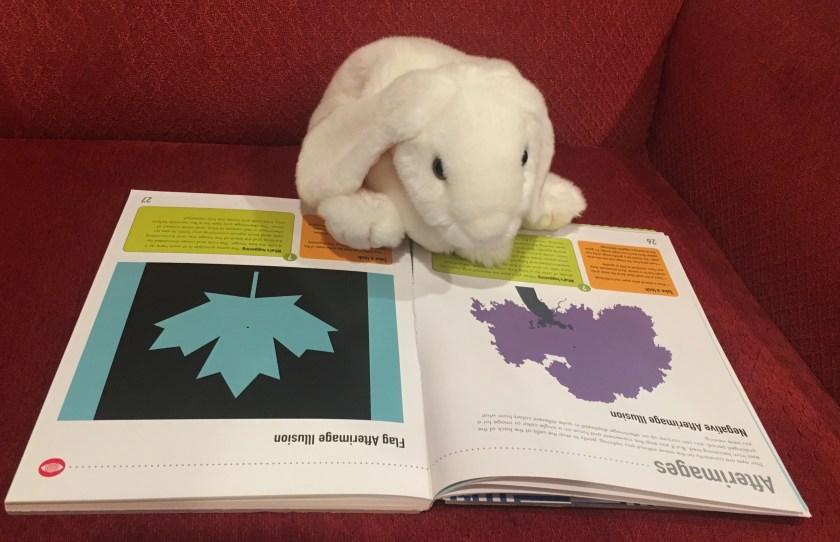
One of my favorite optical illusions in the book is a physiological illusion called Afterimages. This is where you stare at an image, for example a black light bulb, and then you look at a piece of paper that is white and then you see a glowing light bulb that looks like the light bulb you saw in the book but now the bulb you see is glowing! The reason that this happens is because, according to the book, your special light-detecting cells get tired after staring at an image for a long time, and they send a weak signal so that your brain reads it as the opposite color that the image actually is, thus making the light bulb look like it is glowing. 

Marshmallow is reading up on afterimages, a special kind of physiological illusion.

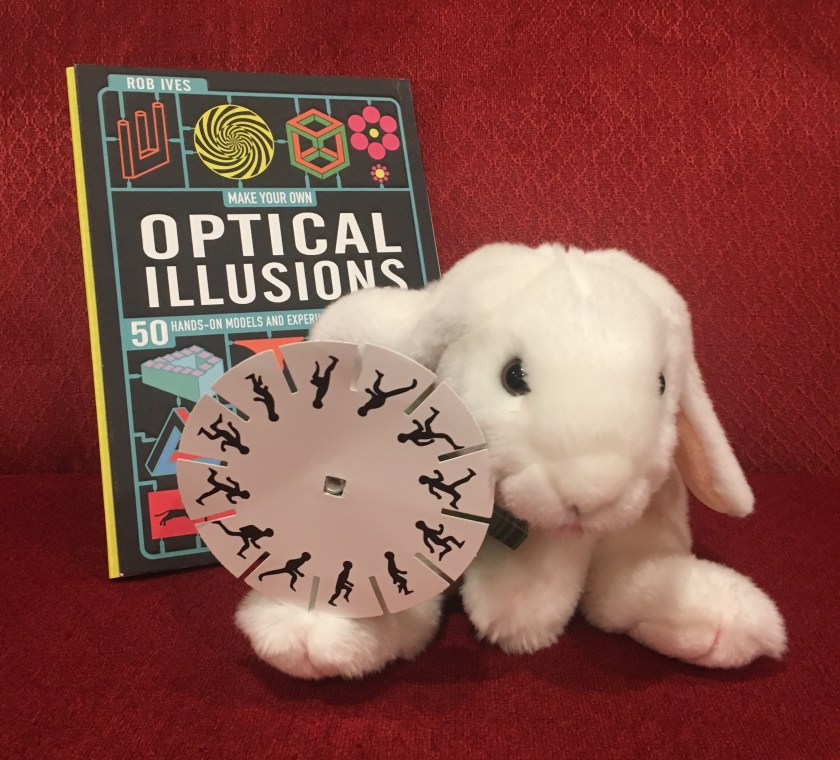
The book has a total of 64 colorful pages of text and examples of illusions. Then there are twenty pages in the back that have cardboard cutouts. You can “press them out” and they come out easily, so you can build your own optical illusions, little hand-held thingies that you can use to fool or trick your brain and eyes into thinking in strange ways. Some of these hands-on projects are things that you spin and then you see a person running. Some of the papers that you can press out are one that are to help you see why one of the optical illusions work.

Marshmallow is proudly showing one of the optical illusion toys she made using the cutouts from Make Your Own Optical Illusions: 50 Hands-On Models and Experiment to Make and Do.

Marshmallow’s Review: This is a great book which contains many great optical illusions that will definitely fool you. Some are optical illusions that you can build, and some are ones that make your eyes see two images in one picture. The explanations given to explain what is happening in your brain when you get fooled are expertly written so that anyone can understand why you see something that is not on the page.

The authors, Rob Ives and Clive Gifford, have cooked up some great illusions that are really interesting. When these optical illusions are mixed together, they make a mind-boggling illusion book.

This is a hands-on book that includes projects that you can put together by yourself and then amaze your mind. I have only made some of the projects at this point and I am excited to make some more.

Overall Make Your Own Optical Illusions is a great book for all bunnies, especially those who like to play with their minds and hands (or paws?).      

Marshmallow’s rating: 95%

Marshmallow rates Make Your Own Optical Illusions: 50 Hands-On Models and Experiment to Make and Do by Clive Gifford and Rob Ives 95%.

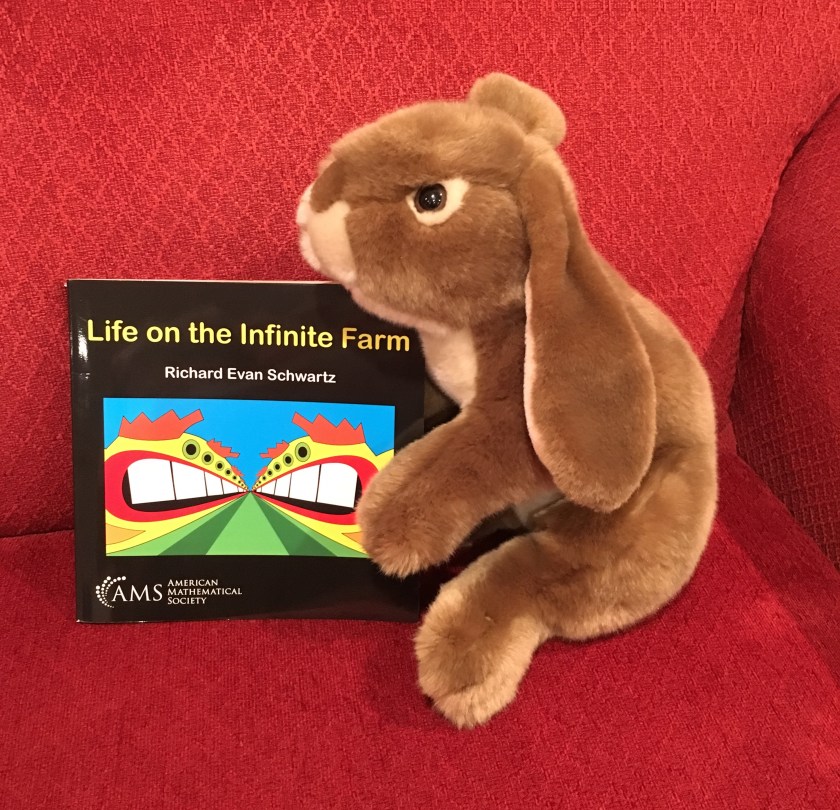
Caramel reviews Life on the Infinite Farm by Richard Evan Schwartz

Caramel has been reading a very colorful math book recently. Below he talks about what he thinks about this book, Life on the Infinite Farm by Richard Evan Schwartz. As usual Sprinkles is taking notes and asking followup questions.

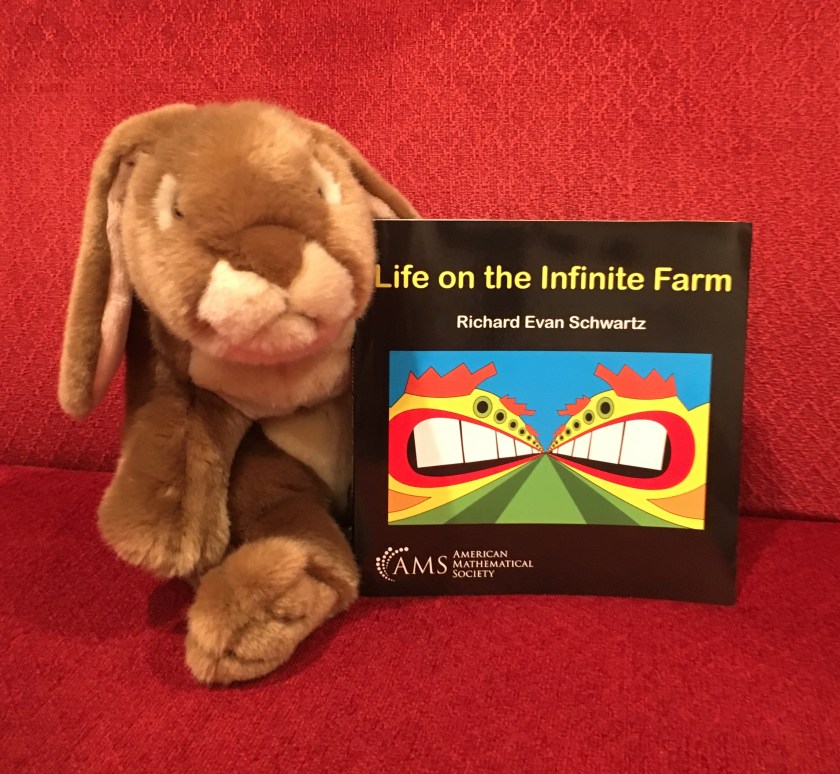
Caramel reviews Life on the Infinite Farm by Richard Evan Schwartz.

Sprinkles: So Caramel, what is this book about?

Caramel: It’s about infinite stuff. There are infinite animals.

S: Do you mean to say there are infinitely many animals?

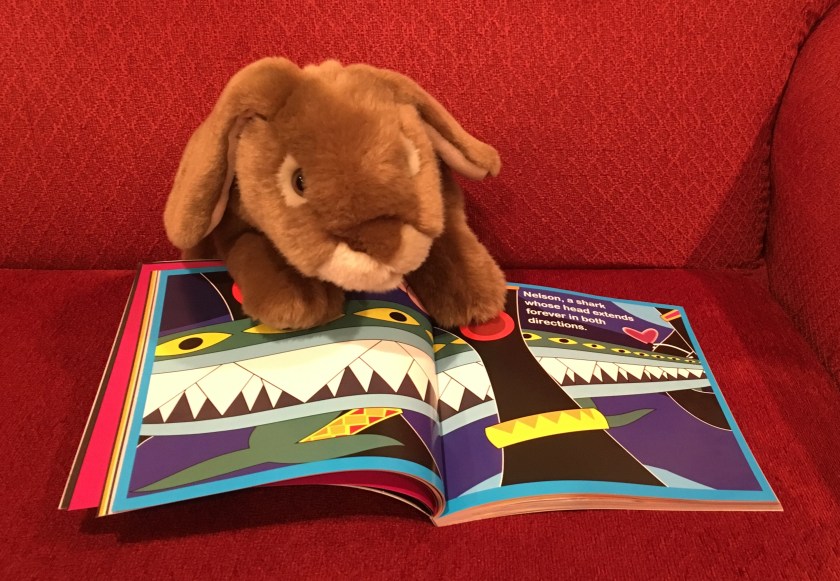
C: No. I mean there are animals with infinitely many things, like infinitely many feet. There is a cow with infinitely many feet, and she loves shoes! There’s also an infinite sheep, and an infinite donkey, and an infinite gopher. Oh and there’s an infinite shark named Nelson. Guess what he can do?

S: Hmm, I don’t know. What can Nelson do?

C: He has infinitely many teeth. And wait, I’ll find it.

“Nelson is a shark whose head extends in both directions. [His] head can swing open like a door in some places.”

Isn’t it kind of creepy Sprinkles?

Caramel is pointing toward Nelson's scary (and infinite) teeth.
Caramel is pointing toward Nelson’s scary (and infinite) teeth.

S: Hmm, yes, kind of. But it also looks like he’s smiling, friendly like. No?

C: I’m not so sure. Anyway in this farm chickens have teeth too!

S: Interesting! So what else happens in this farm?

C: There is a pond and a crater and these are infinite from the inside but look finite from the outside. They are “enclosed infinite spaces”. Whatever that means.

S: It is kind of confusing, isn’t it?

C: Very!

S: Yes infinity is a confusing concept. But it is also a fascinating one. There are so many strange things happening in this farm, right? Don’t you find them fascinating?

C: Yes. I keep finding new parts of the book to read.

S: Yes, this is not a short book. And it is not quite a book to be read in one sitting, is it?

C: No, not always.

S: How do you read it then?

C: I pick it up every now and then, and read a few pages. I find new and strange things every time. But once in a while I do read the whole book. And then I read it again some other time.

S: So you have read the whole book?

C: Yep.

S: So how does it end? What happens in the end?

C: In the end the book answers the question:

“Can we VISIT the infinite farm?”

S: So can we? Can we visit it?

C: Anybody can. But they have to read the book to visit it. The farm is the book.

S: And you might find more of it in other geometry books, perhaps?

C: Yes!

S: Would you like to live in the infinite farm?

C: Nope.

S: Why not?

C: Because I’m fine being finite.

S: But are you really finite Caramel? You have a big imagination, don’t you?

C: Yes, my imagination goes on forever.

S: That’s some kind of infinity too, no?

C: Yep I suppose so.

S: Do you think this is a good place to end our review?

C: Yes! Let me say my last words as usual: Stay tuned for more reviews from the Book Bunnies!
Caramel enjoys reading and rereading bits and pieces of Life on the Infinite Farm by Richard Evan Schwartz.

Marshmallow reviews Beatrix The Bold and the Curse of the Wobblers by Simon Mockler

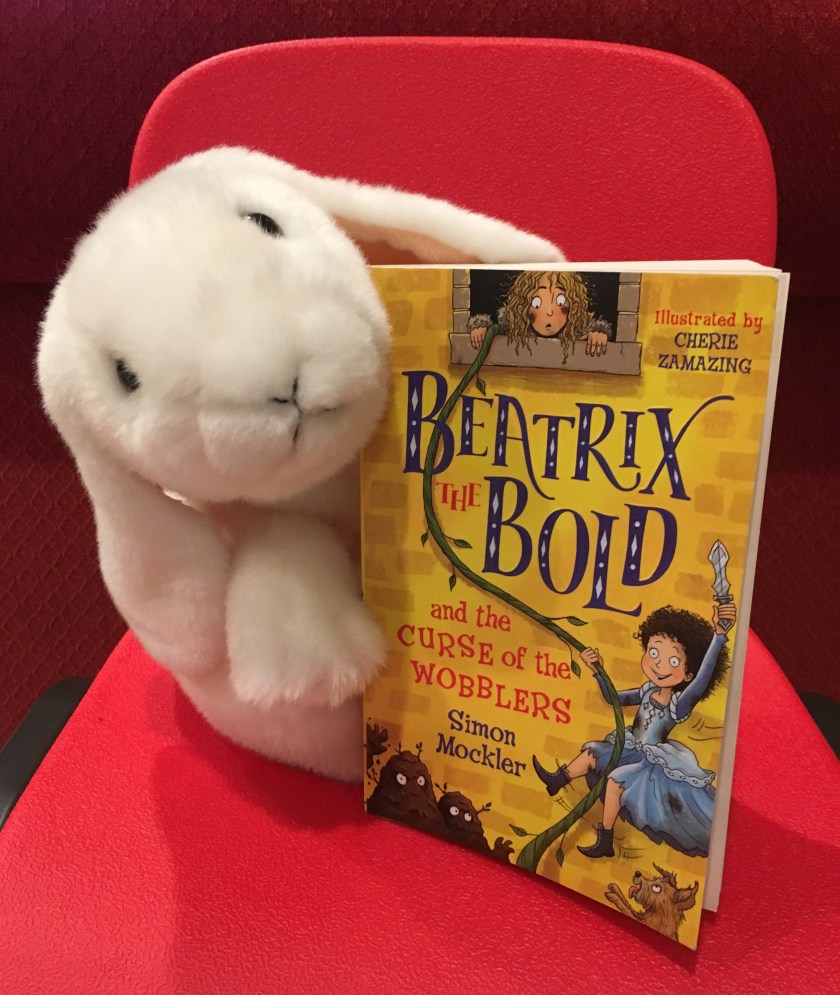
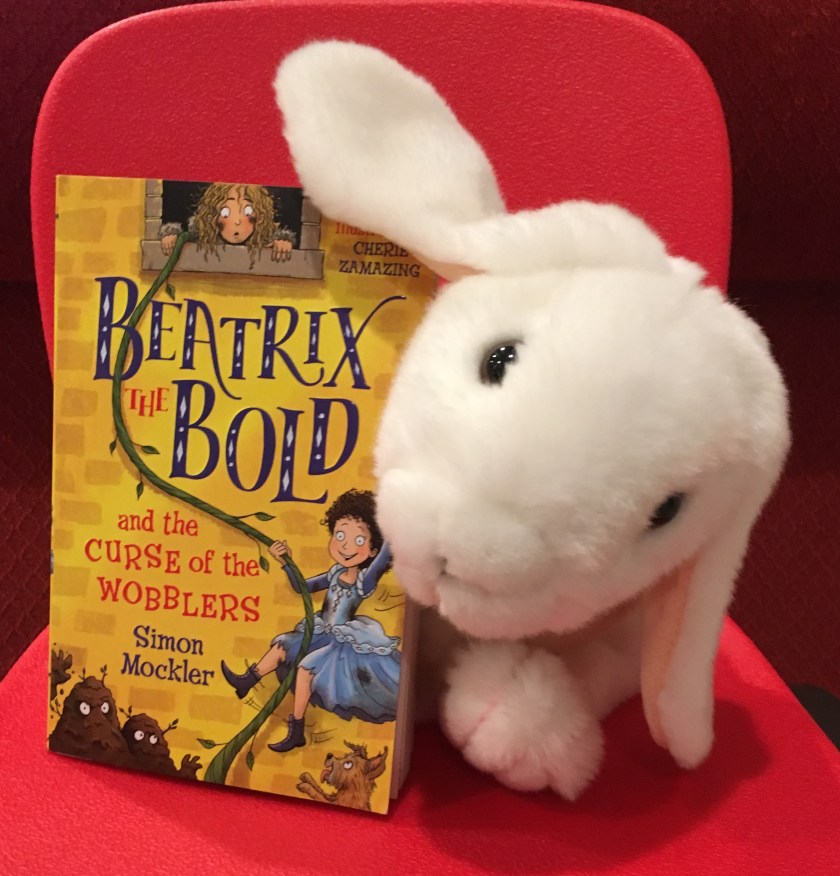
Marshmallow heard about Beatrix The Bold and the Curse of the Wobblers by Simon Mockler from a fellow blogger, Asha at A Cat, A Book, and A Cup of Tea (see Asha’s enticing review here). So of course she had to get her paws on a copy of the story of this fun and courageous little queen. Below she shares her thoughts on this recent book.

Marshmallow reviews Beatrix The Bold and the Curse of the Wobblers by Simon Mockler.

Marshmallow’s quick take: If you like books that have a strong female character, then this might be the book for you.       

Marshmallow’s Summary (with spoilers): Beatrix the Bold has a big secret she does not know about.

“In a faraway palace in the Kingdom of Morden lived a small girl, with a big secret. The secret and the girl, whose name was Beatrix, lived side by side but never met. The secret was big, but the palace was bigger, and there were plenty of dark places for it to hide.”

So here is the first big spoiler: The secret is that Beatrix is a queen. Her parents had sent her to live at this big palace with her aunt, Esmerelda the Terrible, and her uncle, Ivan the Vicious. Her aunt, Esmerelda the Terrible, loves gold a LOT. Her uncle, Ivan the Vicious, is … well, vicious. She was sent to live with her aunt and her uncle because she was in mortal peril. An Evil Army from Beyond the Woods has a mission to kill her and slice her into small pieces if necessary.

Beatrix has only been in ten rooms of the castle. The ten rooms include a classroom, a story room, and a war room. In the classroom she takes classes from Wilfred the Wise. In the story room she can listen to stories acted out by a storyteller. In the war room she throws KNIVES and plays war with mini soldiers, with her uncle coaching.

She attempts to escape from the palace, and she fails. Her aunt catches her in the process. The fact that Beatrix only knows about ten rooms in the palace soon changes though. Her aunt, Esmerelda the Terrible, betrays her to the Evil Army for gold. Beatrix is soon on the run.    

Marshmallow’s Review: This is a good book that will intrigue a lot of people. It was published in April 2019, so it is not a very old book. The character, Beatrix, is a strong female character. She throws knives and is great at military tactics. She is not afraid of danger, unlike most fairy-tale queens and princesses. She is a good role model. (Except that she throws knives! Really, there are a lot of knives in this book!)   

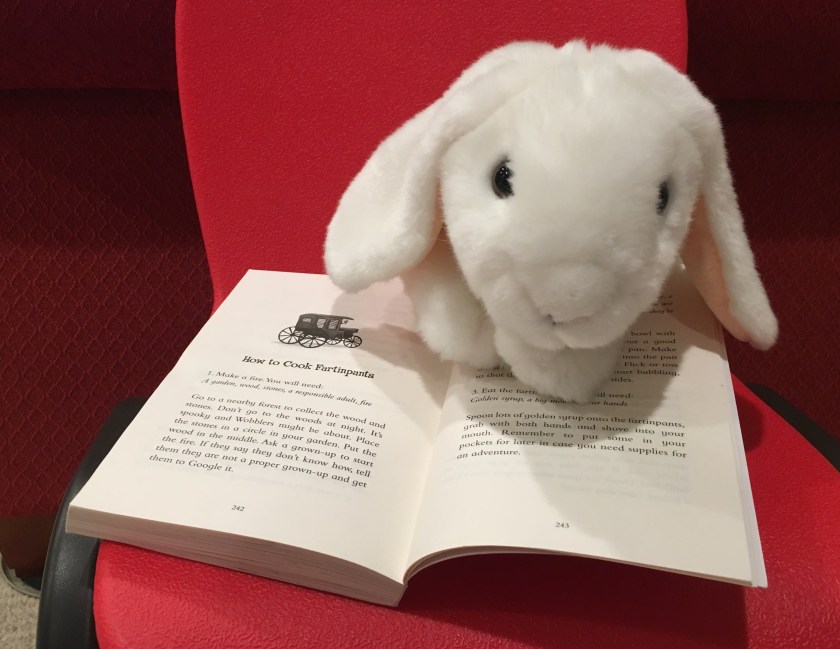
The end of the book contains a recipe for fartinpants. Fartinpants are like pancakes and crepes mixed together, and they can make a good breakfast, especially if you put jam, chocolate/hazelnut spread, strawberries, or syrup in or on the fartinpants. (The Book Bunnies household did try them this morning and can verify.)

Marshmallow insisted on trying the fartinpants recipe included at the end of Beatrix The Bold and the Curse of the Wobblers. The whole Book Bunnies household was quite pleased.
Marshmallow insisted on trying the fartinpants recipe included at the end of Beatrix The Bold and the Curse of the Wobblers. The whole Book Bunnies household was quite pleased with the outcome. Thankfully, no adults (or younger ones) were too burnt during the experience.

Beatrix The Bold is sure to entertain a lot of children in the 7-10 age group . The author’s writing style is light-hearted and the characters are funny. The book itself is not very hard to read and there are many illustrations (by Cherie Zamazing) sprinkled in here and there. I for one am looking forward to reading the next book about Beatrix and her adventures.

Marshmallow’s rating: 95%

Marshmallow rates Beatrix The Bold and the Curse of the Wobblers by Simon Mockler 95%.