Caramel reviews Charlotte’s Web by E.B. White

Caramel’s class has been reading E.B. White’s Charlotte’s Web. Quite reasonably, they have been pacing their way through the book, but Caramel just could not wait and is already done with the reading. Today he shares his thoughts on this 1952 classic, which received a Newberry Honor in 1953. As usual, Sprinkles is taking notes and asking questions.
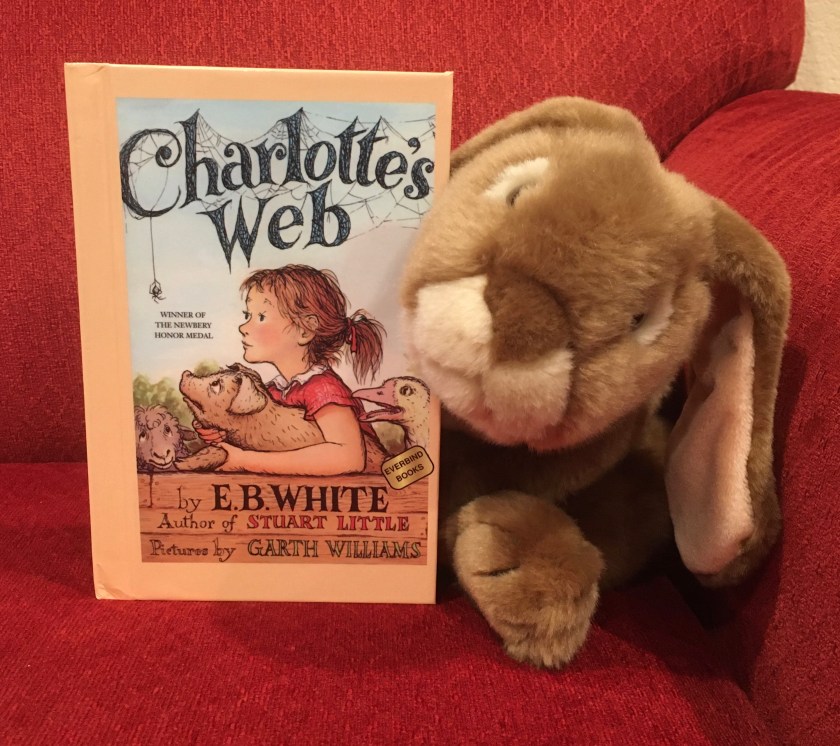
Caramel reviews Charlotte's Web, a classic from 1952, written by E.B. White and illustrated by Garth Williams.
Caramel reviews Charlotte’s Web, a classic from 1952, written by E.B. White and illustrated by Garth Williams.

Sprinkles: So Caramel, tell me about this book.

Caramel: This book is about animals living in a farm. The main character is Wilbur, he is a pig. In the first chapter he is just born, and the farmer is getting ready to kill Wilbur because he is the smallest one in the litter. That’s called a runt. That’s very mean, right?

S: Why do you say that?

C: The pig is born and they should not kill him.

S: I see. I agree. But I am guessing the farmer is thinking more like how things are in nature, where the weakest and the smallest in a litter will not usually survive.

C: Yes, but later in the book Wilbur does grow and get much bigger.

S: So the farmer decides not to kill him after all?

C: Yes, the farmer’s daughter Fern stops him.

S: So tell me more. The book title involves someone named Charlotte. Who is that?

C: She is a spider.

S: Is she Wilbur’s friend?

C: Yes, she becomes Wilbur’s friend when he moves into the Zuckerman barn. Zuckerman is Fern’s uncle but he is not very nice. Zucker means sugar in German, you told me, but this Zuckerman is not very sweet.

S: I see. Maybe that is why the author chose that name. But why is the book titled Charlotte’s Web if the main character is the pig?

C: Charlotte does save Wilbur’s life multiple times, and she is very important to him. They are best friends and Wilbur learns a lot from her.
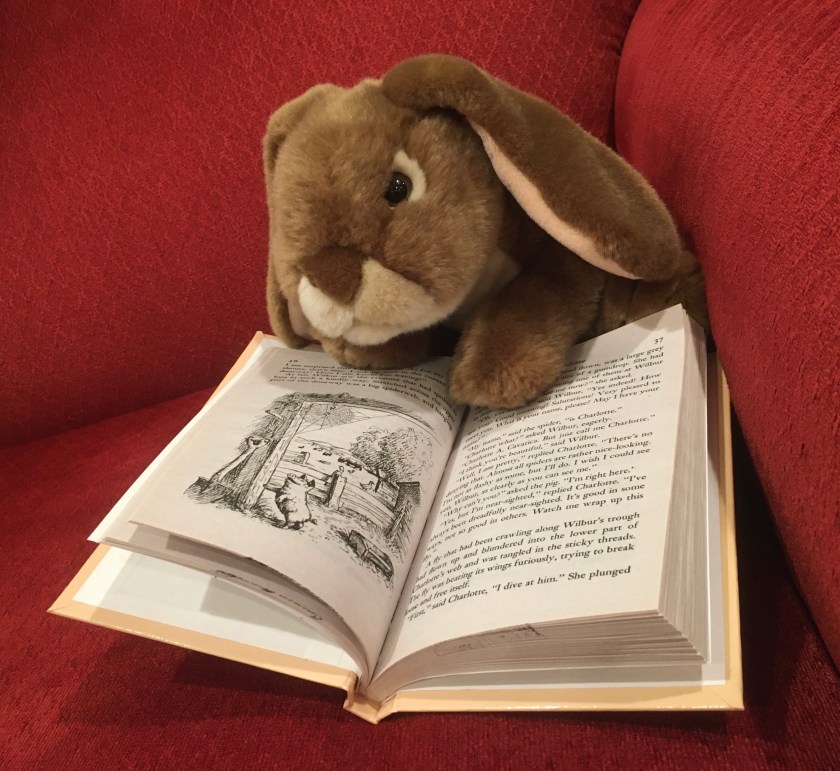
Caramel is pointing to the page where Wilbur the pig meets Charlotte the spider in Charlotte's Web, written by E.B. White and illustrated by Garth Williams.
Caramel is pointing to the page where Wilbur the pig meets Charlotte the spider in Charlotte’s Web, written by E.B. White and illustrated by Garth Williams.

S: As you know, I did not grow up in this country, and so this book was not on my reading list at school. When I learned about it, I was already an adult. But I also learned that the book was rather sad, so I never read it.

C: That’s an understatement. It is really really sad.

S: Okay, I won’t ask you why it is sad because I think I actually know. But I also know that you don’t usually like sad books. Did you like Charlotte’s Web?

C: Yes! It might be the only sad book I actually liked.

S: Oh? Why did you like it?

C: The story is really interesting, and I liked Wilbur. He is funny and very likeable. And I also liked Charlotte. She is wise and also very nice.

S: I know you like fiction involving animal characters. You already reviewed a whole lot of them, like Poppy about a mouse and her adventures, The Mouse and the Motorcycle about another mouse and his adventures, and Verdi about a snake. Do Wilbur and Charlotte have some interesting adventures too?

C: Oh yes! They go to the fair, and Charlotte makes an egg sack at the fair. She puts a lot of eggs in it. Let me check. 514 spider eggs.

S: That is a lot of eggs! So the book is fun and joyful to read except the sad parts?

C: Yes.

S: So which three words would you use to describe the book?

C: Sweet, happy and sad. Because it is really sweet and happy until it is sad. But then it is happy again, sort of.

S: Hmm, maybe I should read it after all. Would you recommend it?

C: Yep. But you will have to wait for Marshmallow to finish it first.

S: Hmm, I see I have competition. Okay, I guess I will wait. But at least now, after all these years, I know I should read Charlotte’s Web. In the meantime, let us wrap up our review. What do you want to tell our readers?

C: Stay tuned for more book bunny reviews!
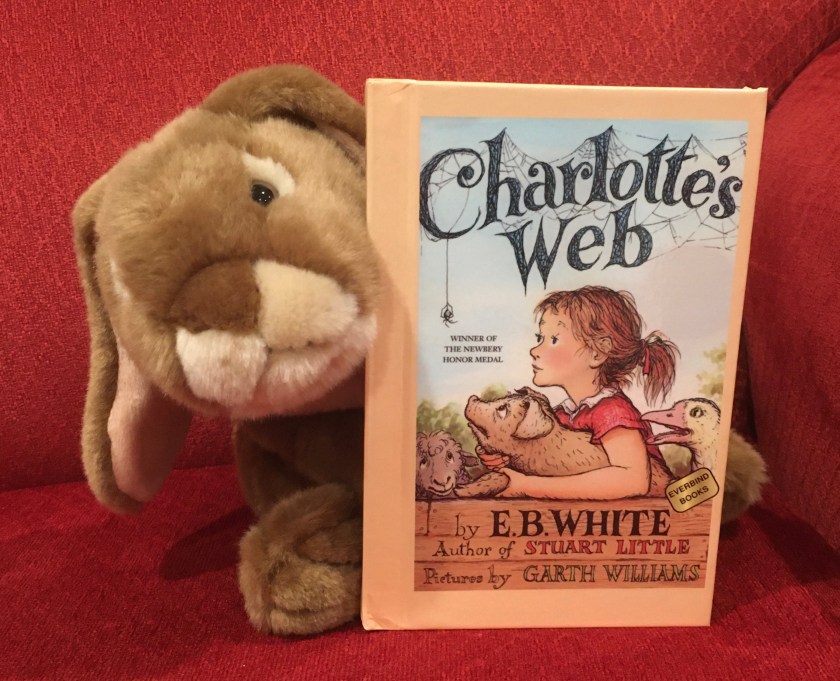
Caramel has enjoyed reading Charlotte's Web, written by E.B. White and illustrated by Garth Williams, and recommends it strongly. He already convinced both Marshmallow and Sprinkles to read the book.
Caramel has enjoyed reading Charlotte’s Web, written by E.B. White and illustrated by Garth Williams, and recommends it strongly. He already convinced both Marshmallow and Sprinkles to read the book.

Marshmallow reviews Getting Things Done for Teens by David Allen, Mike Williams, and Mark Wallace

Marshmallow has always been a curious little bunny. She has always been eager to learn about the world as well as about how our minds work. Recently she got her paws on a book for teens, written by David Allen, the David Allen, of GTD fame, together with Mike Williams and Mark Wallace, about the way our minds work and about how to build a fulfilling life in a world full of distractions: Getting Things Done For Teens: Take Control of Your Life in a Distracting World. Though she is not yet a teen, Marshmallow found this book extremely interesting and eye-opening. Below is her review of this neat little book, perfect for teens and tweens as well as the adults in their lives.

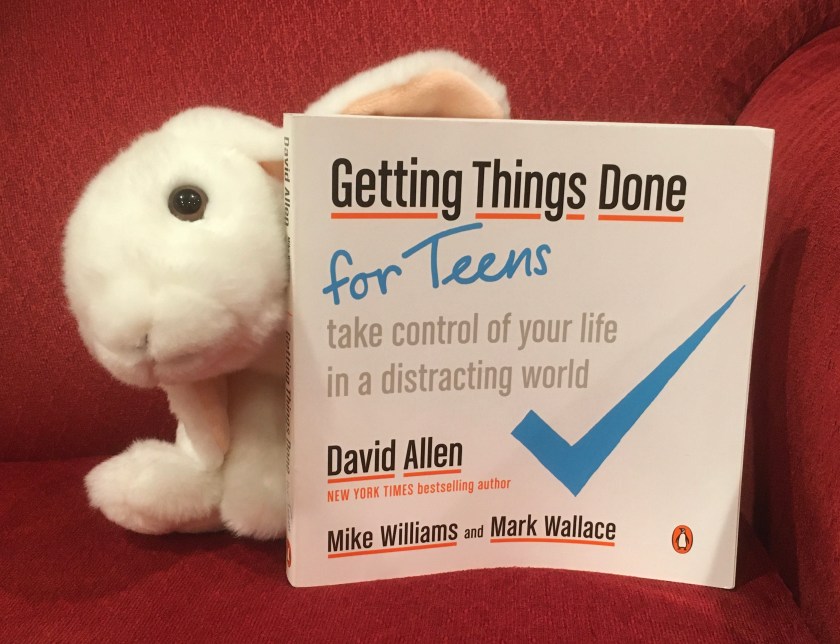
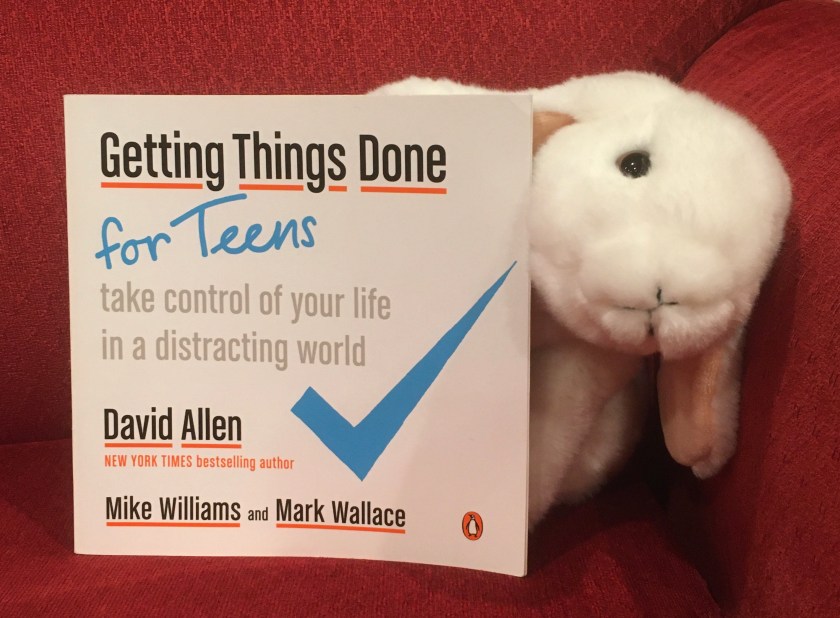
Marshmallow reviews Getting Things Done For Teens: Take Control of Your Life in a Distracting World, written by David Allen, Mike Williams, and Mark Wallace.

Marshmallow’s Quick Take: If you like how-to books or books about time management, organization, and self-improvement, or if you want to understand how your mind works and how to take control of your life, then this might just be the book for you.

Marshmallow’s Overview: Getting Things Done for Teens: Take Control of Your Life in a Distracting World is non-fiction, and it aims to teach the reader literally how to take control of their work and/or life. There are two main characters in the book: Cortland, an owl who represents the prefrontal cortex, and Myggy, a monkey who represents the amygdala. Like the prefrontal cortex, Cortland is slower and more thoughtful than Myggy. Myggy, on the other hand, is quick and makes decisions without a lot of thought. The book starts with an overview of how these two parts of the brain help us make decisions, and then introduces the basic features of the Getting Things Done perspective on living a life.

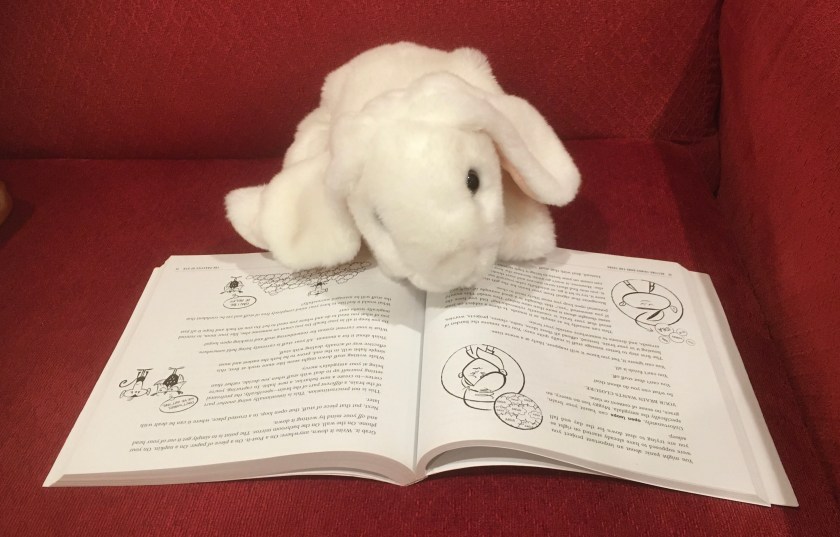
Marshmallow is reading Getting Things Done For Teens: Take Control of Your Life in a Distracting World, written by David Allen, Mike Williams, and Mark Wallace. Here she is looking at the page about "open loops", the things your mind feels like it needs to keep track of unless you resolve the issue about them or at least record them somewhere so you know you will get back to them later.
Marshmallow is reading Getting Things Done For Teens: Take Control of Your Life in a Distracting World, written by David Allen, Mike Williams, and Mark Wallace. Here she is looking at the page about what you need to do about “open loops”, the things your mind feels like it needs to keep track of unless you resolve the issue about them or at least record them somewhere so you know you will get back to them later.

The quick summary is that the book helps teenager bunnies organize their work and how to get their lives in order. It does this by teaching the reader how to deal with “stuff” in their minds. Some examples of “stuff” that one might need to deal with are classes, homework, bullying, college applications, and parent pressure.  

Marshmallow’s Review: This is a great book for bunnies that want to be better at organizing their life or work. There is a lot of information and useful advice packed into the book. But it does not get boring because the tone is light and humorous. Scenarios used to explain things are all realistic. There are helpful graphs, for example about stress and about things teens worry about. Also there are pictures on basically every other page. The illustrations of Cortland and Myggy, especially, are everywhere and keep reminding you of how your mind works in different ways.

There are also inspiring quotes sprinkled throughout. One of the quotes I really liked is:

“I don’t want other people to decide who I am. I want to decide that for myself.”

Emma Watson
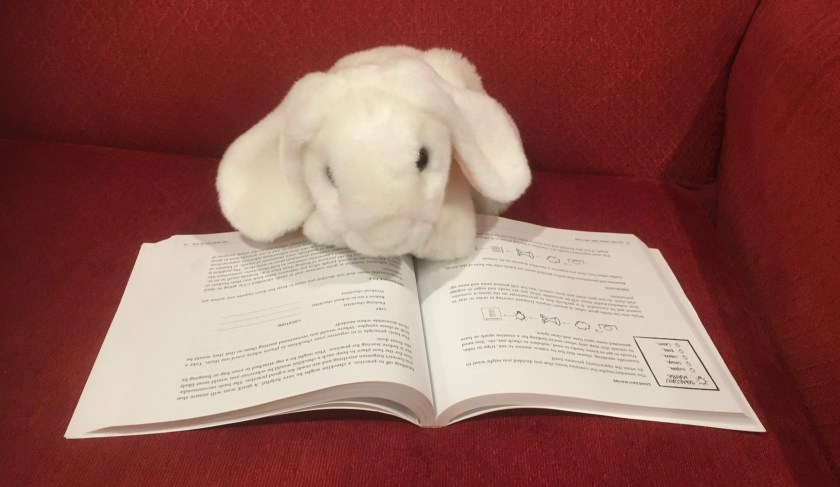
Marshmallow is reading Getting Things Done For Teens: Take Control of Your Life in a Distracting World, written by David Allen, Mike Williams, and Mark Wallace. Here she is looking at the page about the "someday / maybe" list, a list that you can put things that you want to do some day but maybe it is not yet time to work towards them.
Marshmallow is reading Getting Things Done For Teens: Take Control of Your Life in a Distracting World, written by David Allen, Mike Williams, and Mark Wallace. Here she is looking at the page about the “someday / maybe” list, a list that you can put things that you want to do some day but maybe it is not yet time to work towards them.

Though Getting Things Done For Teens: Take Control of Your Life in a Distracting World has ideas that can be useful for everyone, I think it might be best for 9 and up. One of the reasons is because Myggy sometimes uses informal (and for some, inappropriate) words, but also because the methods might confuse younger bunnies. And younger bunnies might have fewer things that they can control in their lives and fewer things to have to worry about. In the other direction, Sprinkles told me that she thinks the book could help grownup bunnies, too. She thinks that this book does a great job explaining how the mind works and how this knowledge can help us organize our work so that our lives become much more manageable and enjoyable.

Marshmallow’s Rating: 100%.

Marshmallow rated Getting Things Done For Teens: Take Control of Your Life in a Distracting World, written by David Allen, Mike Williams, and Mark Wallace 100%, and recommends it highly.

Caramel reviews It’s Alive: From Neurons and Narwhals to the Fungus Among Us by Molly Bloom, Marc Sanchez, and Sanden Totten

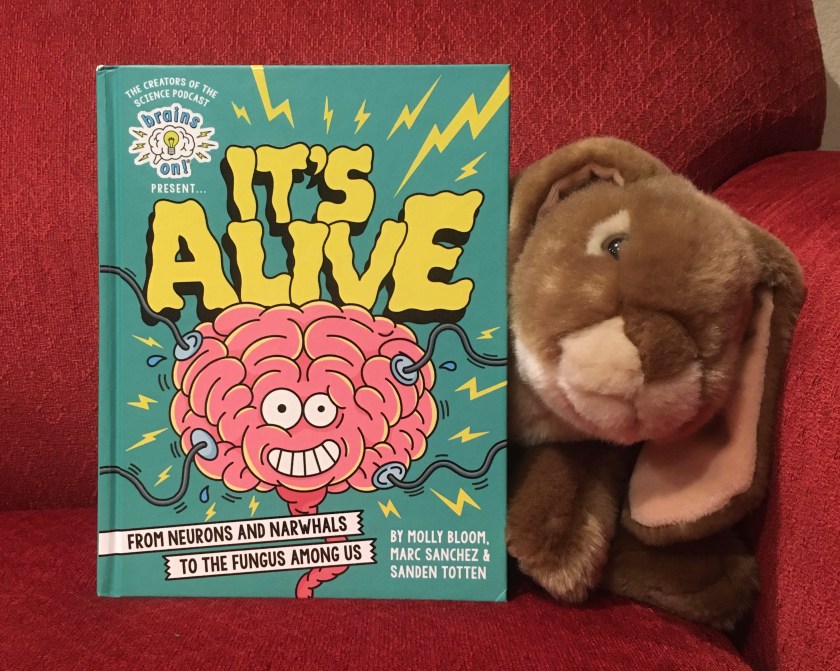
The book bunnies are fans of Brains On!, a science podcast directed toward young bunnies but, at least in our household, also much appreciated by the older set. When we heard that the amazing Brains On! team, made up of Molly Bloom, Marc Sanchez, and Sanden Totten, had published a science book together, we knew we all had to read it. Today Caramel reviews this book: It’s Alive: From Neurons and Narwhals to the Fungus Among Us. As usual, Sprinkles is taking notes and asking followup questions.

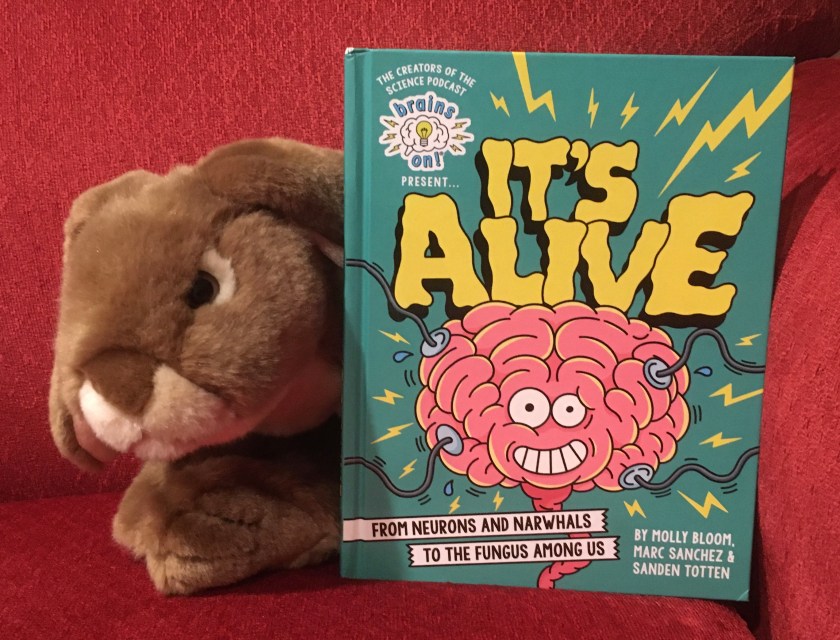
Caramel reviews the Brains On! book It's Alive: From Neurons and Narwhals to the Fungus Among Us, by Molly Bloom, Marc Sanchez, and Sanden Totten.
Caramel reviews the Brains On! book It’s Alive: From Neurons and Narwhals to the Fungus Among Us, by Molly Bloom, Marc Sanchez, and Sanden Totten.

Sprinkles: So Caramel, this book is right up your alley, right?

Caramel: Yep. It’s full of fun facts, and illustrations are awesome!

S: I know! It is so colorful! So tell me what the general theme of the book is. What is the book about?

C: It’s about science. There are all sorts of facts about all sorts of living things. There is a part about animals, one about plants, one about humans, and another about microorganisms.

S: That sounds cool! So tell me about your favorite animal fact you learned from this book.

C: There are so many, I can’t choose.

S: Give me one or two then…

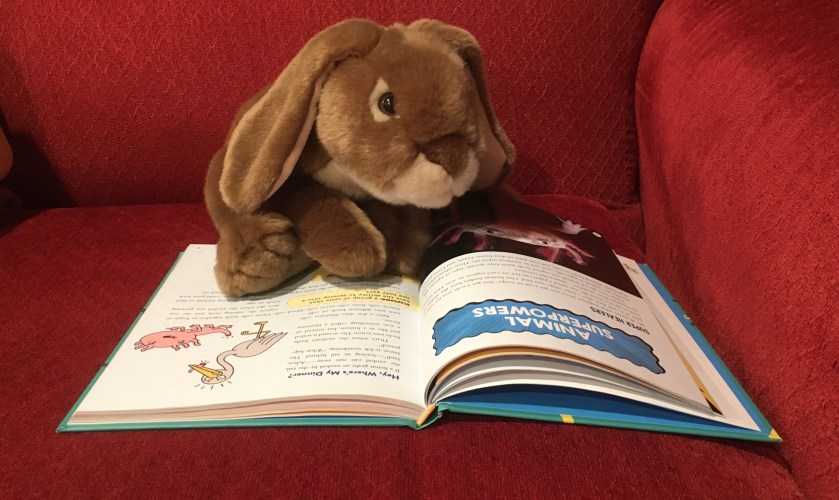
C: Okay, let me try. I like the Animal Superpowers part a lot.

Caramel is reading the Brains On! book It's Alive: From Neurons and Narwhals to the Fungus Among Us, by Molly Bloom, Marc Sanchez, and Sanden Totten. Here he is checking out the section on Animal Superpowers.
Caramel is reading the Brains On! book It’s Alive: From Neurons and Narwhals to the Fungus Among Us, by Molly Bloom, Marc Sanchez, and Sanden Totten. Here he is checking out the section on Animal Superpowers.

S: That sounds interesting! What kinds of superpowers?

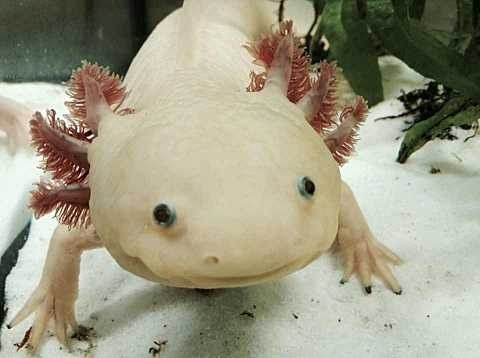
C: There are super-healers for example. Did you know that the axolotl can regrow part of its missing limbs, and even its brain? It is cool, isn’t it?

S: That is really cool, you are right! And that is one cute animal I had not heard about before! Here is a picture from Wikipedia if people want to see one:

An axolotl in captivity, image by th1098, taken from https://en.wikipedia.org/wiki/Axolotl#/media/File:AxolotlBE.jpg

S: So would you like to have such a super power, Caramel?

C: Yes, being able to regrow limbs would be awesome!

S: So then how about the plants? Tell me a favorite fact you learned from this book about plants.

C: Shall we visit the Tree Hall of Fame?

S: Okay…

C: The tallest tree is a redwood tree named Hyperion. It is 380 ft tall. That is taller than the Statue of Liberty!

S: Wow! That is tall!

C: It is in Redwood National Park, in California, but the scientists are keeping its exact location secret.

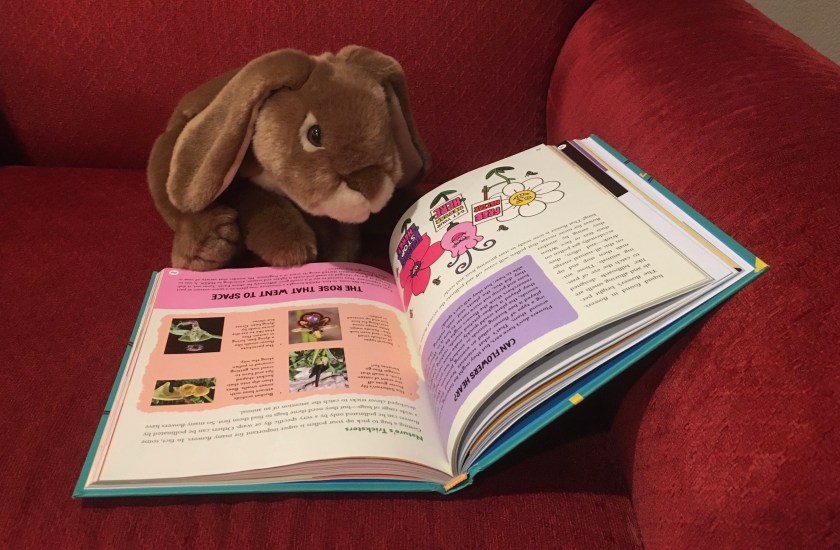
Caramel is reading the Brains On! book It's Alive: From Neurons and Narwhals to the Fungus Among Us, by Molly Bloom, Marc Sanchez, and Sanden Totten. Here he is looking at the section on "the rose that went to space".
Caramel is reading the Brains On! book It’s Alive: From Neurons and Narwhals to the Fungus Among Us, by Molly Bloom, Marc Sanchez, and Sanden Totten. Here he is looking at the section on “the rose that went to space”.

S: The book sounds really packed full of interesting facts Caramel. Just perfect for you!

C: Yep. Exactly. I recommend that you read it too.

S: Yes, I will definitely do that after this review. I can’t wait!

C: But you have to wait! Because I need to tell you about the Mega Matchups!

S: What’s that?

C: There are parts in the book where they compare two things. Like there is one where they pit dogs against cats. I think there is one in each part. Wait, there is the octopuses vs the dolphins. So that is at least two in animals. And then there is another matching porcupine caribou against monarch butterflies.

S: Wait. How do those two compare? Why are they even pitted against one another?

C: It seems random till you read it. These are two creatures that are “long-distance travelers that travel thousands of miles without a map or a compass.”

S: I see. This matchup idea is like the Smash-Boom-Best segment the Brains On! folks used to do sometimes in their podcasts. Did you know that that eventually became its own podcast?

C: No I didn’t know that. Then again I think Marshmallow listened to an episode for her class one time.

S: Yes, I remember. It was pizza vs tacos I think.

C: I think pizza wins for me!

S: I think they both have their time and place.

C: True. Wait, here is another matchup. The durian vs the corpse flower. They’re both stinky! A corpse flower apparently smells like, well, a corpse.

S: I know durian. I ate durian ice cream once. Did you know that?

C: Nope.

S: It tasted like vanilla ice cream, but with a terribly strong garlicky, or onion-y aftertaste.

C: That does not sound too appetizing.

S: I know.

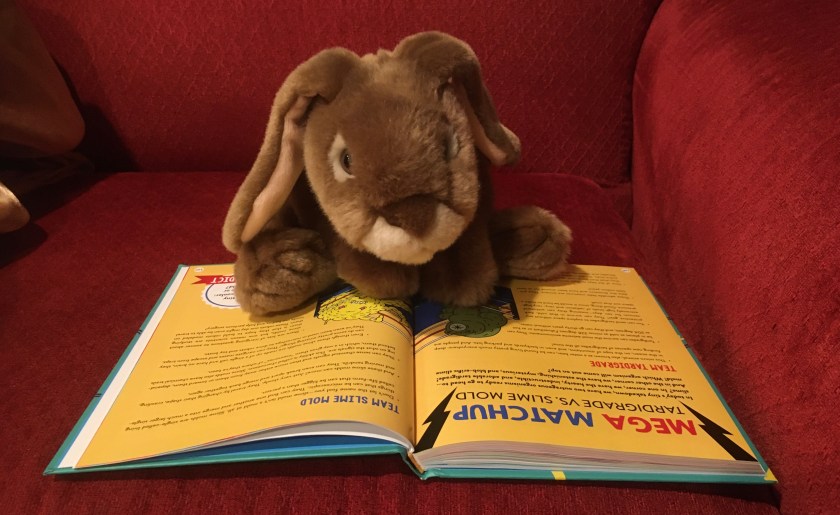
Caramel is reading the Brains On! book It's Alive: From Neurons and Narwhals to the Fungus Among Us, by Molly Bloom, Marc Sanchez, and Sanden Totten. Here he is looking over the "Mega Matchup: Tardigrade vs. Slime Mold".
Caramel is reading the Brains On! book It’s Alive: From Neurons and Narwhals to the Fungus Among Us, by Molly Bloom, Marc Sanchez, and Sanden Totten. Here he is looking over the “Mega Matchup: Tardigrade vs. Slime Mold”.

S: So this review is already quite long. Let us wrap it up. What three words would you use to describe this book to someone who is interested in learning about it?

C: Factful, interesting, and very colorful.

S: I agree with all of those Caramel, even before I got to read it fully. I think I’d also add “very fun” to the list.

C: Yes, it is really fun and funny too.

S: Great! So we are done. What do you say to our readers?

C: Stay tuned for more book bunny reviews!
Caramel loved reading the Brains On! book It's Alive: From Neurons and Narwhals to the Fungus Among Us, by Molly Bloom, Marc Sanchez, and Sanden Totten, and cannot wait to share all his new facts with friends and family.
Caramel loved reading the Brains On! book It’s Alive: From Neurons and Narwhals to the Fungus Among Us, by Molly Bloom, Marc Sanchez, and Sanden Totten, and cannot wait to share all his new facts with friends and family.

Marshmallow reviews The Grey King by Susan Cooper

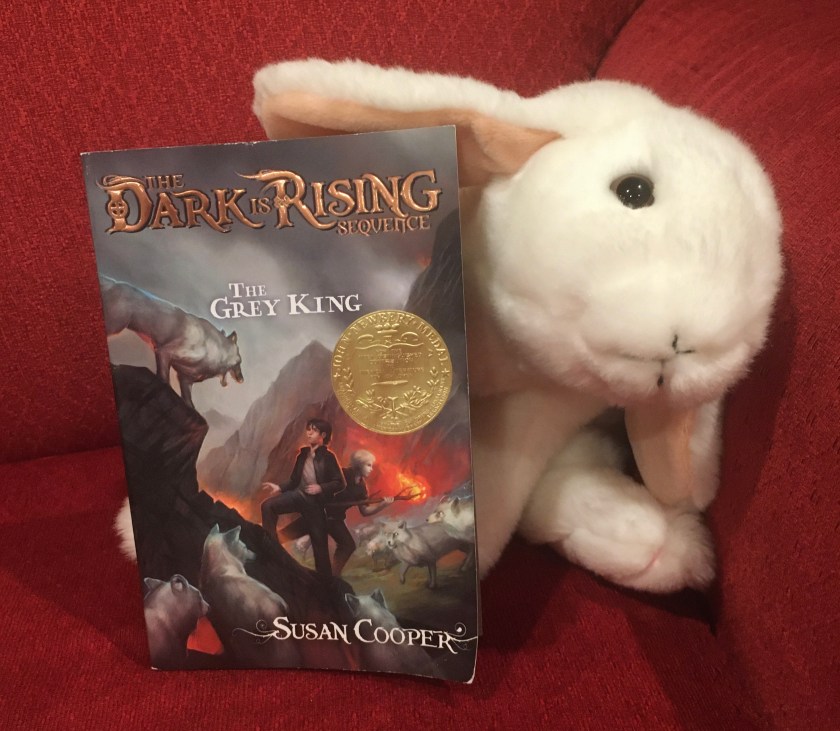
Marshmallow has already reviewed Over Sea, Under StoneThe Dark is Rising, and Greenwitch by Susan Cooper. Today she reviews the fourth book in The Dark is Rising series: The Grey King, which was published in 1975 and received the 1976 Newberry Medal.

Marshmallow reviews The Grey King by Susan Cooper

Marshmallow’s Quick Take: If you enjoyed reading the previous books in The Dark Is Rising series, then this might be the book for you.

There is a Welsh legend about a harp of gold, hidden within a certain hill, that will be found by a boy and a white dog with silver eyes–a dog that can see the wind. Will Stanton knows nothing of this when he comes to Wales to recover from a severe illness.

from the back cover of The Grey King by Susan Cooper

Marshmallow’s Summary (with Spoilers): Will Stanton, an Old One, has lost his memory. He is sent to Wales, to live with his mother’s cousin for a little bit, because he is supposed to be healed by the sea air. When he gets to Wales, he meets a lot of people. One of the people he meets is not a nice person. Caradog Prichard is a cruel man who dislikes everyone. But on the brighter side, Will also meets Bran. Bran is very pale as he is an albino. His skin and hair are white, but his eyes are gold. Caradog Prichard is blaming Bran’s dog, Cafall, constantly, because Caradog Prichard thinks that Cafall is killing his sheep. When Will meets Bran and starts to talk to him, Will starts to get his memory back. He remembers that he is an Old One, and he remembers his previous quests. And he realizes that Bran is “the raven boy” from this prophecy:

“On the day of the dead, when the year too dies, 
Must the youngest open the oldest hills 
Through the door of the birds, where the wind breaks.  
There fire shall fly from the raven boy, 
And the silver eyes that see the wind, 
And the Light shall have the harp of gold.”

The prophecy continues, but I won’t write all of it. But even when Will recognizes Bran in the prophecy, there is more about Bran than what he can know: Bran’s past is not what it seems. As Will discovers more about Bran, he uncovers a shocking truth. Do Bran’s roots come from the Light or from the Dark?

Marshmallow is reading The Grey King by Susan Cooper

Marshmallow’s Review: I think that this was a very interesting book because the plot is very surprising. I wasn’t able to guess Bran’s background; it was so surprising.

I think that this would be a good book for 8 and up. This is not because it is scary, but because the plot might confuse younger readers.

I think that if you want to read this book alone, that’s fine, but I would suggest reading the previous books too. Also you might want to know a little bit about King Arthur, just a vague idea of his life. I should add that Sprinkles says The Grey King is her favorite from this series so far.

Marshmallow’s Rating: 95%.

Marshmallow rates The Grey King by Susan Cooper 95%.