Caramel reviews Be the Bus by Mo Willems

Caramel, just like the rest of the book bunnies, loves Mo Willems’s Pigeon, and he has already reviewed one of his adventures, The Pigeon HAS to Go to School!, for the blog. Today, he talks about the brand new Pigeon book, Be The Bus: The Lost & Profound Wisdom of the Pigeon as told to Mo Willems, published this year, 2023, which is also the twentieth anniversary of the very first Pigeon book: Don’t Let the Pigeon Drive the Bus. As usual, Sprinkles is taking notes and asking questions.
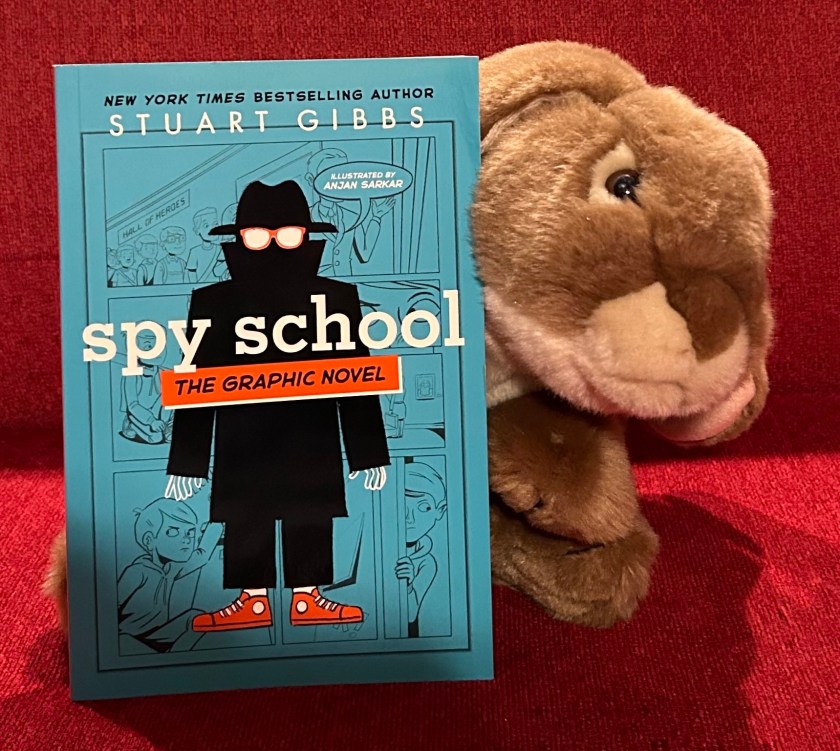
Caramel reviews Be The Bus: The Lost & Profound Wisdom of the Pigeon as told to Mo Willems, by Mo Willems.

Sprinkles: So Caramel, when I heard of this book, I knew you would want to read it. Even though it is supposedly meant for grownups.

Caramel: I am sure grownups can enjoy it, too, but I really liked it. So I don’t think it is only for grownups.

S: I agree with you Caramel. It definitely fits the adult humor genre, kind of in the spirit of Penguins Hate Stuff by Greg Stones, which you have reviewed a while ago. But it is also perfectly hilarious for little bunnies like you, and there is nothing too adult there, I feel.

C: Well, there is no mushy stuff for starters, and that is good.

S: Yep, nothing like that.

C: It’s just the Pigeon saying stuff. He says for example “I’m not susceptible to flattery. Unless it is about me.” I think that is funny.

S: Yes. I thought all of it was hilarious. The Pigeon says the funniest things. What was your favorite?

C: I don’t think I have a favorite. They are all funny.

S: I did hear you laugh out loud.

C: Yep. LOL.

S: Hmm, now you speak textspeak?

C: Well, I just said what you said.

S: Okay then.

C: The Pigeon is really wise. He says that it is better to say “I love you more than ever” than “I used to love you less.” And it is true. The two sentences say the same thing. But the first one does sound much better than the second.

S: Yes, I took a photo of you with that page. Let me put it right here.

Caramel is reading Be The Bus: The Lost & Profound Wisdom of the Pigeon as told to Mo Willems, by Mo Willems.

S: So all in all, which three words would you use to describe this book Caramel?

C: Colorful, hilarious, and profoundly wise.

S: I see what you did there Caramel! You picked out the word “profound” from the title of the book!

C: Yep. Guilty as charged. I guess.

S: And some of the advice is on target, don’t you think?

C: Some of it, yes. The “I love you more than ever” one is clever. And there is another one like that, that I liked, too. and that is true: you should say “You are one in a million!” rather than saying “there are 7,960 other people like you!” Because if you are one in a million on a planet with 7.9 billion people, then the second sentence is right, too, but it does not sound so good.

S: Yes, and there are some quite wacky thoughts in the book, too, no?

C: Yes. Here is one: “Genius is seldom recognized. That is why I wear a name tag.” And the name tag says “Hello. I’m a genius.” So that is kind of wacky.

S: I agree. The Pigeon is definitely not a very modest creature.

C: That’s true. I’m sure nobody ever claimed he was.

S: So we read almost all the Pigeon books.

C: Yes, all except the one with the duckling and the cookie. We just saw that one in a YouTube video.

S: Yes.

C: Can we put the video here in this post?

S: Sure. Here it is.

The Duckling Gets a Cookie!? by Mo Willems | A Pigeon Read Aloud – from YouTube.

S: So do you think you are done with the Pigeon?

C: No. Never! I like the Pigeon and I like reading and rereading his funny adventures. And now there is this short book, too, so maybe Mo Willems will continue to write more Pigeon stories, and we can read them, too.

S: Yes, who knows? So maybe this is a good time to wrap this review up. What would you like to tell our readers?

C: Stay tuned for more book bunny reviews!
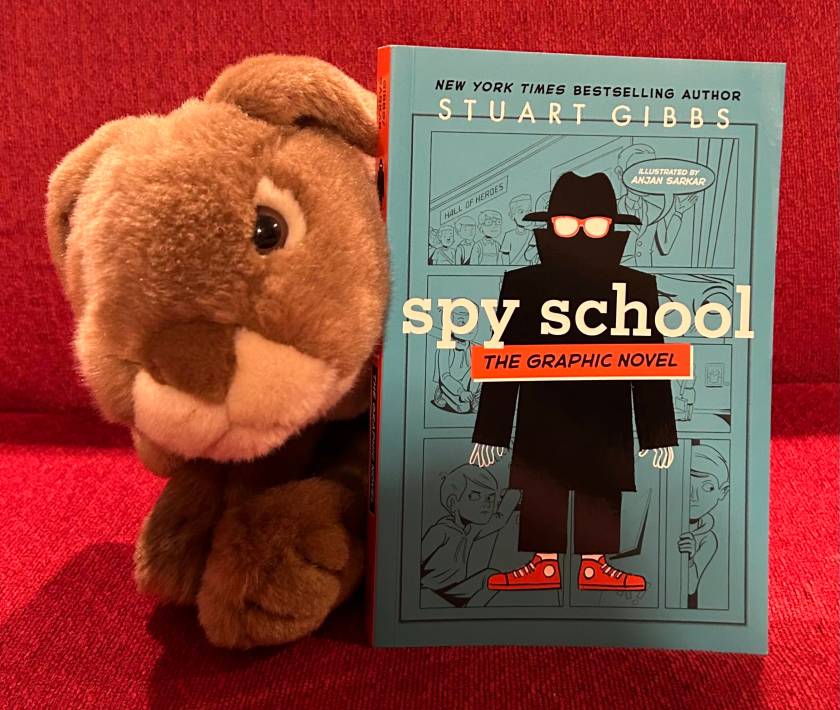
Caramel loved reading Be The Bus: The Lost & Profound Wisdom of the Pigeon as told to Mo Willems, by Mo Willems, and recommends it to all the bunnies who know and love the Pigeon.

Marshmallow reviews Fall of the School for Good and Evil by Soman Chainani

Last June, Marshmallow reviewed Rise of the School for Good and Evil, the first of the two prequels Soman Chainani wrote for his School for Good and Evil hexalogy. And this week, finally, she was able to get her paws on the second prequel book, Fall of the School for Good and Evil, fresh off the press (the book just came out on May 2, 2023). Below, she shares her thoughts on this long-awaited book.

Marshmallow reviews Fall of the School for Good and Evil by Soman Chainani.

Marshmallow’s Quick Take: If you like books about fairy tales, friendship, family, or any of Soman Chainani’s other books, then this might be the book for you. But to understand the book fully, you should probably have read (or checked out my reviews of) some of the other School for Good and Evil books. For example check out The School for Good and Evil, the very first book that started this whole saga, or the book right before this one: Rise of the School for Good and Evil.

Marshmallow’s Summary (with Spoilers): Twins Rafal and Rhian rule the School for Good and Evil (a school that trains children to be in fairy tales) together. Rafal is the evil twin, and Rhian is the good twin. Their two contradicting souls, bound by their love for each other, balance the school and allow them to serve as School Masters. That is until they start having problems and tensions rise between them. If their bond does not last, they will both lose the immortality and magic given to them by the Storian.

Fall of the School for Good and Evil starts off when the twins go to Gavaldon to find new students for their school after losing several of their best ones. Gavaldon is a town outside of the magic of the woods, and the townspeople are called Readers. Gavaldon is not magical, but its inhabitants read the stories and fairy tales that happen in the woods. Their children read of magic, unaware that it is real. Rafal hopes that this will make them more effective and excited students, as opposed to the children who come from the kingdoms in the woods who have grown up with magic their entire lives.

Upon visiting Gavaldon, Rhian selects a Reader named Midas and takes him to be a new student at his School for Good. Rafal also picks a Reader to take to his School for Evil, but unfortunately, this person betrays him; Rafal is captured and accused of being a witch. Luckily, the brothers manage to escape with Midas. When they return to the School for Good and Evil, the twins discover their immortality is fading. They fear losing their powers and immortality. But a new division has started with Midas; each twin wants Midas to join his school, which causes competition between them. By the time they realize and recognize their division, the cracks are too big. The fight that started out as a small sibling rivalry becomes a full-blown war for the position of School Master with more than two competitors. But the result of the conflict is not what anyone would have expected and will change the course of fairy tales forever. 

Marshmallow is reading Fall of the School for Good and Evil by Soman Chainani.

Marshmallow’s Review: This is a sequel to Rise of the School for Good and Evil and is set before the School for Good and Evil series. I would definitely suggest reading those books before this because otherwise nothing will make sense. The other books are necessary for understanding the fantasy world that this book is set in. However, for those who have read the other books, this book is full of twists and turns that will leave readers astonished by revelations hidden throughout the entire series. Even though the reader thinks they know what will happen (since this book is set before the others), the road to the future of the School for Good and Evil is long and not as straight as one may think. The characters (specifically one!) in the other books is not who we thought they were.

I loved how Fall of the School for Good and Evil added nuance to the other books and built the world in which they are set. The depth of Chainani’s characters is astonishing. The characters we read about in Peter Pan and other fairy tales are transformed into living, breathing, and complex characters. I loved how characters from other fairy tales are given a new level of nuance and depth.

Fall of the School for Good and Evil did not have as much romance as previous books written by Chainani, which I think was a good move since it left more room for character and plot development.

This is a book that is appropriate for most ages, though it is likely more interesting for readers 8 and up.

Overall, this is an amazing book for those who like (retellings of) fairy tales and the School for Good and Evil series. 

Marshmallow’s Rating: 100%.

Marshmallow rates Fall of the School for Good and Evil by Soman Chainani 100%.

Caramel reviews Robot Dreams by Sara Varon

If it was not clear by now to the readers of this blog, Caramel loves robots. This week he got his paws on a graphic novel published first in 2007 about one particular robot: Robot Dreams by Sara Varon, and he had to review it for the book bunnies blog. As usual Sprinkles is taking notes and asking questions.

Caramel reviews Robot Dreams by Sara Varon.

Sprinkles: So Caramel, this book was perfect for you, with a robot as one of the main characters, and in a really neatly drawn graphic novel format. Don’t you think?

Caramel: Yes.

S: I knew it! So tell me a bit about the book then.

C: Robot Dreams is kind of sad because it is about a robot who is friends with a dog but then gets rusty and the dog has to leave him.

S: I know. It is pretty sad at times. But it is also really cute and sweet when the dog and the robot are friends and are enjoying each other’s company immensely, no?

C: Yes. I just wanted them to continue to be friends. Forever.

S: Unfortunately, Caramel, there are very few things that last forever.

C: Yes, but I did not need to be reminded of that annoying fact.

S: I understand of course.

Caramel is reading Robot Dreams by Sara Varon.

S: So tell me a bit more about the book.

C: Well, nobody speaks in the whole book. There are only a few words, when the dog and the robot go to the library for example. And at the very beginning when the dog receives the box containing the robot from the mailman.

S: Hmm, why do you think there are no words?

C: The author said that she feels like she is not the most articulate person, but also that the story was one that could be told without words, because it could be told in actions.

S: And it is, isn’t it? We do see how the two are good friends, and how they enjoy each other’s company, and how they get sad when things go wrong, and so on.

C: Yes.

S: Okay, then tell me a bit about the title of the book. It is a neat title, no? It could have two meanings. The robot is dreaming or the dreams belongs to the robot or about the robot.

C: Yes, either the robot is dreaming or dreams of robots. I like it!

S: Which one is it do you think?

C: I’m guessing it is the first one. Because we see the robot dreaming of the dog coming back and saving him and they are together again, but it is only a dream, unfortunately.

S: I can see that.

C: And in the end both have new friends. The dog has a new robot friend, and the original robot has a new friend who is a raccoon.

S: I guess life goes on, right?

C: Yes, but …

S: I think you don’t like that kind of change.

C: Yes, that is correct. I’d be happier if the dog could have saved the robot.

S: So I know this is a sad book, but it is also very simply illustrated and just beautiful. And I think you actually really liked it. Is that correct?

C: Yes.

S: And so maybe we can add this to the very short list of sad books that you liked even so. (As far as I can tell, there are only two books on that list so far: Charlotte’s Web by E.B. White and Poppy and Ereth by Avi.)

C: Yes. But I would have preferred to add it to a longer list of happy books that I like.

S: I know. but sometimes sad books are good too.

C: I’m not going to comment on that.

S: So let us wrap this review up then. What three words would you use to describe this book?

C: Colorful, wordless, interesting. I only wish I could also say happy.

S: I know. But the three words you gave me work well enough. And what would you like to tell our reader Caramel?

C: Stay tuned for more book bunny reviews!
Caramel loved reading Robot Dreams by Sara Varon and is sure to spend a lot more time with it in the coming weeks and months.

Marshmallow reviews Are You There God? It’s Me, Margaret by Judy Blume

A while back Marshmallow reviewed Blubber by Judy Blume. Today she reviews another classic by Blume: Are You There God? It’s Me, Margaret, first published in 1970. Sprinkles is asking questions and taking notes.

Marshmallow reviews Are You There God? It's Me, Margaret by Judy Blume.
Marshmallow reviews Are You There God? It’s Me, Margaret by Judy Blume.

Sprinkles: So Marshmallow, let us start at the beginning. Who do you think would appreciate this book?

Marshmallow: I think girls who are approaching adolescence and may have some concerns about growing up might find this book relatable. Also if you liked other books by Judy Blume, I think you would definitely like this too.

S: That is a good start. Okay, more specifically, tell us now about the plot.

M: Margaret is this girl who just moved to New Jersey. And she is starting a new school and she makes a new friend named Nancy Wheeler —

S: This Nancy Wheeler?

M: Yeah, no. Not the Nancy from Stranger Things. Though she is also a girl who is living in a suburb with her family and wants to fit in and so on.

S: Okay, so let us get back to Margaret.

M: Yes, so Margaret’s dad was raised Jewish and her mom was raised Christian, but their families did not approve so they eloped and did not dictate a religion on their daughter. And when she lived in New York, nobody seemed to be perplexed by this, but here in her new school, her friends seem to want her to choose to belong to one or the other community.

S: And she is talking to God all through the book, right? Which God is this one?

M: Well, it is definitely a personal God, and Margaret shares her concerns, fears, hopes, and desires with Him. but through the book, we see her not making a specific choice. Her new teacher, Mr. Benedict, wants each student in her sixth grade class to pick a topic that is personally important to them and spend time that whole year to research it. Margaret chooses religion, hoping that through the year, she will try to figure out whether she should be Christian or Jewish. Remember both her grandparents are religious, but the Christian ones, her maternal grandparents cut off their relationship with them. Margaret does have a close relationship with her father’s mother, Sylvia, who encourages her to explore her Jewish heritage.

S: So the book is partially about Margaret exploring religion. But it is also a lot about growing up, right?

M: Right. Margaret’s new friends are obsessed with their growing bodies, and wearing bras, and boys, and so on, and Margaret does not yet feel like she is that interested in any of these things, but she wants to fit in, and so she ends up sharing their obsessions. Which was kind of weird to me, actually, because this is not quite how the girls in my school have been acting.

S: But maybe some of the girls in your school, too, might be interested in these kinds of things. Not all bunnies are like you and your friends, Marshmallow.

M: Well, I did not mean to sound like I am all so much more mature…

S: You are a pretty mature young bunny. But when I was growing up, there were a lot of girls like Nancy and her friends, and I feel like a lot of girls must have sympathized with the characters of the book for this book to have become such an iconic book.

M: Yes. It might also be that they felt like they should act like Nancy but they were actually feeling like Margaret who is not quite there. And eventually she does start obsessing about similar things.

S: The desire to fit in is often very strong. Especially among teens and tweens, but more generally it seems to be pretty common.

M: Yes.

Marshmallow is reading Are You There God? It's Me, Margaret by Judy Blume.
Marshmallow is reading Are You There God? It’s Me, Margaret by Judy Blume.

S: So this book was iconic, but it was also banned in many places. Did you know that?

M: Yes, I did. It talks about menstruation and so on, which some people claimed were not appropriate. But also it talks about religion and how it is okay if you do not pick between Christianity or Judaism, and how there might be other ways to finding spirituality in your life. This probably came across as anti-religion to some very religious folks.

S: Well, maybe today we are a bit more open-minded about these things. And the United States is a lot more diverse today in terms of people’s religious affiliations.

M: Yes, Margaret said, for example, that she was not considering Islam or Buddhism because she did not know anyone from those religions.

S: But there are people from a few other religions in your class, right?

M: Yep.

S: So we have come a long way from the 70s in that regard.

M: I hope so!

S: Okay, did you like Margaret as a character?

M: She is okay, she is very genuine, and kind of bland, she does not have a very big and sharp personality, and maybe that is intentional because the reader can fill in the gaps and more easily identify with her.

S: That makes sense to me.

M: There is also a girl in the school who has already grown up in terms of her body, and all the other people think she is sticking out. They make up rumors about her, they gossip about her, and they are pretty mean.

S: That is not good.

M: I think they are jealous. And I don’t think the girl does anything to deserve it.

S: Middle school can be a cruel place.

M: Well, they are in sixth grade but I guess that is middle school in some places.

S: Yep. So we got a hold of this book because there is a new movie about it. Do you think we should see it?

M: Yes. The trailer looks fun. Can we put a link to it here?

S: Sure, let us embed it right now:

Are You There God? It’s Me, Margaret. (2023) Official Trailer, from YouTube.

S: Do the characters look the way you visualized them?

M: Not quite, but I think they are close enough.

S: So we should try and watch it then. Okay, how would you rate this book?

M: I’d rate it 95%.

S: Sounds good. And what do you want to tell our readers as we wrap things up?

M: Stay tuned for more amazing book reviews from the book bunnies!

Marshmallow rates Are You There God? It's Me, Margaret by Judy Blume 95%.
Marshmallow rates Are You There God? It’s Me, Margaret by Judy Blume 95%.