Marshmallow reviews The Wayfaring Journeyman by Ingo Milton

Today Marshmallow reviews The Wayfaring Journeyman: Oskar’s Story from Apprentice to Master, a short graphic novel by Ingo Milton and published in 2015 by Den Gamle By.

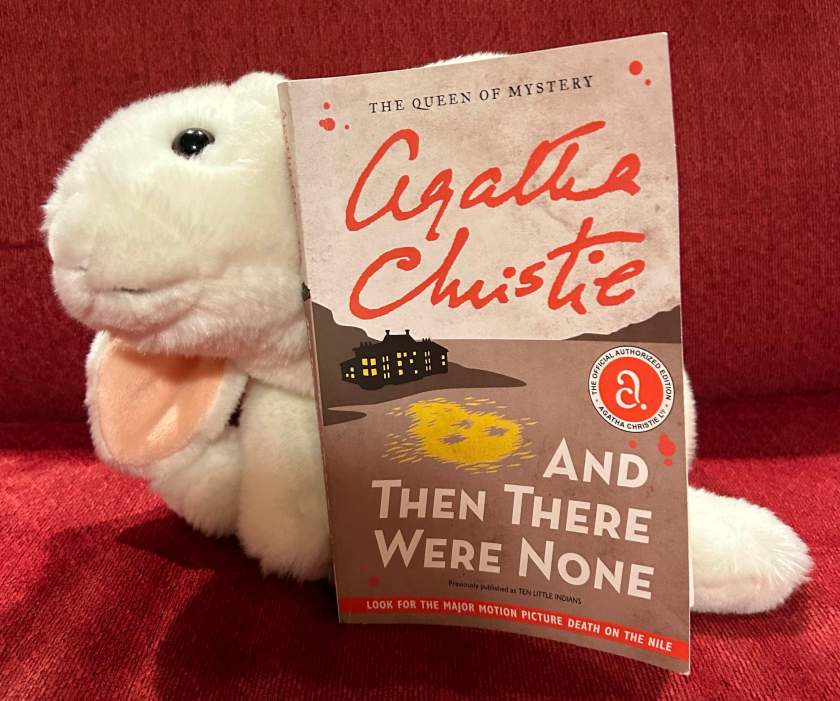
Marshmallow reviews The Wayfaring Journeyman: Oskar's Story from Apprentice to Master by Ingo Milton.
Marshmallow reviews The Wayfaring Journeyman: Oskar’s Story from Apprentice to Master by Ingo Milton.

Marshmallow’s Quick Take: If you like historical fiction or if you enjoy graphic novels, then this might be the book for you. 

Marshmallow’s Summary (with Spoilers): Born in 1827 and raised in Haderslev, Denmark, Oskar Larsen begins an apprenticeship in 1839. Apprenticeship is hard work: working under a master cabinet maker, he must endure physical hardship for five years as he toils and trains to become a journeyman. During this time, he must build a wide variety of items and work as a joiner (“a person who constructs the wooden components of a building, such as stairs, doors, and door and window frames”, according to Oxford Languages).

During the day, Oskar works and eats with his fellow apprentices and their master. The master has a wife and two daughters. After the death of the family cat, Oskar becomes close with Esther, one of the master’s daughters. Before he can finish his apprenticeship, he must build a test piece.

After his test piece is approved and he passes the hazing, Oskar becomes a journeyman. As a journeyman, he can work for other master craftsmen but cannot employ others to help him. He travels all around Europe looking for employment opportunities; he even goes to Constantinople, which is today Istanbul. Striving to build his own workshop, he must get approval from the Guild to get his Master’s Certificate.

Once he gets his Certificate, there are unexpected events and Oskar ends up getting married. Things get even more complicated.

Marshmallow is reading The Wayfaring Journeyman: Oskar's Story from Apprentice to Master by Ingo Milton.
Marshmallow is reading The Wayfaring Journeyman: Oskar’s Story from Apprentice to Master by Ingo Milton.

Marshmallow’s Review: I liked reading The Wayfaring Journeyman: Oskar’s Story from Apprentice to Master. In less than 50 pages, this graphic novel offers a unique perspective on life as an apprentice, a journeyman, and, eventually, a master craftsman in the 1800s. This book taught me a lot that I didn’t know before, especially about trade guilds and their traditions from a couple centuries ago.

Though the story was overall interesting and engaging, I felt the ending was a bit abrupt. The illustrations are vivid and colorful, and overall, the book is easy to read.

According to the text on page 45 of the book, “Oskar is a fictitious character, but the storyline is historically correct, and information refers to actual facts.” He narrates the story, and it is interesting to hear from someone who is supposed to have lived about two hundred years ago.

The Wayfaring Journeyman is mostly kid-appropriate, and I think that the story would appeal to many young bunnies. However, there is a dead body shown pretty early on. There is also some nudity at the end of the book and some bad words here and there, so parents may want to read the book first and decide for themselves. 

Marshmallow’s Rating: 95%. 

Marshmallow rates The Wayfaring Journeyman: Oskar's Story from Apprentice to Master by Ingo Milton 95%.
Marshmallow rates The Wayfaring Journeyman: Oskar’s Story from Apprentice to Master by Ingo Milton 95%.

Caramel reviews Best Nerds Forever by James Patterson and Chris Grabenstein

A couple months ago, Annie Bunny, a friend of the book bunnies blog, recommended that the bunnies check out Best Nerds Forever by James Patterson and Chris Grabenstein. They obliged. Each of the bunnies ended up reading the book over their summer break, and today Caramel is talking it over with Sprinkles.

Caramel reviews Best Nerds Forever by James Patterson and Chris Grabenstein.

Sprinkles: So Caramel, tell us about this book a bit. What is it about?

Caramel: The book is about a boy named Finn, who just dies at the very beginning.

S: So the book starts with the main character dying?

C: Yes. And he is also the narrator, so it is kind of weird to be reading a book from a ghost’s perspective.

S: Totally.

C: And it is sad. Finn is only twelve, finishing middle school, and he dies! It is not fair!

S: I can see how you would feel that way. I agree, it is always hard with young people dying. But Finn is pretty lively as a narrator, don’t you think?

C: Yes, he is actually quite funny. But he is dead, and his family and friends are very sad, so the book is very sad, too. And you know I don’t like sad books.

S: I do, but this is kind of like an adventure. Finn wants to figure out what happened to him, and why he died. And he meets a new friend in the afterlife, too. Right?

C: Yes, he meets another kid from his school who also apparently died that year. Her name is Isabella. So he is not alone or lonely. And he can do some strange and fun things, like go through walls or go through people. When he goes through people, they get chills, without understanding why. It is kind of funny actually.

Caramel is reading Best Nerds Forever by James Patterson and Chris Grabenstein.

S: Before we started the post, you told me that the end is your favorite part of the book, because it is a happy ending of sorts. Can you say more?

C: Yes, I’d say it is a happy ending of sorts. It is probably the best ending that could happen because —

S: Okay, that is probably already good enough, we should not be giving too many spoilers…

C: I guess so. Okay. But the end is happy, so I can say that at least.

S: Yes, you sure can. What else would you like to say about the book? Can you give me three words to describe it?

C: I want to say confusing, because I did not really understand the end at first.

S: But then we talked about it, right?

C: Yes, and now I do understand it, and I like the end. My other word would be funny, of course.

S: I definitely agree.

C: And ghostly! Because you know, Finn and Isabella are ghosts!

S: That works for me! Okay, so why is the title “best nerds forever”?

C: Well I think it is because Finn and his friends are big nerds, you know, and they are best friends, so best friends forever, but nerdy, too.

S: Maybe the forever is also referring to him being a ghost now, starting his eternal life.

C: Maybe. People have BFFs, like best friends forever, so if you and your friend are both ghosts and will live forever, you can really be BFFs!

S: Right! All in all, we enjoyed reading this book, right?

C: Yep. I know Marshmallow enjoyed it too.

S: And it was fun to receive a recommendation from a reader bunny, right?

C: Yep. I always like to meet new bunnies! Hi Annie Bunny!

S: I agree. Thank you Annie Bunny!

C: Yes, thank you!

S: Okay, so time to wrap things up. What would you like to tell our readers?

C: Stay tuned for more book bunny reviews!

Caramel enjoyed reading Best Nerds Forever by James Patterson and Chris Grabenstein, especially the end!

Marshmallow reviews The City of Ember by Jeanne DuPrau

As her first review for the new season, Marshmallow chose to talk about the first book of Jeanne DuPrau’s Books of Ember series: The City of Ember (2008). Sprinkles also read the book and enjoyed it so much that she is asking questions and taking notes.

Marshmallow reviews The City of Ember by Jeanne DuPrau.

Sprinkles: Welcome back Marshmallow!

Marshmallow: It is good to be back!

S: So let us dive right in. Please tell us a bit about this book.

M: This book is about a girl named Lina and a boy named Doon who live in a city named Ember, which is lit by artificial means. There are no suns, stars, or moons. The city has city lights which go off at night, and so it becomes completely dark.

S: At the end of the book, we learn why this is so, of course.

M: Right, but we are not giving away any spoilers today!

S: Sure. So tell me about the girl and the boy.

M: They are eleven, and the book starts right about the time they are finishing school and being assigned their jobs for life.

S: So they go to school only till they are eleven or so and then they are assigned a job for life. Do you like that idea?

M: Well, not particularly. Plus you don’t even get to choose your job. You can switch around in a year or so, but it is still kind of limiting. But these people do not know anything different. So maybe they do not feel it is a bad thing.

S: Makes sense to me.

M: Unfortunately schooling is so short and everyone gets trained on the job. They also do not know a lot. I mean, the city has a system that generates electricity that works the lights and so on, but they do not know or understand fire, electricity, or the inner workings of the generator. So when the generator begins to malfunction, they are at a loss.

S: Reminds me of the Star Trek Next Generation episode When the Bough Breaks.

M: It does have similarities actually! There too you have a society that does not understand how their planetary computer system is sustaining them, and then the system starts to fail. Though in The City of Ember, there are no computers.

S: Sure. So Lina and Doon try to figure out how to solve their city’s big problem, right?

M: Well, Lina kind of stumbles into it, but Doon has been thinking of trying to save his city for a while now. But yes, they are trying to figure out things.

S: I think that is a good overview of the plot Marshmallow.

Marshmallow is reading The City of Ember by Jeanne DuPrau.

S: So now tell me a bit about the characters. Did you find them compelling?

M: Yes. I thought the most compelling character is Lina, and she tries to make sure her baby sister is safe. Lina’s life and that of her sister is more precarious than some of the other folks in town, and she is very caring of the little baby. They have been orphans for a while, but now their grandmother who is taking care of them is also starting to have health problems.

S: Doon also does not seem to have a mother, right?

M: True, both of the main characters are coming from families where at least one parent is missing. But they are both self-reliant and also want to help all the others.

S: Still they make some mistakes…

M: Yes, but unlike in all the Harry Potter books where Harry and Ron and Hermione make all kinds of mistakes, these two feel remorse that they did not consult with or confide in the caring adults in their lives. So in some sense, Lina and Doon are a lot more responsible.

S: I can see that. So overall, did you enjoy reading this book?

M: Yep.

S: I liked it too. I read it in one sitting.

M: And I want to read the next book in the series. Though it will likely be quite different.

S: For reasons we cannot quite divulge, of course.

M: Of course.

S: So let us wrap up this review then. How would you rate the book Marshmallow?

M: I’d rate it 100%.

S: Sounds fair to me. What do you want to tell our readers?

M: Stay tuned for more amazing reviews from the book bunnies!

Marshmallow rates The City of Ember by Jeanne DuPrau 100%.

Caramel reviews Animated Science: Periodic Table by Shiho Pate and John Farndon

For his first review back from his summer break, Caramel wanted to talk about Animated Science: Periodic Table, a 2021 book illustrated by Shiho Pate and written by John Farndon. As usual Sprinkles is taking notes and asking questions.

Caramel reviews Animated Science: Periodic Table, illustrated by Shiho Pate and written by John Farndon.

Sprinkles: Welcome back Caramel!

Caramel: It’s great to be back!

S: Yay! Are you ready to talk about books again?

C: Always!

S: So you chose a nonfiction book to talk about today. Can you tell us what it is about?

C: It is about the periodic table, as its title says.

S: So what is the periodic table?

C: The periodic table is a way to organize the elements and the atoms.

S: Yes, you actually talked about it before, when you were reviewing The Elements: A Visual Exploration of Every Known Atom in the Universe by Theodore Gray. Do you remember that book?

C: Yes, of course I do.

S: So how is this book similar ot or different from that book?

C: Well, it is similar because it talks about many different elements and their uses. There are special pages for some of the elements and some of the elements are together on one page, but they talk about each of the elements.

S: That is cool!

C: Yes.

S: Back then, you told me your two favorite elements were titanium and uranium. If you were to pick two new ones now, which ones would you pick?

C: That’s a tough question. But I found some new interesting facts. Can I tell you about them?

S: Sure.

C: For example, Gallium is a metal that melts very quickly, only at 86 degrees Fahrenheit.

S: That is a reasonably warm day in California, no?

C: Yep.

S: That sounds interesting, a metal that can melt at a temperature that we can survive in. Is that what you found interesting about Gallium?

C: Yes. Also the book has very cute drawings, and I like the one for Gallium. It is a melted gray blob and it is very cute!

Caramel is reading about Gallium in Animated Science: Periodic Table, illustrated by Shiho Pate and written by John Farndon.

S: So tell me more about the drawings then.

C: They make them very cute. All the elements have faces and they are different colors and some are wearing clothes.

S: That is funny!

C: Yep. Then there is a green cube that is silicon and he is being sliced up so people can make chips with it. It could be sad or scary, but the cube is looking very serious but not in pain. So maybe he is concentrating.

S: That could be!

C: Also I learned from this book that the Latin name for lead is plumbum, and that is why its abbreviation is Pb.

S: I did not know that!

C: Neither did I.

S: So the book is full of lots of new facts then, right?

C: Yes. So “factful” is one of my three words.

S: Okay, so what are your other words then?

C: Incredibly cute pictures.

S: Hmm, that is three words on its own. But alright, I think we can let it slip by. So do you think other little bunnies would enjoy this book?

C: Yep. Especially if they like cute pictures.

S: Okay, that sounds good Caramel. Let us wrap this up then. What would you like to tell our readers?

C: Stay tuned for more book bunny reviews!
Caramel loved reading Animated Science: Periodic Table, illustrated by Shiho Pate and written by John Farndon and recommends it to all curious little bunnies looking to learn more about the world around us.