Marshmallow reviews And Then There Were None by Agatha Christie

Sprinkles is an avid Agatha Christie fan, so she was very excited to introduce Marshmallow to her work. Earlier this year, Marshmallow reviewed her first Agatha Christie book, Miss Marple: The Complete Short Stories. And today, she talks to Sprinkles about And Then There Were None, the classic mystery novel, first published in 1939, known to be one of the best-selling books of all time.
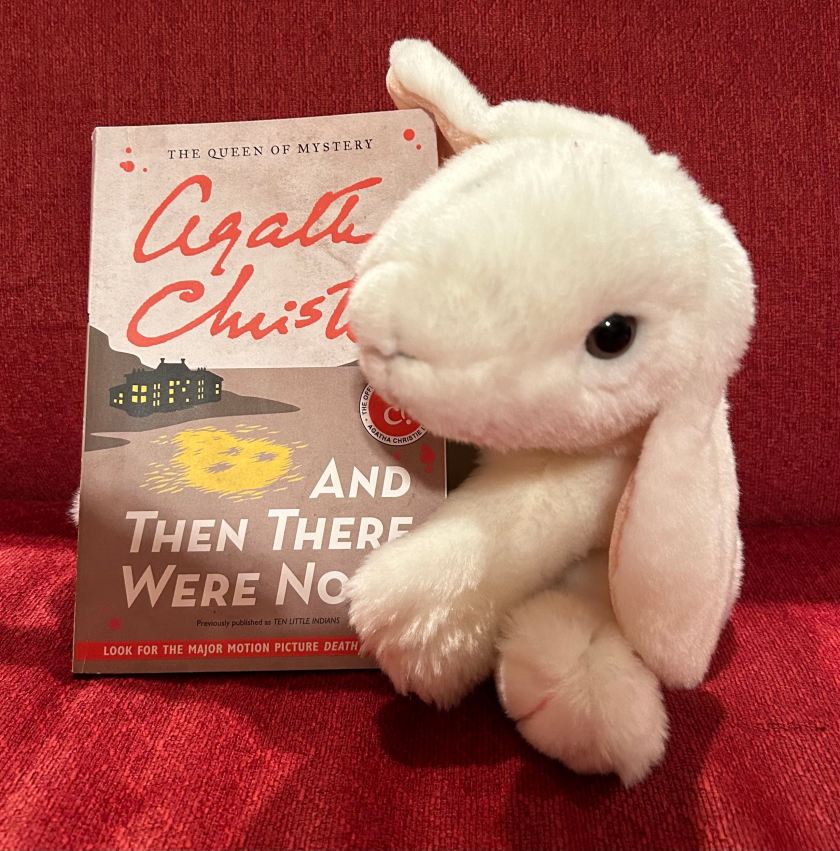
Marshmallow reviews And Then There Were None by Agatha Christie.

Sprinkles: So Marshmallow how should we start talking about this book?

Marshmallow: I usually start my reviews with an overview. We could just do that.

S: Okay, so go for it!

M: If you like books about mystery or enjoy Agatha Christie’s works, then this might be the book for you.

S: That works. Okay, so can you tell us a bit about this book then?

M: Sure. Separately, eight people are invited to spend time at Soldier Island. They are all confused and do not fully understand why or by whom they were summoned to the island, because they do not know their host well or (in some cases) at all. They all travel to Soldier Island (for different reasons) and are ferried there together. They all have different ideas of who their host is; some suspect an eccentric billionaire while others think that the owner is a famous movie star. When they get to the island, they are also confused by the variety in their fellow guests: there is a judge, a doctor, two young men, a young woman, an older woman, a retired military man, and another man who we eventually find out is a former police inspector.

S: So there are eight guests. But the story needs ten people, right?

M: Right. There is a married couple in the single house on the island who are supposed to be the caretakers for the time the eight will be spending there. They make up the last two of the ten.

S: Then what happens?

M: The first night, during dinner, there is an eerie recording that plays and accuses each of the ten with murder. Each of the ten people, the eight guests and the two caretakers, were apparently involved with the death of at least one person, and the voice in the recording claims that they were guilty. Or rather it says “You are charged with the following crimes…” and goes on to list one by one whose deaths each of the guests and the caretakers was responsible for. And of course everyone is unsettled and some want to leave the island immediately but of course this turns out to be impossible. Then one by one, people start dying.

S: So somehow someone got them to this island to kill them off?

M: Yes, basically. After the first couple days the remaining ones figure out that there is nobody else on the island other than themselves, which leads them to the conclusion that the murderer must be among them. This leads to more mistrust and suspicion. While some of the people dismiss the accusations against them, others admit to them and show no remorse. The reader is left wondering how innocent some of the characters are and how they end up dying one by one.

S: How so?

M: There is a nursery rhyme hung up in every guest room called Ten Little Soldiers and it is a story about these ten little soldiers who die one by one in specific ways until there are none.

S: And so the title of the book is And Then There Were None.

M: Yes. This is the last line of the nursery rhyme.
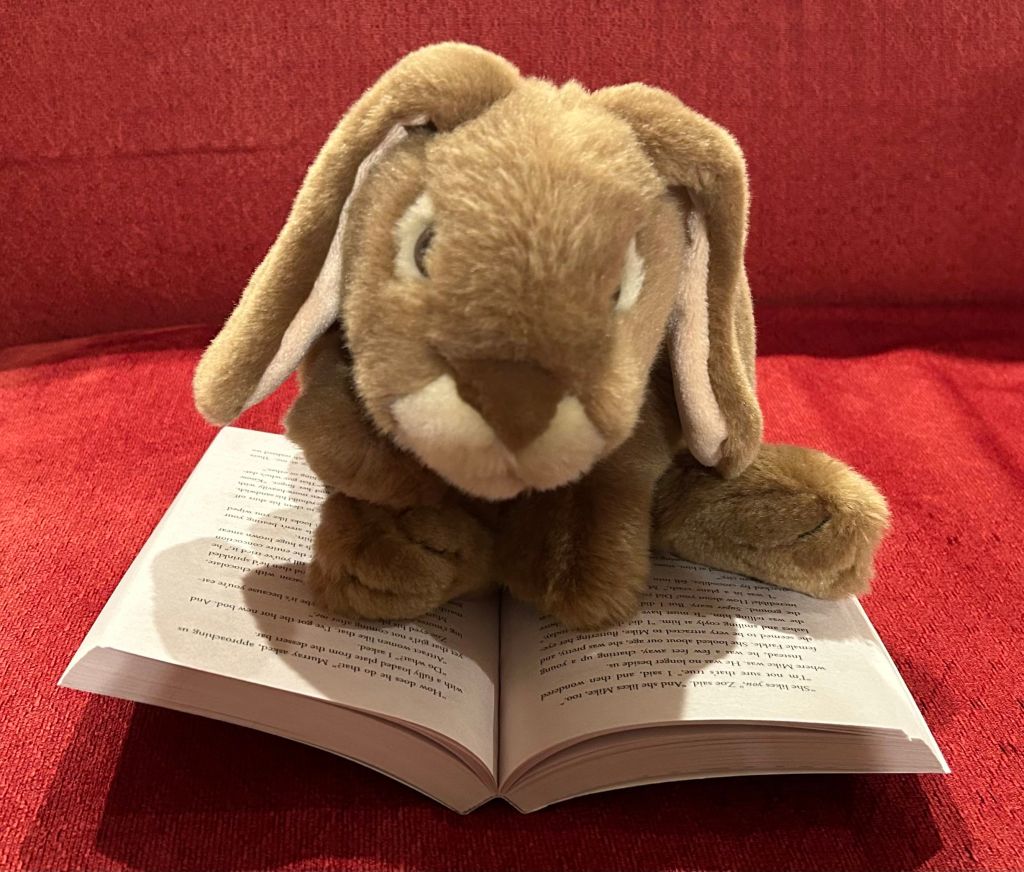
Marshmallow is reading And Then There Were None by Agatha Christie.

S: The rhyme is pretty interesting. I even reviewed a children’s book about zombies that parodies this rhyme.

M: Actually, the nursery rhyme in the book is coming from a real nursery rhyme that the book’s original title was based on. The title of the book used to be something quite different, but was changed because the original nursery rhyme was very offensive. I am very glad to have read the more modern, updated version, because the older title and rhyme were extremely offensive. Interested readers might read more about the history of this rhyme here. And here is the version from the book now:

Ten little Soldier Boys went out to dine; 
One choked his little self and then there were nine.

Nine little Soldier Boys sat up very late;
One overslept himself and then there were eight.

Eight little Soldier Boys travelling in Devon;
One said he'd stay there and then there were seven.

Seven little Soldier Boys chopping up sticks;
One chopped himself in halves and then there were six.

Six little Soldier Boys playing with a hive;
A bumblebee stung one and then there were five.

Five little Soldier Boys going in for law;
One got in Chancery and then there were four.

Four little Soldier Boys going out to sea;
A red herring swallowed one and then there were three.

Three little Soldier Boys walking in the zoo;
A big bear hugged one and then there were two.

Two little Soldier Boys sitting in the sun;
One got frizzled up and then there was one.

One little Soldier Boy left all alone;
He went out and hanged himself and then there were none.

S: So, overall, what did you think about the book?

M: I was engrossed while reading it. I could not stop! And rereading it is still enjoyable, knowing now how things turn out and who did what and so on, it is really fun to read again, as I am doing now.

S: I know, right? Christie is a master of this genre!

M: I have not read much in the genre actually but I definitely liked this book. The plot is so tightly set up, and everything works out like clockwork, and it is simply captivating. I had to finish it!

S: I know. She is amazing and this is one of her best books. So what would you rate this book Marshmallow?

M: 100%, definitely.

S: I would too. To this day, I find it so intricately put together. I am honestly so happy that I could share this book with you Marshmallow! But this is probably a good time to wrap things up. What would you say to our readers while we do so?

M: Stay tuned for more amazing reviews from the book bunnies!
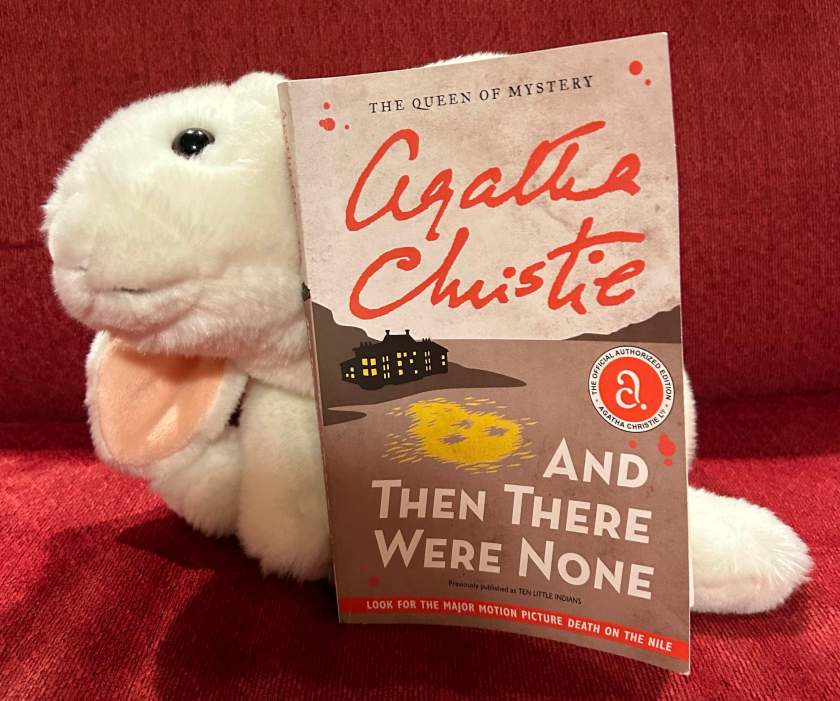
Marshmallow rates And Then There Were None by Agatha Christie 100%.

Caramel reviews Spy School Goes South by Stuart Gibbs

Caramel has already reviewed the first five books of the Spy School series of Stuart Gibbs. Today he is talking to Sprinkles about Book Six: Spy School Goes South, first published in 2018.

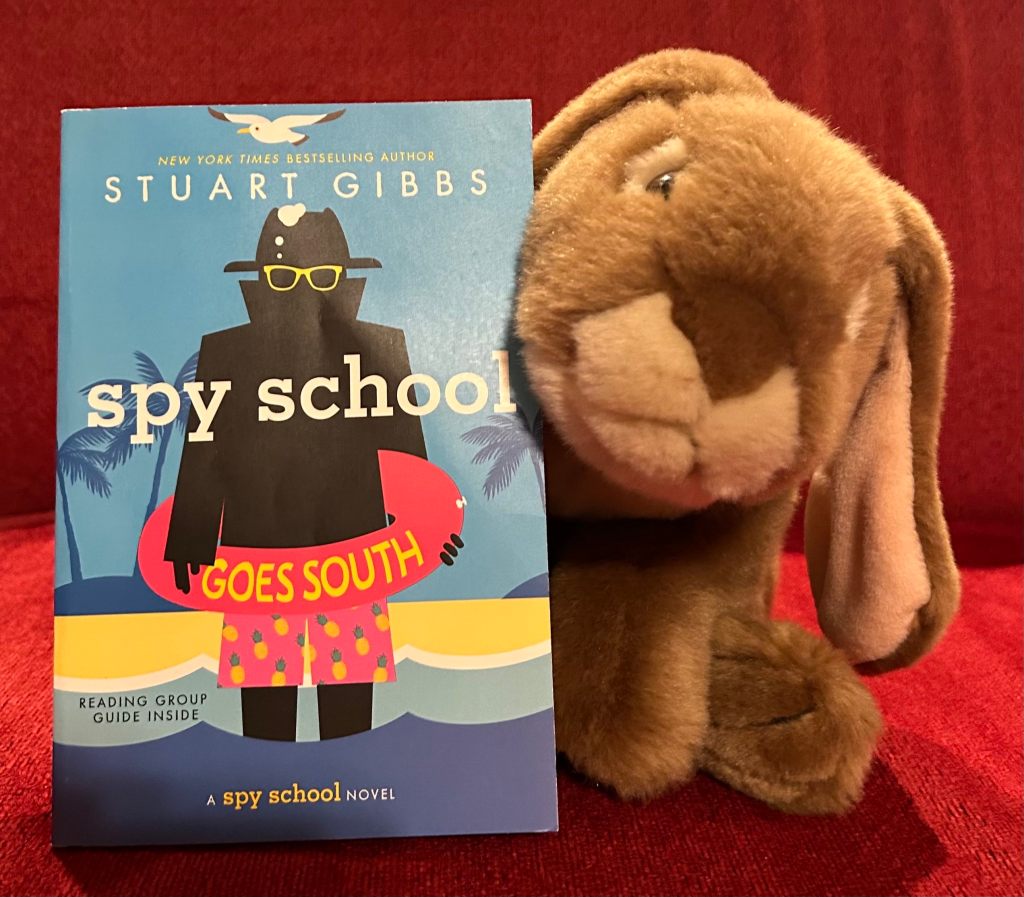
Caramel reviews Spy School Goes South by Stuart Gibbs.

Sprinkles: So Caramel, here we are, with yet another Spy School book. What is this one about?

Caramel: So in this one, Ben goes to Mexico because he was told by Murray that the leaders of SPYDER would be there. Then he gets shot at with a missile.

S: Why would he listen to Murray? Isn’t Murray an untrustable character?

C: Yes he is a baddie, but for some reason Ben trusts him to be telling the truth in this case.

S: I see. Was he?

C: At least that is what Murray knew to be the truth. And it did turn out that at least some of the leaders of SPYDER were there, so yes, he was telling the truth after all. But Ben never gets to see them.

S: You said he gets attacked. So does he figure out how to get out of it?

C: Yes.

S: And most of the story is taking place in Mexico?

C: Yep. I guess that is the going south in the title.

S: I guess so. So are there any new characters in this book?

C: Yes, Erica’s mom Catherine Hale.

S: What can you tell us about her?

C: She is very helpful. Maybe even more than Erica.

S: Interesting! So how old is Ben in this book?

C: I think he is thirteen now. It is one year after the first book.

S: Wow! so a lot has happened in that one year, right?

C: Yes. This is the sixth book after all.

Caramel is reading Spy School Goes South by Stuart Gibbs.

S: What did you like most about Spy School Goes South?

C: I liked the part where Ben finds out and foils SPYDER’s evil plan again.

S: Why?

C: Because it was hilarious to see Joshua Hallal freak out about it.

S: Wait, who is Hallal?

C: Joshua Hallal is an evil dude.

S: Hmm, so I guess it is good that he freaks out then.

C: Yes.

S: Does this book make you want to continue to read the rest of the series? 

C: Of course!

S: Okay, then maybe we should wrap up this one. Can you describe Spy School Goes South using three to five words?

C: Reprehensible. Repugnant. Odious. Loathsome. Abhorrent. Subhuman.

S: Wait, what? That’s what you think about the book?

C: No of course not! I’m just quoting Erica! That is what she says about Murray!

S: You did surprise me there Caramel! So honestly, would you try to describe the book now?

C: Okay, okay. How about “spyfull”, “adventurous”, and “page-turner”?

S: Those will work fine Caramel, thank you! What do you want to tell our readers?

C: Stay tuned for more book bunny reviews!

Caramel enjoyed reading Spy School Goes South by Stuart Gibbs and is ready for Book Seven!

Marshmallow reviews The Mysteries by Bill Watterson and John Kascht

Marshmallow is a big fan of Calvin and Hobbes, the comic strip about the often obnoxiously cynical but extremely curious six-year-old Calvin and his stuffed tiger Hobbes who comes alive only when nobody else but Calvin is looking. Early during the COVID-19 pandemic, she reviewed The Authoritative Calvin and Hobbes: A Calvin and Hobbes Treasury by Bill Watterson for the book bunnies blog. So she was very excited to hear that Watterson teamed up with the illustrator John Kascht in a new book project. Today Marshmallow talks to Sprinkles about this book, The Mysteries, which was published in October 2023.

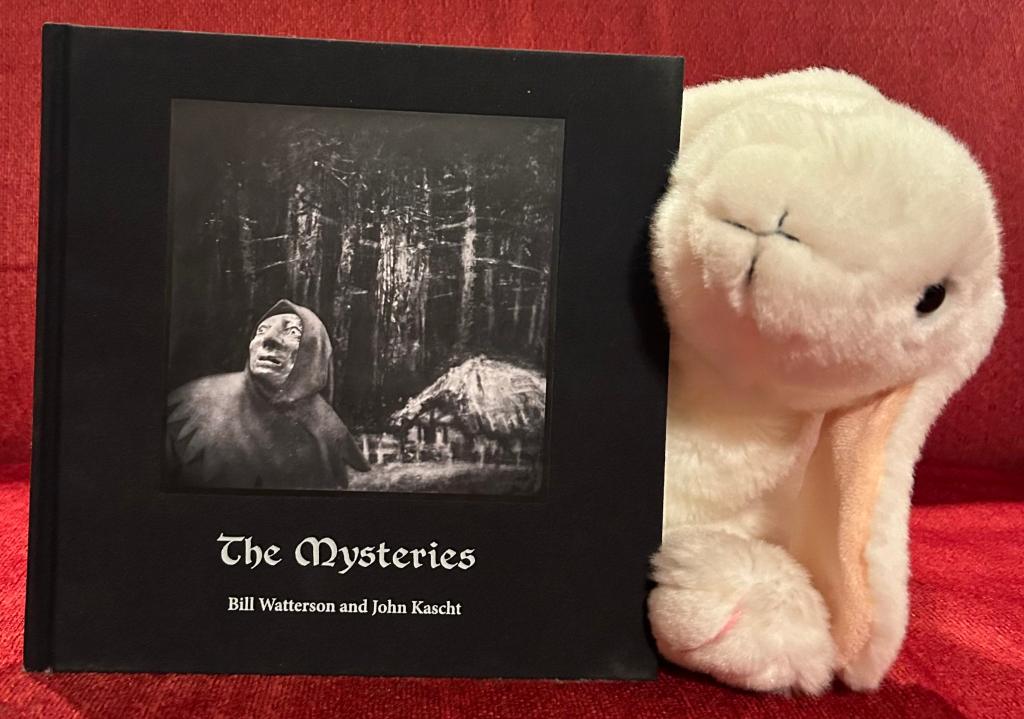
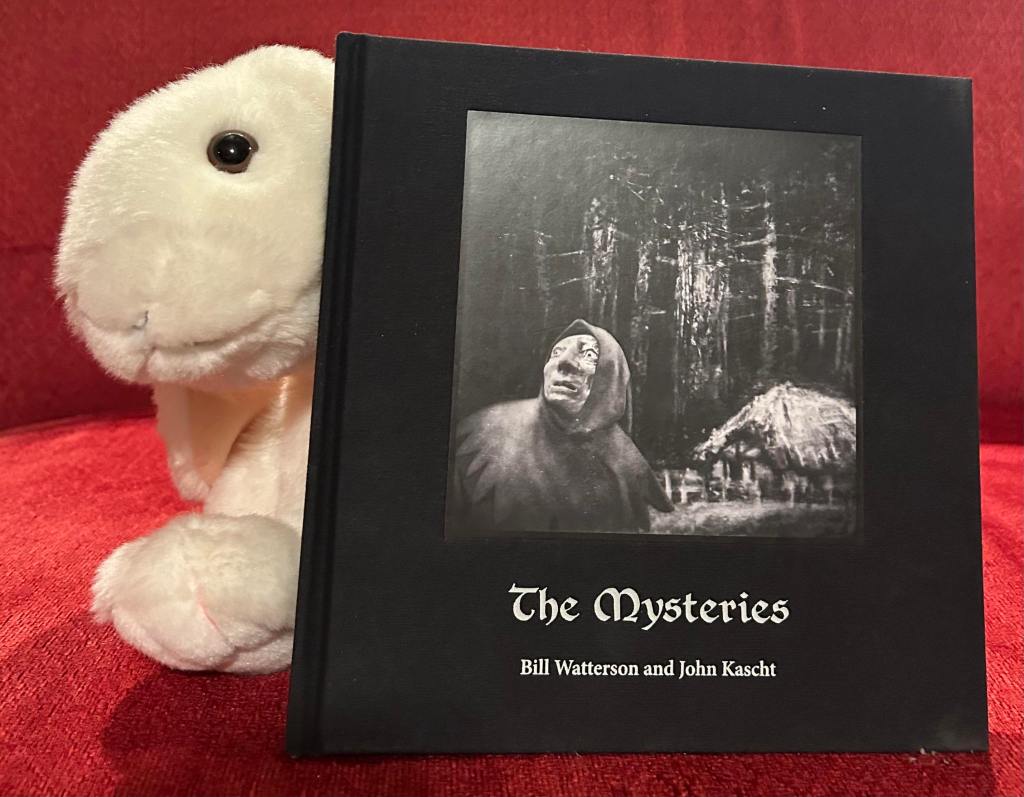
Marshmallow reviews The Mysteries by Bill Watterson and John Kascht.

Sprinkles: So Marshmallow this book was not quite what we expected, was it?

Marshmallow: No.

S: We were kind of hoping to see something of Calvin and Hobbes, at least perhaps some humor, right?

M: I was.

S: But before we dig in any further, can you tell our readers what the book is about?

M: Sure. This is a fable about a small village or country in some faraway place which was near a big forest. And in the forest were scary things, things the people did not understand.

S: And maybe they were scared because they did not understand.

M: Actually that is probably one of the points of the story. Because they tried very hard to capture one of these scary things, they called them the Mysteries, and then when they caught one, they were not very impressed.

S: Hmm, so what do you think that means?

M: I am not sure. But maybe it refers to things like thunder and lightning and solar eclipses and earthquakes, which were very very scary things, until we figured out what they were really all about.

S: Hmm, so once we had scientific explanations for them, their power to inspire fear and awe diminished.

M: Yes, but I think it is more than that. I think the Mysteries represent the mysteries of the universe. They go beyond thunder and lightning. And maybe the people got a bit too arrogant once they figured out how thunder worked that there was no mystery left that they should be scared of. But lightning still starts fires. Earthquakes still cause lots of damage to life and property. So in some sense, we will never be able to completely tame and understand nature, let alone the whole universe.

S: I think you might be on to something Marshmallow.

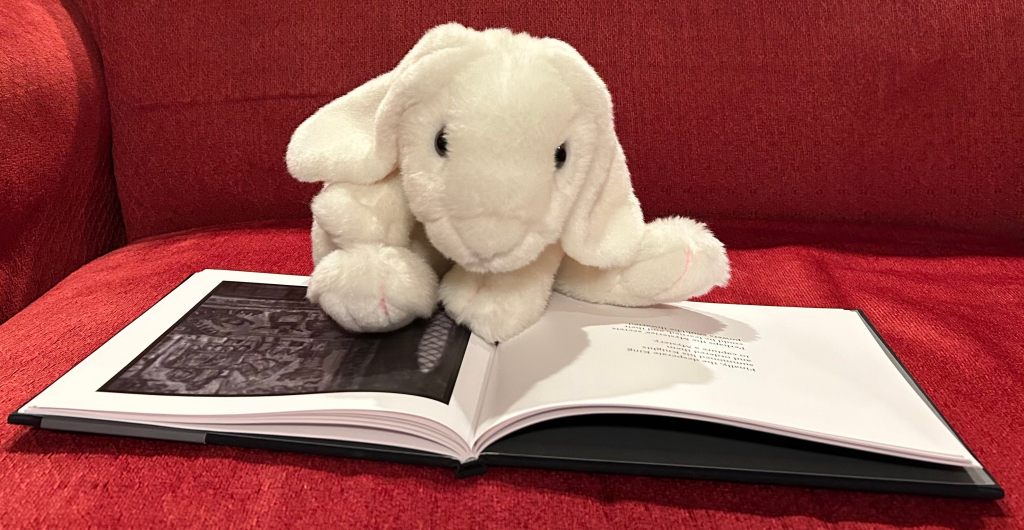
Marshmallow is reading The Mysteries by Bill Watterson and John Kascht.

S: Coming back to our original expectations about this book, maybe I am going to say, we actually should not have been too surprised.

M: What do you mean Sprinkles?

S: Maybe the end especially is pretty fitting for a fable coming from the creator of Calvin, the youngest and toughest misanthrope of all time.

M: What do you mean by that?

S: I feel like there is some pessimism about humans in the book. And I think there is some of that cynicism in Calvin, too.

M: Well, I did not notice that, but then again, when I read Calvin and Hobbes, I just laugh at his ridiculous plans and hilarious excuses for not doing what he is supposed to do.

S: Sure, there is definitely that level of hilarity to Calvin and Hobbes, but I’d say there is a lot of questioning of mainstream beliefs and assumptions, too, and some of the questioning does not leave much space for optimism. At least that is how I read it sometimes.

M: I guess I will need to reread Calvin and Hobbes, this time with that perspective, to see what you mean.

S: But coming back to The Mysteries, why do you think it is a fable?

M: Well, the space and time are not very clearly set, and it could be anywhere anytime, almost. And the kingdom seems to be all there is. And the authors are trying to give us a moral message.

S: Ooh, I like that! Can you tell me what that moral message is?

M: If we lose our awe of the mysteries of life and the universe just because we think we understand some of them, we might lose our respect for life and the universe, which can only end in disaster.

S: That is deep. Marshmallow!

M: But there is more. I think the fable is also telling us that there is always more mystery. That we will never run out of them, that there is always some magic and something to be in awe of when it comes to life and this universe.

S: I see. And the book says all this in so few words!

M: Yes. Each two-page spread has only a handful of words, and at least one of the two pages is a full page-picture.

S: Can you tell me a bit about the illustrations?

M: I think the only word that comes to my mind is “haunting”. Everything looks kind of deformed. The people look like they are made out of clay. It is almost like we are seeing our world but through some kind of a magic lens which shows us only the darker, more arrogant side of humanity.

S: In some sense though, I think one could read the ending as a hopeful message.

M: No!

S: I do! No matter what, life and the universe just go on.

M: I am not sure I agree with you on that, Sprinkles. But I guess we will just agree to disagree.

S: Sure, I am okay with that. But at least I think we agree that the core message is a warning.

M: Yes. We do agree. The core message is to warn people not to be too arrogant. As a species, humans should not get too arrogant. I think that is what the authors are saying. And they are telling us that we are like boats; a boat can cross the ocean but it can never conquer the waves.

S: That is a beautiful way to put it Marshmallow. Did you just come up with that yourself?

M: Yep.

S: I will definitely use that sentence again, Marshmallow, and I will cite you.

M: Thank you!

S: Okay, so let us wrap up this review then. What would you like to tell our readers?

M: Stay tuned for more amazing reviews from the book bunnies!

Marshmallow appreciated reading The Mysteries by Bill Watterson and John Kascht and talking about it with Sprinkles.

Caramel reviews Spy School: Secret Service by Stuart Gibbs

Caramel is on a roll, reviewing the Spy School books of Stuart Gibbs one by one. Today he talks about the fifth book in the series: Spy School: Secret Service, first published in 2017. As usual, Sprinkles is taking notes and asking questions.

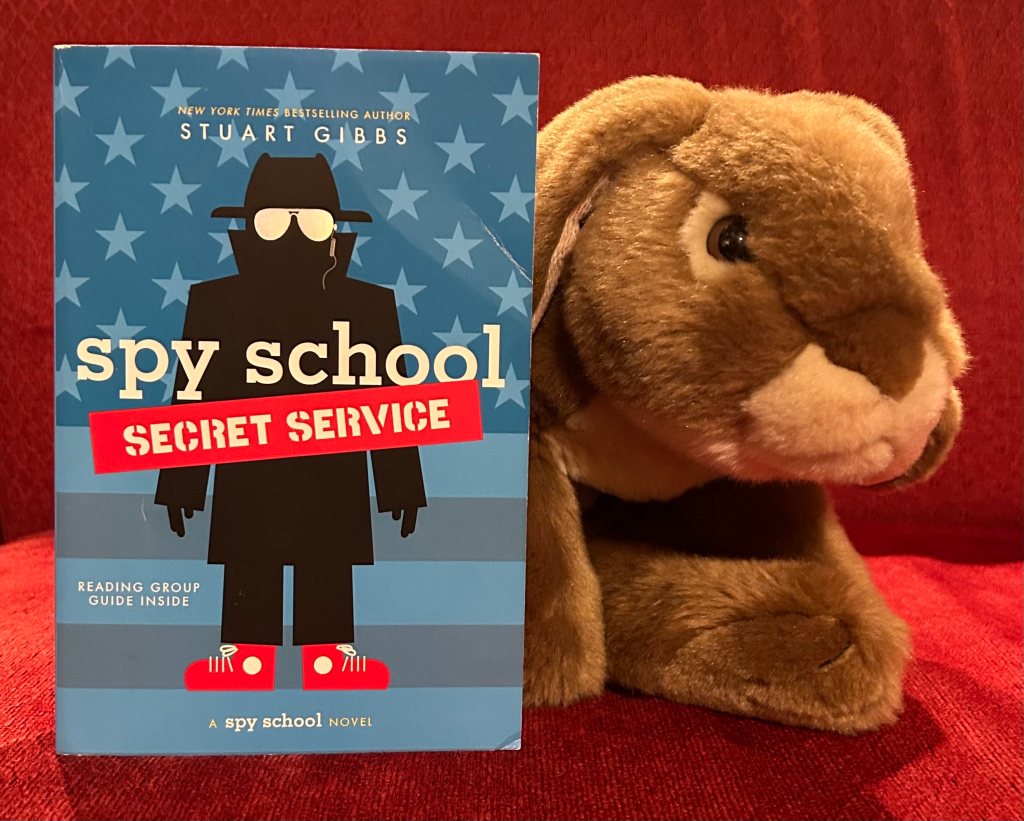
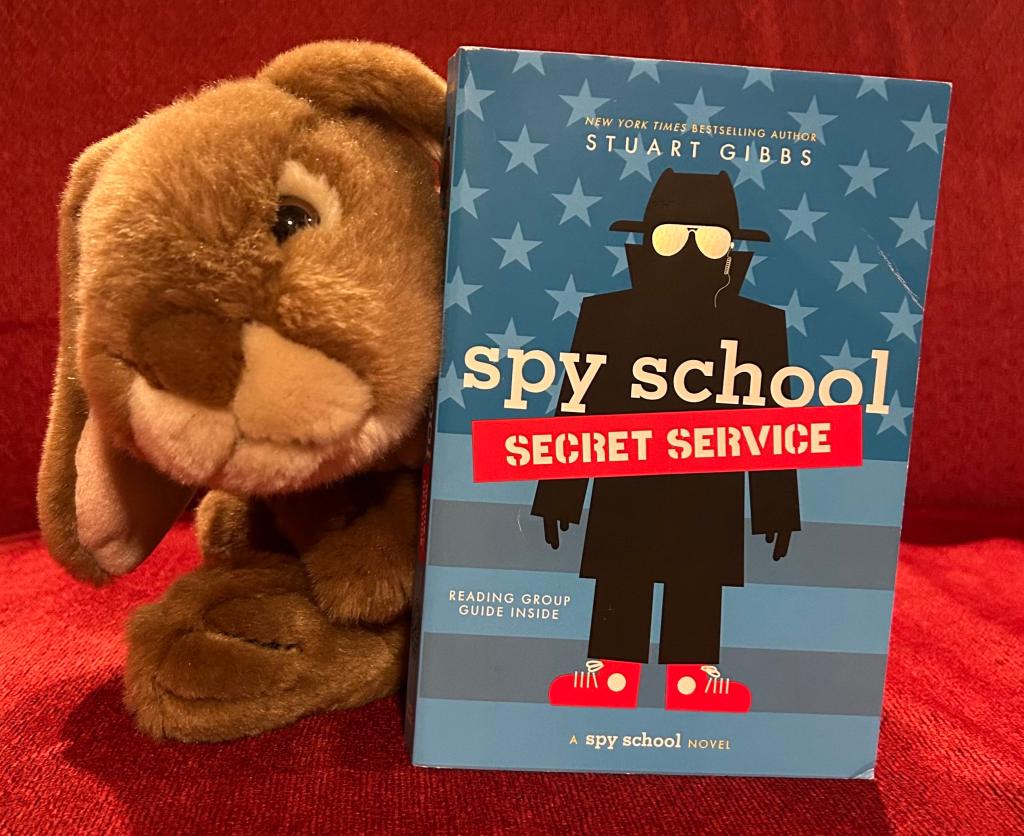
Caramel reviews Spy School: Secret Service by Stuart Gibbs.

Sprinkles: So Caramel, here we are, talking about yet another Spy School book. What is this one about?

Caramel: Ben is re-activated and saves the chairman of Joint Chief of Staff and the president from being assassinated by SPYDER.

S: Wow, that sounds serious and dangerous!

C: It is! Spying is dangerous business!

S: So reading these books is not giving you any ideas of becoming a spy?

C: No, definitely not. I just like reading about Ben’s adventures and misadventures.

S: That’s fair. So do we meet any new characters in Spy School: Secret Service?

C: Yes. Kimmy, Jemma, Jason, and President Stern.

S: So who are all those people? I’m guessing President Stern is the president of the United States and the person Ben will save. So who are the other three?

C: Jason and Jemma are the President’s kids. Kimmy is a person who is on the staff of the White House. She gives Ben a tour of the White House and introduces him to Jason.

S: Okay. I am assuming these people all play some important roles in the adventure?

C: Yep.

S: Do any of the characters from the earlier books show up too?

C: Yes of course. Ben’s friend Erica is there, and his nemesis, the evil genius Murray Hill is there. And so on.

Caramel is reading Spy School: Secret Service by Stuart Gibbs.

S: What did you like about this book most?

C: I liked the part when Ben and Murray fight with swords the most.

S: Why?

C: Because it was really funny. And I like it when Ben can beat Murray in something.

S: I see. I guess it is normal to root for the main character. So Id you were to describe this book in three to five words, what would you say?

C: Funny, fight scenes, and somewhat tense.

S: I like that recap! So is it tenser than the earlier books?

C: Not really. It is a little higher stakes maybe, but then again, I know Ben will figure things out. So it is not that bad.

S: I see. I guess we do know there are quite a few more books in the series, so surely Ben will make it out of this one.

C: Yep.

S: So does this book make you want to continue to read the rest of the series? 

C: Yes. I am ready for the next book!

S: Alright, then. Let us wrap up this review. What would you like to tell our readers?

C: Stay tuned for more book bunny reviews!

Caramel loved reading Spy School: Secret Service by Stuart Gibbs and is ready for the next book.