Sprinkles reviews three poetry anthologies

Today Sprinkles reviews three poetry anthologies that can help young bunnies get acquainted with a great many wonderful poems all at once: 101 Great American Poems collated by the American Poetry & Literacy Project, Favorite American Poems edited by Paul Negri, and How to Eat A Poem: A Smorgasbord of Tasty and Delicious Poems for Young People edited by the American Poetry & Literacy Project and the Academy of American Poets.
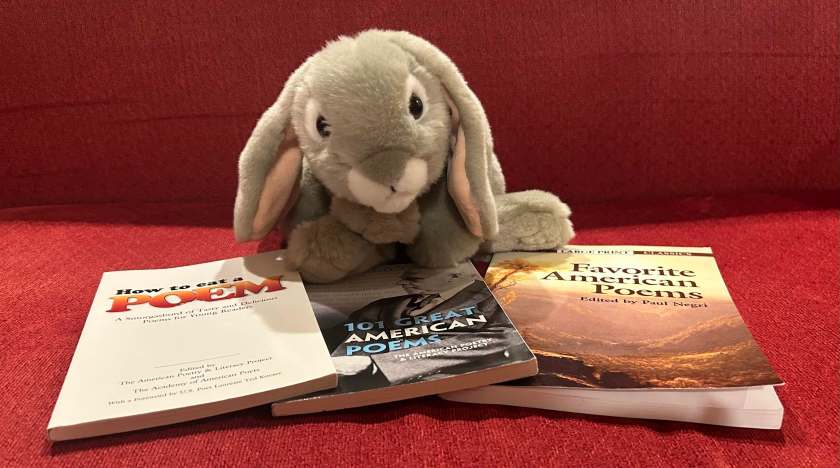
Sprinkles reviews 101 Great American Poems collated by the American Poetry & Literacy Project, Favorite American Poems edited by Paul Negri, and How to Eat A Poem: A Smorgasbord of Tasty and Delicious Poems for Young People edited by the American Poetry & Literacy Project and the Academy of American Poets.

How poetry comes into one’s life will differ from one bunny to another. But hopefully some day you find yourself interested in a poem. A poem that makes you think differently or feel very strongly about something. And that makes you think, hmm, maybe I could enjoy this poetry thing. But there is a whole wide world of poetry out there. Where do you start? Anthologies might help. So today I want to share with you some thoughts about three poetry anthologies that young readers might find of interest.

The first one I will write about is 101 Great American Poems, collated by the American Poetry & Literacy Project, and published originally in 1998 by Dover. Maybe you are aware that Dover is a publisher that specializes in republishing classical works that have been out of print for a while. However, 101 Great American Poems is a new anthology, first published by Dover. In fact all three books I am reviewing today are published by Dover in the same manner. I am glad Dover does publish original works, too, especially because they are often clean books sold at very reasonable prices.
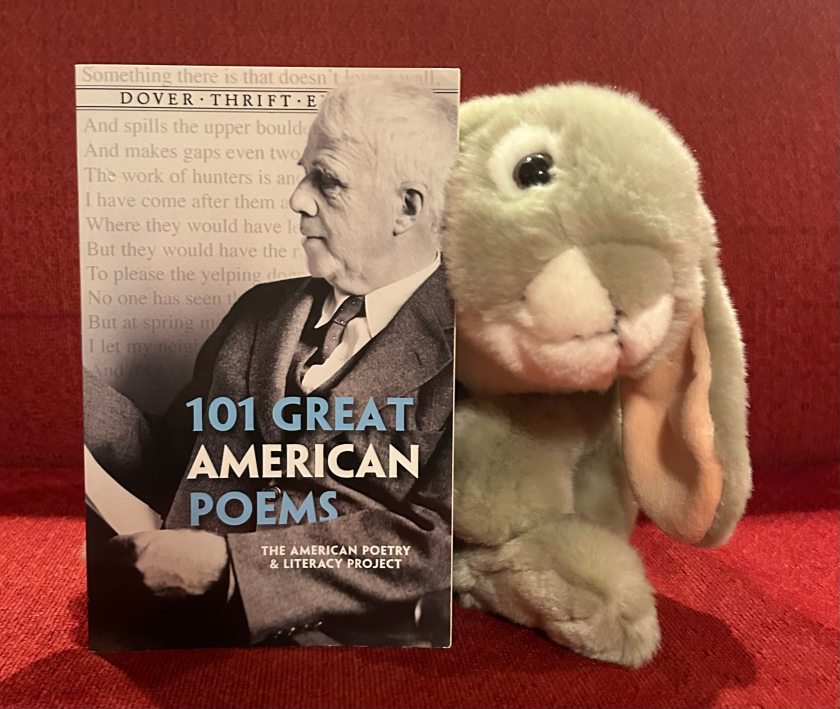
Sprinkles reviews 101 Great American Poems collated by the American Poetry & Literacy Project.

Anyways, let us get back to 101 Great American Poems. As you can tell, the book is a collection of one hundred and one poems from thirty-nine American poets ranging from colonial times to early twentieth century. The poems are organized by their authors, who themselves are organized according to their birth years. So the book starts with a poem “To My Dear and Loving Husband” by Anne Bradstreet, who was born in England in 1612 and was one of the early colonialists in America, and ends with “The Unknown Citizen” by W.H. Auden who was born in England in 1907 and wrote this poem in 1939 soon after he moved to the United States. Each poet is introduced with a couple sentences of biographical context, and then we are offered one to ten poems from each. About seventeen poets have one poem under their names (including one from Abraham Lincoln, who one might or might not have expected to find in a poetry anthology), while two have ten (Emily Dickinson and Robert Frost). Most other folks are represented by two to three poems.
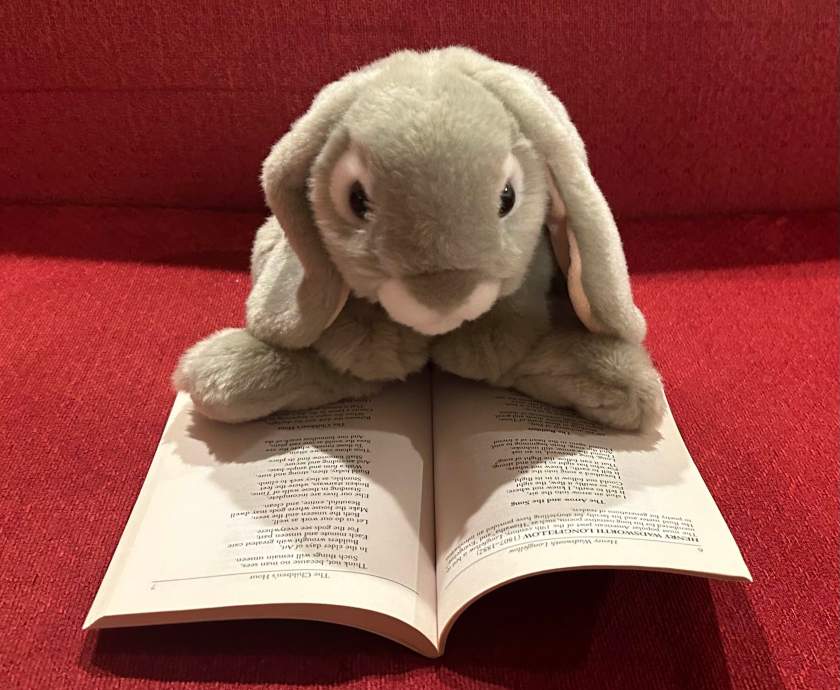
Sprinkles is reading 101 Great American Poems collated by the American Poetry & Literacy Project.

We have here a collection of mainly classical American poetry. Well-known poet names like Ralph Waldo Emerson, Henry Wadsworth Longfellow, Edgar Allan Poe, Walt Whitman, Emily Dickinson, Gertrude Stein, Robert Frost, Carl Sandburg, Wallace Stevens, William Carlos Williams, Ezra Pound, Marianne Moore, T.S. Elliot, E.E. Cummings, and Langston Hughes are accompanied by names that some of us might not be as familiar with. And even from those names that might be familiar, we might get new poems, that might not have shown up in our own studies of poetry in school but will open up whole new worlds for us if we let them.

In the introduction to 101 Great American Poems, the poet Joseph Brodsky is quoted to have said that “Books find their readers, and if not, well, let them lie around, absorb dust, rot, and disintegrate. There is always going to be a child who will fish a book out from the garbage heap.” The introduction ends: “Books wear out. Great poets pass away. But the spirit of poetry is indestructible.” This book is a neat collection that could help a young person reach in and find that one poem (or three) that will bloom new flowers in their heart.

***

Next up, I want to say a few words about Favorite American Poems, edited by Paul Negri. First published in 2002, the version I read is a large-print one, “designed for those who need or prefer large print and meets the standards of the National Association for the Visually Handicapped.” I must say that having quite poor eye sight myself, I find large-print books very much more accessible. And for a poetry book, the format works really well, even if you do not often need large print.
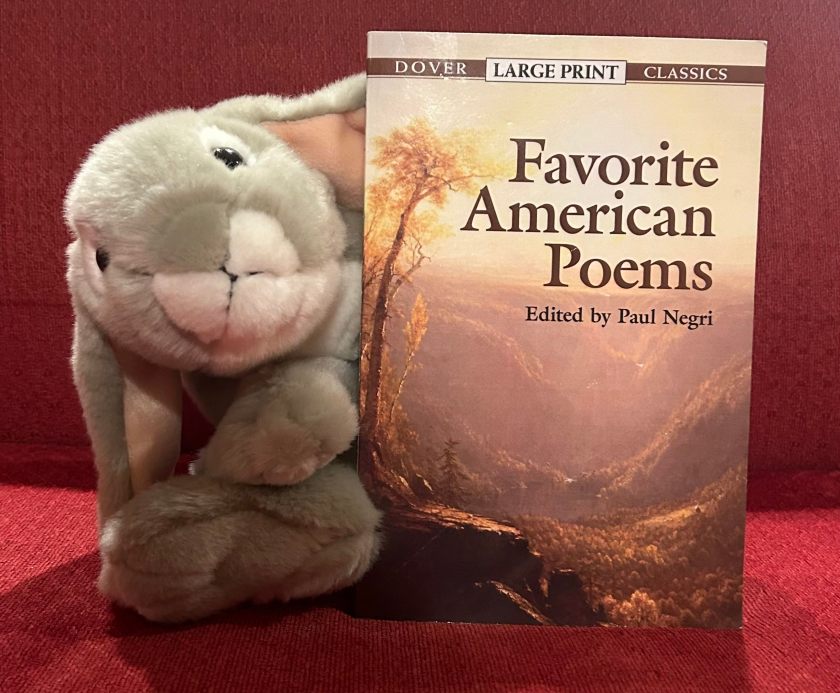
Sprinkles reviews Favorite American Poems edited by Paul Negri.

The book is organized again in terms of the poets, and the poets are listed once more in the order of their birth years. There is much overlap in between these two books, and so you will not be surprised to hear for example that the first poet presented is Anne Bradstreet again, with her “To My Dear and Loving Husband”. This one showcases thirty-four poets, and the big names in the previous book show up all here too. But this book has poems from John Greenleaf Whittier, Jones Very, Henry David Thoreau, Julia Ward Howe (“Battle Hymn of the Republic” had to appear of course!) and James Whitcomb Riley, who did not show up in 101 Great American Poets. On the other hand, we do not get to read poems from Abraham Lincoln, Sara Teasdale, Robinson Jeffers, Marianne Moore, Archibald MacLeish, E.E. Cummings, Jean Toomer, Langston Hughes, Countee Cullen, and W.H. Auden.
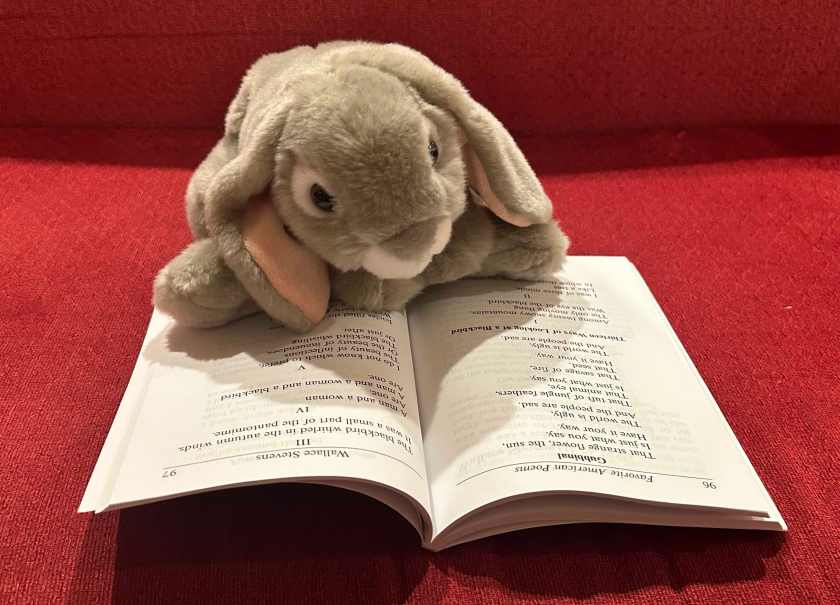
Sprinkles is reading Favorite American Poems edited by Paul Negri.

Biographical notes of the overlapping poets are mostly if not all identical. Poem selections also overlap but not completely. For example the same ten poems from Emily Dickinson, the same seven from Walt Whitman, and the same five from Edgar Allan Poe show up in both books, but both Oliver Wendell Holmes and Ell Wheeler Wilcox are represented by two poems in Favorite American Poems while only one per is showcased in 101 Great American Poems. Favorite American Poems seems to showcase more poems for the same poets in general, while 101 Great American Poems perhaps tries to be more selective.

***

The third book I will talk about is How to Eat A Poem: A Smorgasbord of Tasty and Delicious Poems for Young People, edited by the American Poetry & Literacy Project and the Academy of American Poets. First published in 2006, this book is more explicitly directed towards young readers and it shows, not only in the title but also in the way the poems are organized and presented.
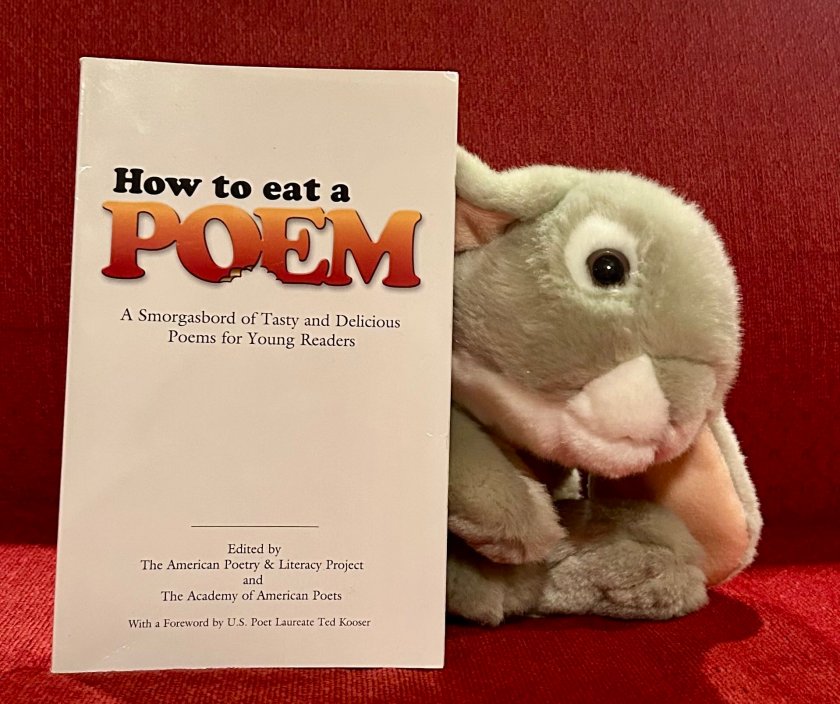
Sprinkles reviews How to Eat A Poem: A Smorgasbord of Tasty and Delicious Poems for Young People, edited by the American Poetry & Literacy Project and the Academy of American Poets.

Unlike the first two books I reviewed above, How to Eat a Poem is organized around themes. The seventy poems in the book are categorized into four groups. The first group is titled “Magic Words: Poems about poetry, books, words, and imagination”. This section contains the poem that gives the book its title: “How to Eat a Poem” by Eve Merriam. The second group is collected under the title: “My Heart Leaps Up: Poems about the beauty of the natural world”. This section starts with William Wordsworth’s poem “My Heart Leaps Up When I behold” which gives the section its title. It also contains four simple and beautiful haiku as well as several famous poems like “The Tyger” by William Blake and “When I Heard the Learn’d Astronomer” by Walt Whitman. This is also where “The Desert is My Mother” by Pat Mora appears side by side with its Spanish version.
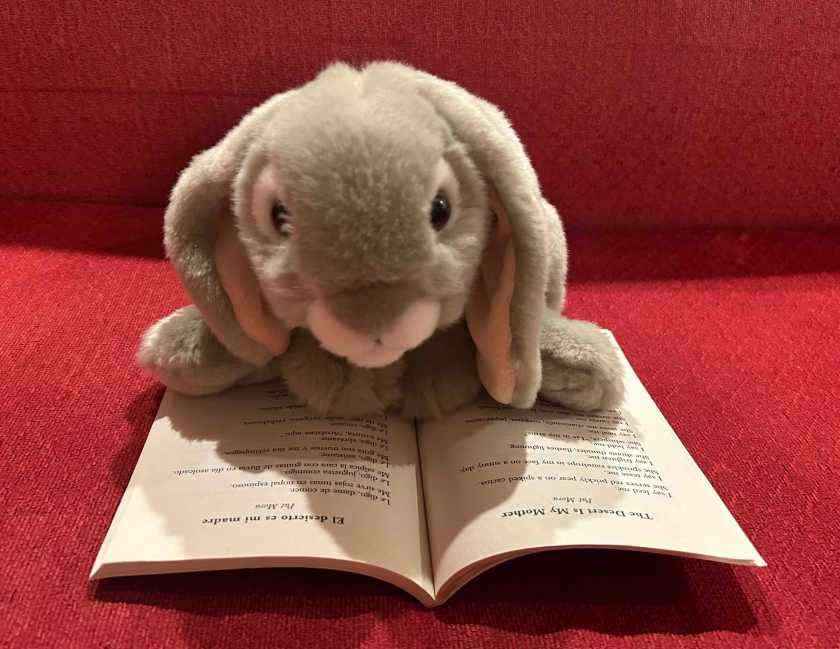
Sprinkles is reading "The Desert is My Mother," and its Spanish version, by Pat Mora in How to Eat A Poem: A Smorgasbord of Tasty and Delicious Poems for Young People, edited by the American Poetry & Literacy Project and the Academy of American Poets.
Sprinkles is reading “The Desert is My Mother,” and its Spanish version, by Pat Mora in How to Eat A Poem: A Smorgasbord of Tasty and Delicious Poems for Young People, edited by the American Poetry & Literacy Project and the Academy of American Poets.

The third section is titled “I Think Over Again My Small Adventures: Poems about travel, adventure, sports, and play”. In here we find the poem that gives the section its title: “I Think Over Again My Small Adventures”. a poem of Native American origin with its original composer unknown. Here we also find a poem by Shel Silverstein (“Sick”), another by Langston Hughes (“Harlem Night Song”) and another by Elizabeth Bishop (“One Art”). The last thematic section is titled “Hope is the Thing With Feathers: Poems about love, friendship, sadness, hope and other emotions,” and as you might imagine, it contains Emily Dickinson’s “Hope is the Thing with Feathers”. It also contains Edgar Allan Poe’s “Annabel Lee”and several others that explore a wild range of emotions. The poets in this book are a lot more diverse, in their national, ethnic, and historical origins. And the goal seems to be to show to the young reader that poetry is fun and worthwhile.

***

Overall I think all three books do well what they set out to do. 101 Great American Poems starts with the poet Joseph Brodsky asserting that “poetry must be available to the public in far greater volume than it is.” In Favorite American Poems, we are told that “we read poetry because at its best, it lives and sings.” And as we are told in the foreword to How to Read A Poem, poet Ted Kooser tells us that poetry “should be fun”. I believe these ideas are very well represented by each of these books.

I think the youngest bunnies may benefit from starting with How to Eat a Poem, and any bunny may decide to pick one or the other between 101 Great American Poems and Favorite American Poems. But make sure you get your paws on at least one of these books, and leave them lying around in the house. The young paws will eventually reach them and start reading. And then their journeys into the world of poetry will really take off.
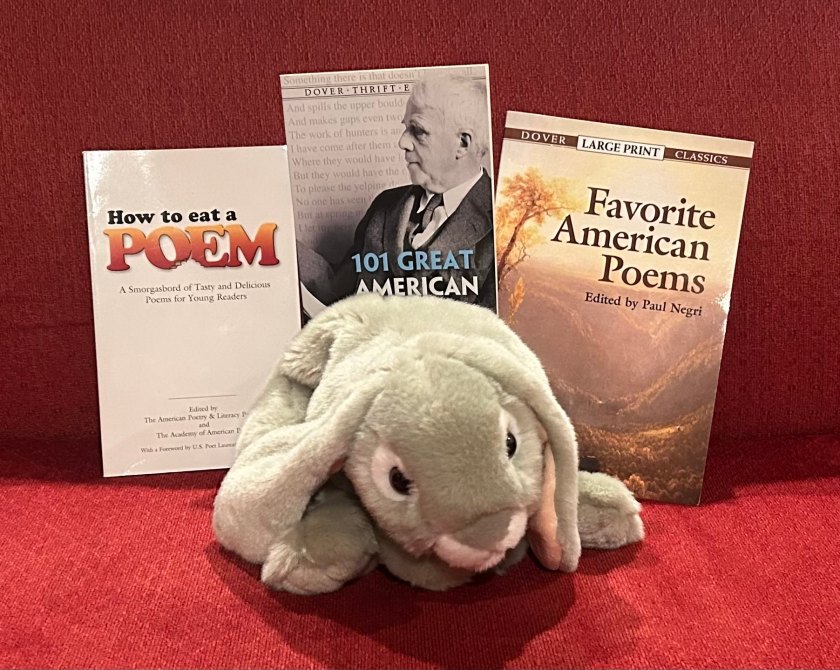
Sprinkles recommends that readers check out at least one of the three books mentioned here: 101 Great American Poems collated by the American Poetry & Literacy Project, Favorite American Poems edited by Paul Negri, and How to Eat A Poem: A Smorgasbord of Tasty and Delicious Poems for Young People edited by the American Poetry & Literacy Project and the Academy of American Poets.

Caramel reviews Nathan Hale’s Hazardous Tales #4: Big Bad Ironclad by Nathan Hale

As his first review of 2025, Caramel wanted to continue with his favorite historical graphic novel series: Nathan Hale’s Hazardous Tales. He had already reviewed One Dead Spy, Treaties, Trenches, Mud, and Blood, and The Underground Abductor. Today he is talking about Big Bad Ironclad, fourth book in our collection. As usual, Sprinkles is taking notes and asking questions.

[We were hoping to go through these books in order, but Caramel happened to first read a three-book sampler which was made up of the first, fourth, and the fifth books! So the numbering of these posts basically is mostly about the order Caramel is reading them in. Big Bad Ironclad, reviewed in today’s post, is the second ever book in the series, originally published in 2012. Readers can see the publication order of these books at this page created by Fulton County Library System.]

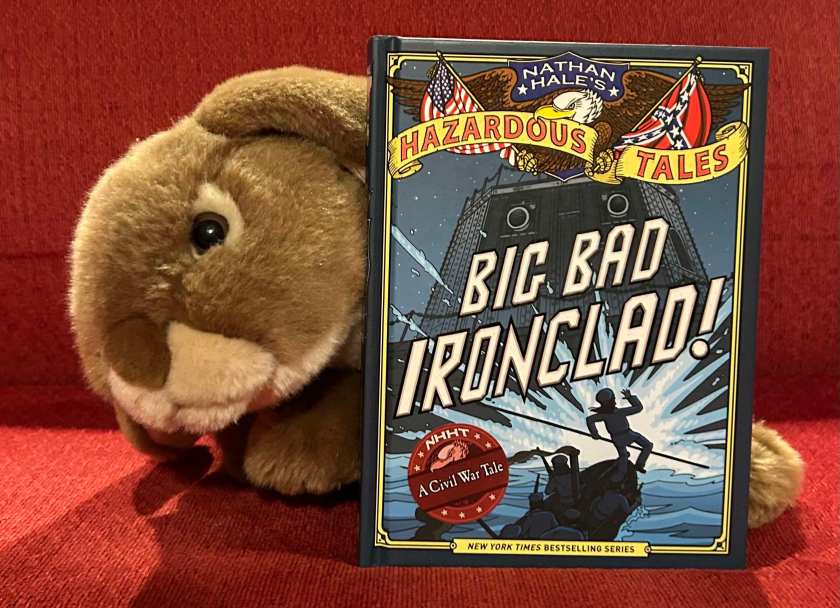
Caramel reviews Nathan Hale’s Hazardous Tales #4: Big Bad Ironclad by Nathan Hale.

Sprinkles: So Caramel, here we are again, and you chose to start off your 2025 reviews with yet another Nathan Hale book.

Caramel: Yes I have, and, what a book!

S: Hmm, I am guessing that means it is a good book?

C: yes, it certainly was.

S: So what is this one about? What time period are we in?

C: we are in the civil war, and it is about the ironclads, the first metal warships.

S: Oh yes, maybe we should remind our readers that these books are graphic novels that explore various time periods in the history of the United States. So this one is about the U.S. Civil War. Then we must be in the 1860s. 

C: Yes, that is important to do, and it is the 1860s.

S: Okay, so tell me more about the ironclads. 

C: They are older steam-powered warships that heavy iron plating is put over, like a jacket, allowing them to withstand cannons, and other guns of the time.

S: So kind of like an armor a warrior might put on. Underneath the iron are they made of wood then? 

C: Yes, they are, in fact, made of wood under the iron.

S: Hmm, I guess it makes sense to try and armor the ships. But wouldn’t that make them too heavy? Wouldn’t they sink?

C: Well, yes and no. The iron is placed on the exact right places as to not make it too heavy, yet still provide ample protection from attack.

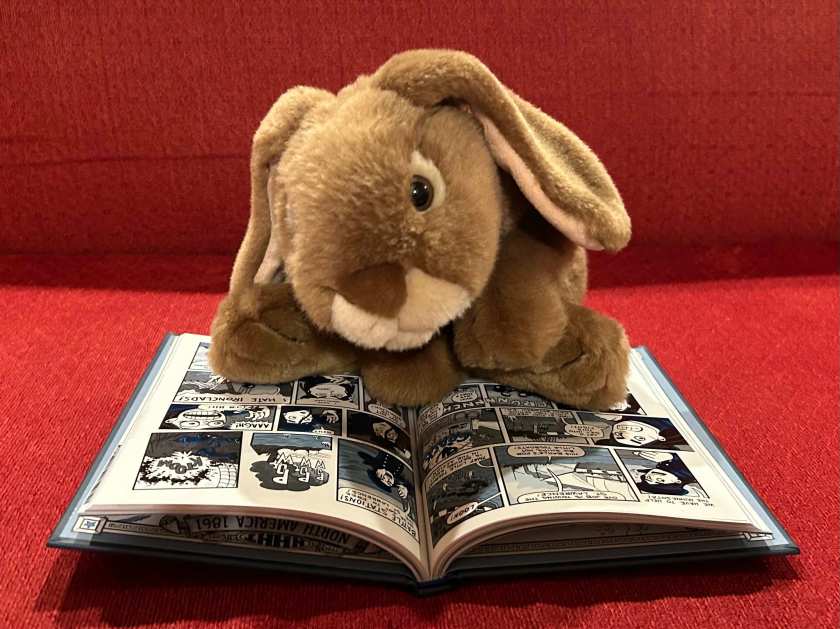
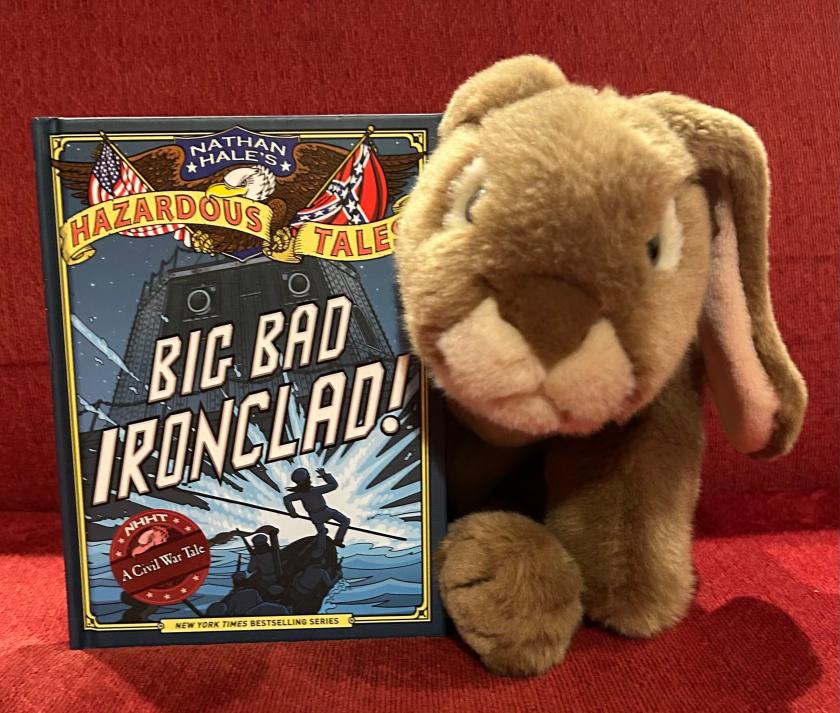
Caramel is reading Nathan Hale’s Hazardous Tales #4: Big Bad Ironclad by Nathan Hale.

S: Okay, so that looks like a story you would be interested in, you like warships and such, but it is after all a graphic novel. Are there any human characters in the book? And what is the human story told?

C: It is about the stories of the ironclads and those who fought against them and how they defeated the big, bad ironclad.

S: Oh, so the ironclads are kind of like the new scary weapons and the story is about how they could be defeated. Do we also learn about the people who designed and built the ironclads? 

C: Yes, I suppose, but the story of how they are defeated is more central. 

S: Do both sides have ironclads or only one side?

C: Well, both sides have ironclads, but the story is told mainly from the view of the Union, the North, so we learn about how they build their ironclad and defeat the ironclad from the South. 

S: I see. So did you learn some new things while reading this book?

C: Yes, I did learn some new things; these books have so many facts! For example I learned that the Union built their own ironclad from the same inventor who made the peacemaker, a huge cannon which blew up and killed the president’s cabinet. They must have been desperate.

S: That is interesting! I had not heard about the peacemaker. Wikipedia has an article about the ship that it was installed on. So these books are factual but also fictional. Can you tell what is fact and what is fiction? 

C: Yes, it is rather obvious as the narrator, Nathan Hale, says the real things that happen, like he says things like, ”this is not an accurate representation of this person,” or something like that.

S: I see. That is cool. So you learn stuff about the history of the United States and also enjoy reading a fun graphic novel. I am assuming of course that you have enjoyed reading this book?

C: Yes, it was great!

S: I am assuming we will hear about a lot more Nathan Hale books in the near future. 

C: Yes, you will.

S: Can’t wait!

C: Well, you have to. At least till next week! 

S: Okay, okay, yes, till next week. So as we wrap up this review, what do you want to tell our readers?

C: Stay tuned for more book bunny reviews!

Caramel loved reading Nathan Hale’s Hazardous Tales #4: Big Bad Ironclad by Nathan Hale and can't wait to read the next book!
Caramel loved reading Nathan Hale’s Hazardous Tales #4: Big Bad Ironclad by Nathan Hale and can’t wait to read the next book!

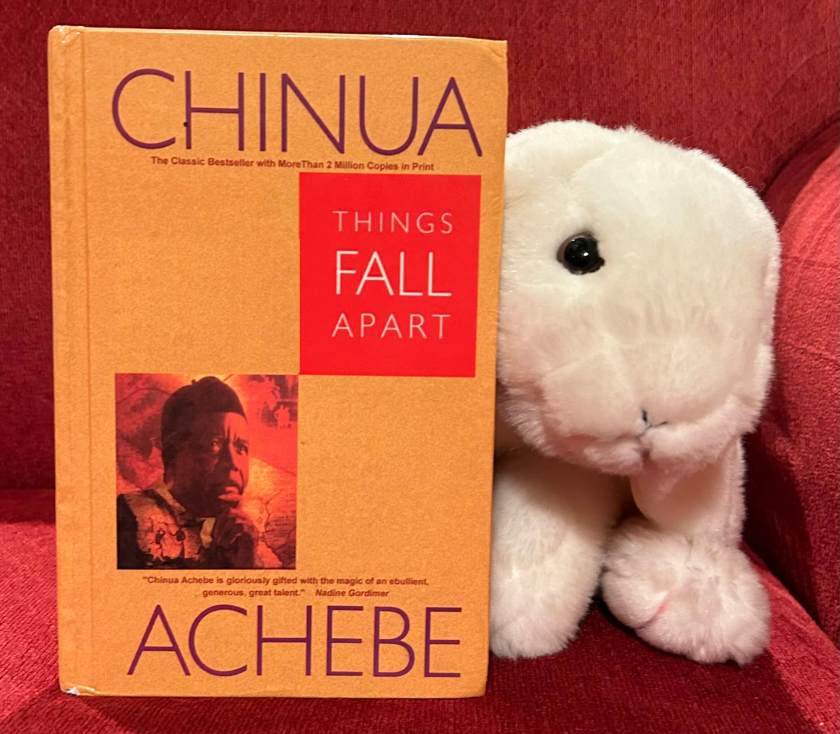
Marshmallow reviews Things Fall Apart by Chinua Achebe

As the first review of the book bunnies blog this new year, we present to you Marshmallow’s review of Chinua Achebe’s Things Fall Apart. First published in 1958, Achebe’s novel is a modern classic, and Marshmallow has read it in school.

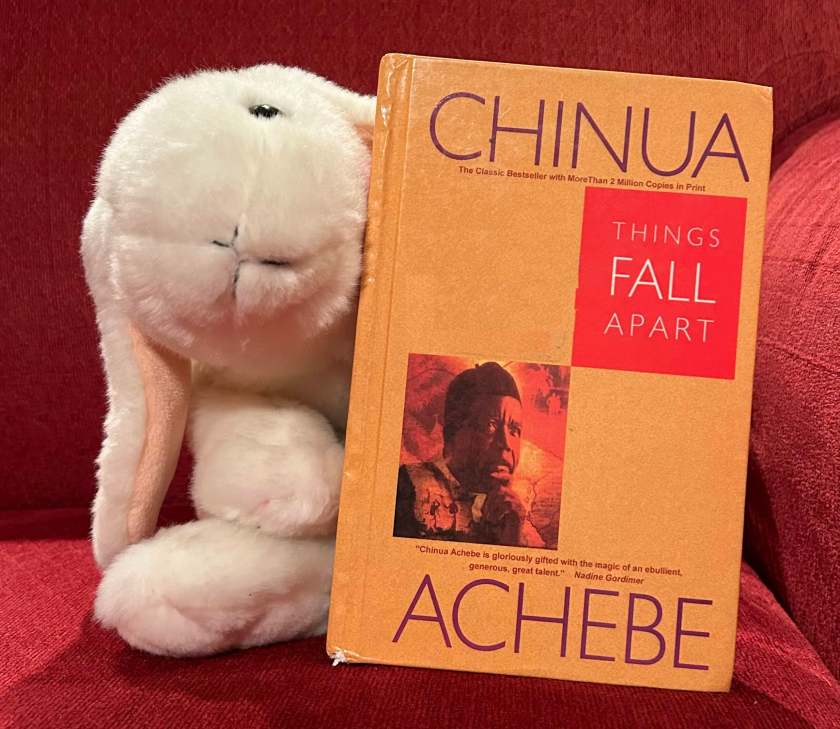
Marshmallow reviews Things Fall Apart by Chinua Achebe.

Marshmallow’s Quick Take: If you like historical fiction books about colonialism in Africa or books that make you think or feel, then this is the book for you!

Marshmallow’s Summary (with Spoilers): Set in the Nigerian Ibo society during the 1890s, this book starts with the introduction of Okonkwo. Okonkwo is a highly-respected man in his village Umuofia. Through his victories in battle and his defeat of the Cat (a famous wrestler), Okonkwo is a powerful man. As a result (as is Ibo culture), he has three wives, many children, a successful farm, and on occasion drinks palm wine out of his first human skull. He is what is called a “strong man.” However, his success and strength is a result of fear. His drive to succeed is fueled by a fear of being similar to his father, who was a efulefu (or worthless man). Okonkwo’s father was lazy and debt-ridden; thus, Okonkwo compensates for his father’s failures by working obsessively. Luckily for Okonkwo, in Ibo society, a man is not judged by his father, but by his own merit. Eventually, his success seems cemented. Yet, he is still controlled by anxiety, fear, anger, and violence. His household, though it reflects the traditional Ibo setup of its time, is a model case of domestic abuse.

Meanwhile, a woman from Umuofia is killed in a neighboring village. To avoid war with the fear-inspiring Umuofia, this village sends a virgin girl and a young boy to compensate. For the purposes of the plot, the boy (named Ikemefuna) is most important. Umuofia doesn’t immediately decide what to do with the boy, taking several years to do so. During this, he is placed in Okonkwo’s household and soon becomes fast friends with Okonkwo’s son, Nwoye. Over time, Okonkwo starts to view Ikemefuna as a son. 

But when tragedy strikes, Okonkwo finds himself in a situation that pits his “strong man” facade against his heart. And as the book progresses, Okonkwo continually finds himself at odds with the changing village. The question is, how much more can he take before he falls apart?

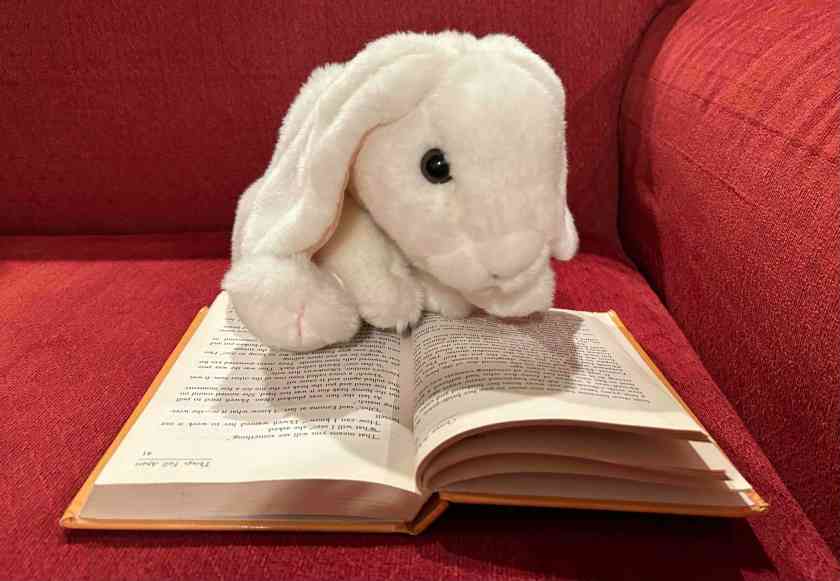
Marshmallow is reading Things Fall Apart by Chinua Achebe.

Marshmallow’s Review: I think reading this book is an extremely important experience that all people and bunnies should have. Chinua Achebe–the author–wrote it in simple, easy to read English specifically so it would be accessible to all; this makes it a good book for all ages and levels of reading ability. But ultimately, this book is remarkably subtle and nuanced. The author’s tone is simple and unique, while startlingly complex at the same time. The plot evolves elegantly and the author creates compelling characters that make you need to see the storyline though. Additionally, Achebe successfully grapples with and portrays issues like colonialism, racism, and toxic masculinity. This book is incredible because of the insights it gives on such topics. It also shows the reader what (some) life and culture was like in Nigeria before colonialism.

Additionally, this book’s themes are philosophically, historically, psychologically, and culturally intriguing. Throughout, Achebe weaves in the concept of facades: facades of strength, of stability, of security, of trustworthiness, of happiness, of truth. Achebe’s work is remarkable, and the astute reader will recognize and appreciate the importance of such work.

Overall, I highly recommend this book to all because it’s imperative to understand what others in the world experience and experienced, especially in a world of such divided opinions and narrow perspectives. 

Marshmallow’s Rating: 100%.

Marshmallow rates Things Fall Apart by Chinua Achebe 100%.

The Book Bunnies review the books of 2024

For the last couple years, at the end of the year, we have been doing a New-Year-ish thing of talking about all the books we have read through that year. (You can find our recap of 2022 here, and here is our recap of 2023.) This year, we continue this new tradition and take a look at our reviews for 2024.

[2024 saw the bunnies read and review many books, both new and classic. You can find a full list here.]

The book bunnies review the books of 2024.

Sprinkles: So maybe this year, we can start with Marshmallow.

Marshmallow: Sure. I have reviewed many, many books this year. I liked all of them, but there are a couple that I really, really, really liked. But maybe we can begin with the series I read and enjoyed.

S: Makes sense to me.

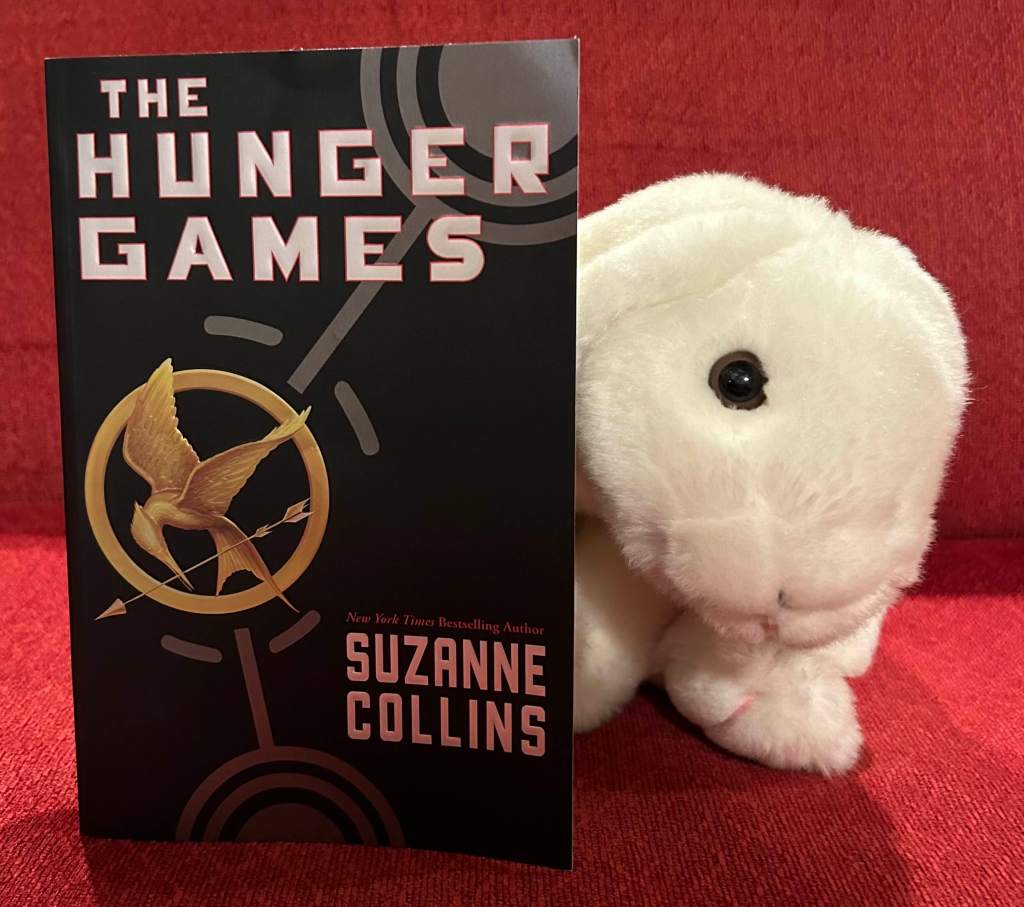
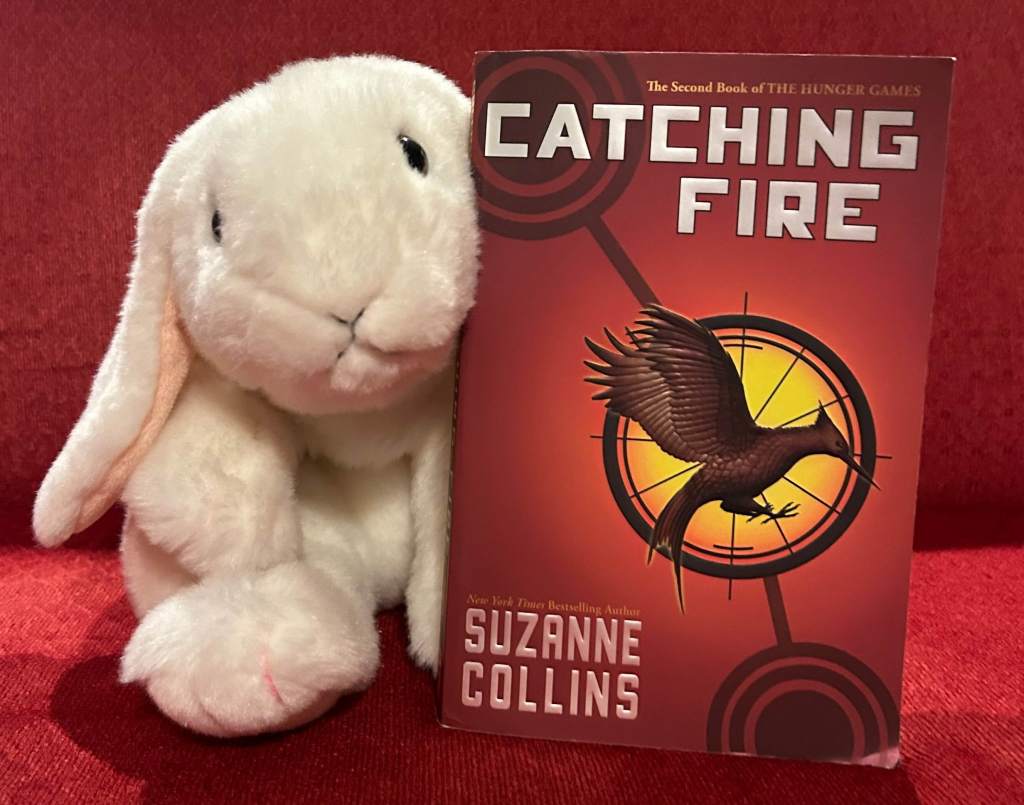
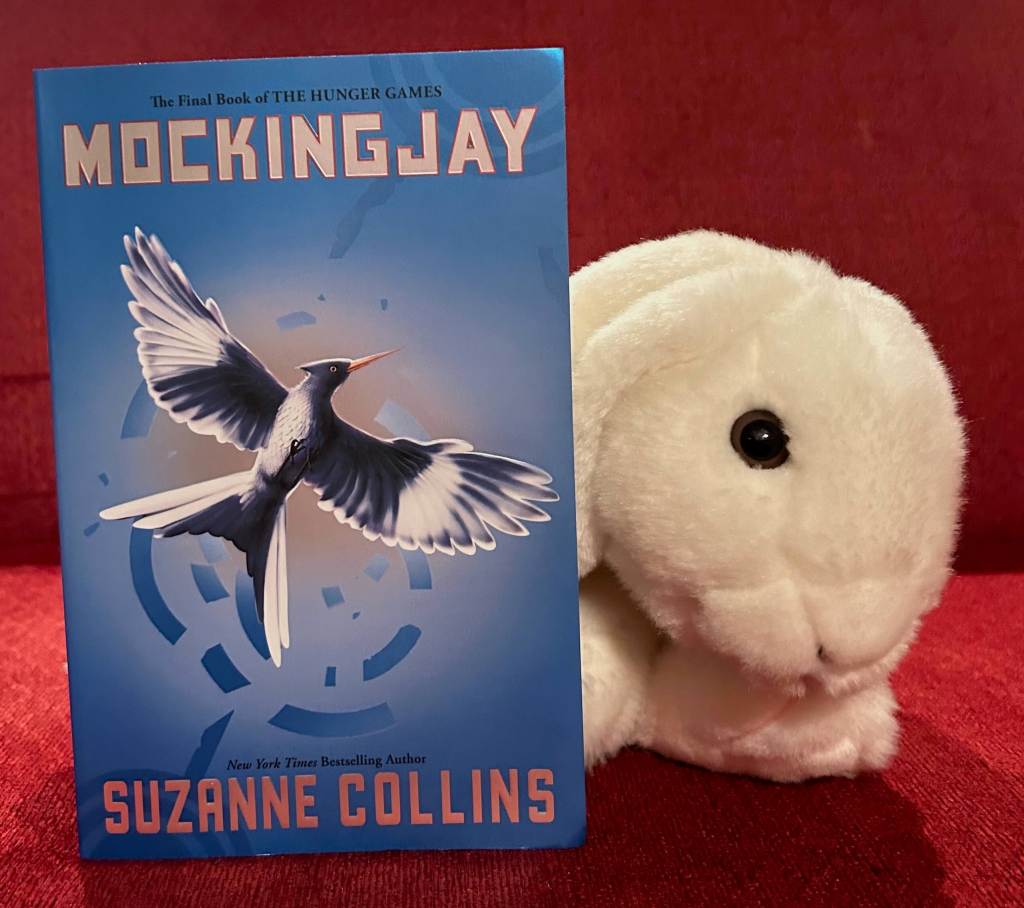
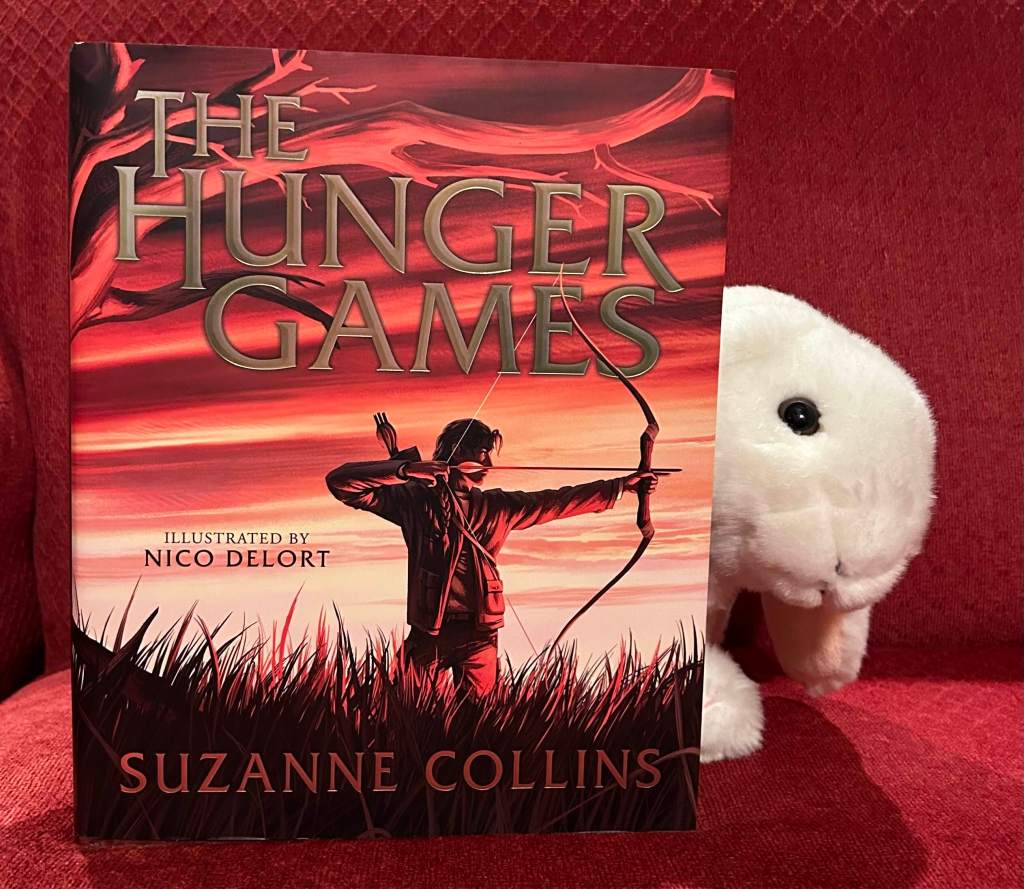
M: The first series I started this year was the famous Hunger Games series. Here are my reviews of the three main books:  The Hunger GamesCatching Fire, and Mockingjay. And here is my review of The Hunger Games: The Illustrated Edition. I had never read these books before and quickly learned exactly why they are so revered. I was also shocked by how deep some of the themes were (family and friendship of course, but also lessons about the impacts of war, greed, violence, trauma, and poverty). This is an amazing series (I love it!) I would recommend to all reasonably mature bunnies (maybe like 12 and up?)

S: Yes, I remember how much you were affected by those books.

S: What about the other series you started this year?

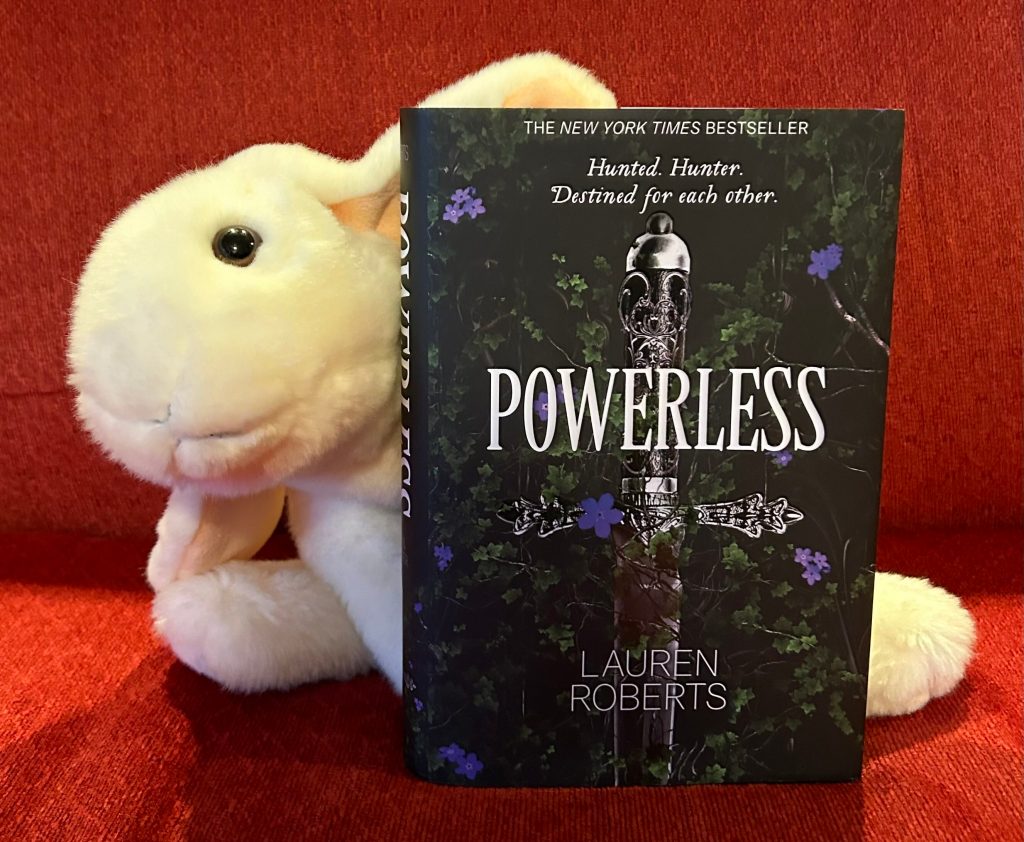
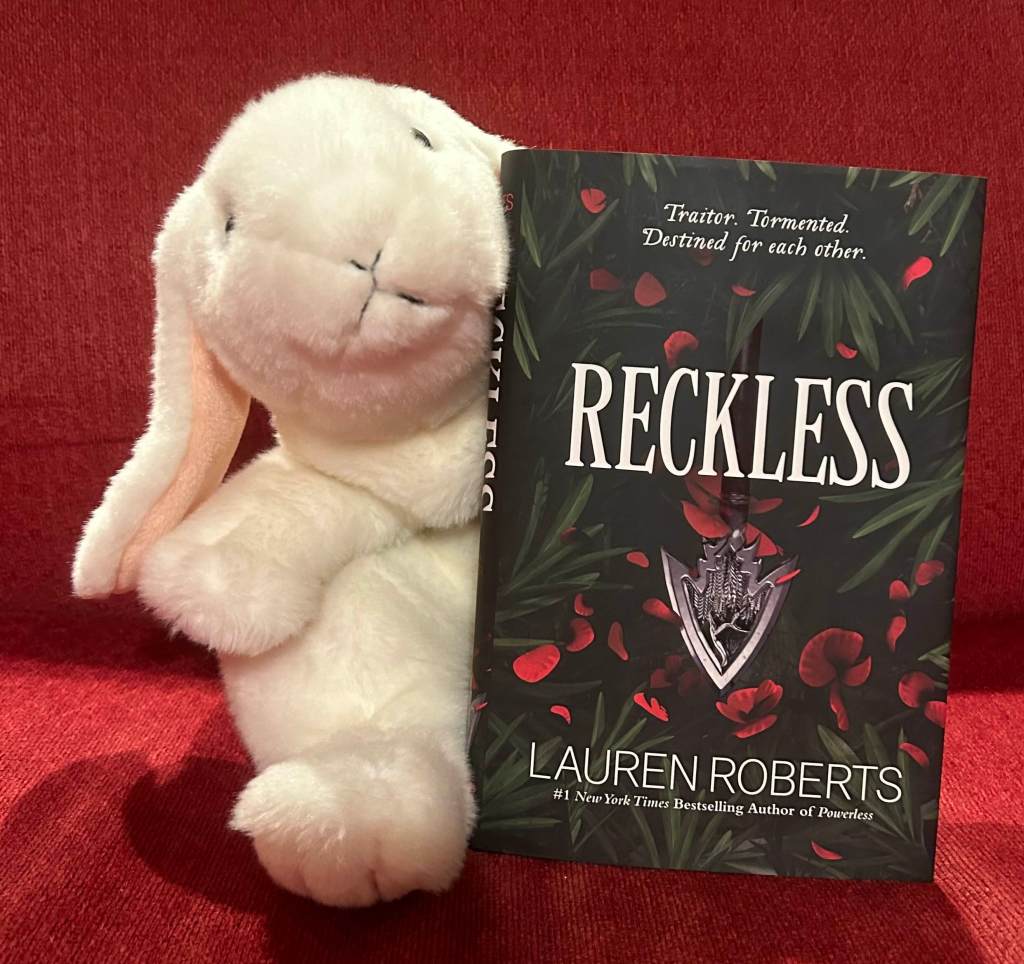
M: Another series I began to read this year was the Powerless series. Here is my review of the first book: Powerless. And here is my review of the second one: Reckless. Unfortunately, not all of the books are out yet, so I am looking forward to reading and reviewing the last (?) book of this series next year. This is hands-down my favorite YA fantasy-romance series. I generally find this genre to lean too much into romance, but this series maintains the perfect balance. I would 100% recommend this book to all interested readers (YA probably), especially those who have been wronged by the ridiculous amount of romance infiltrating the YA fantasy section.

S: I still have not gotten around to reading those books, but I know you have really enjoyed them. So maybe they should go on my 2025 reading list.

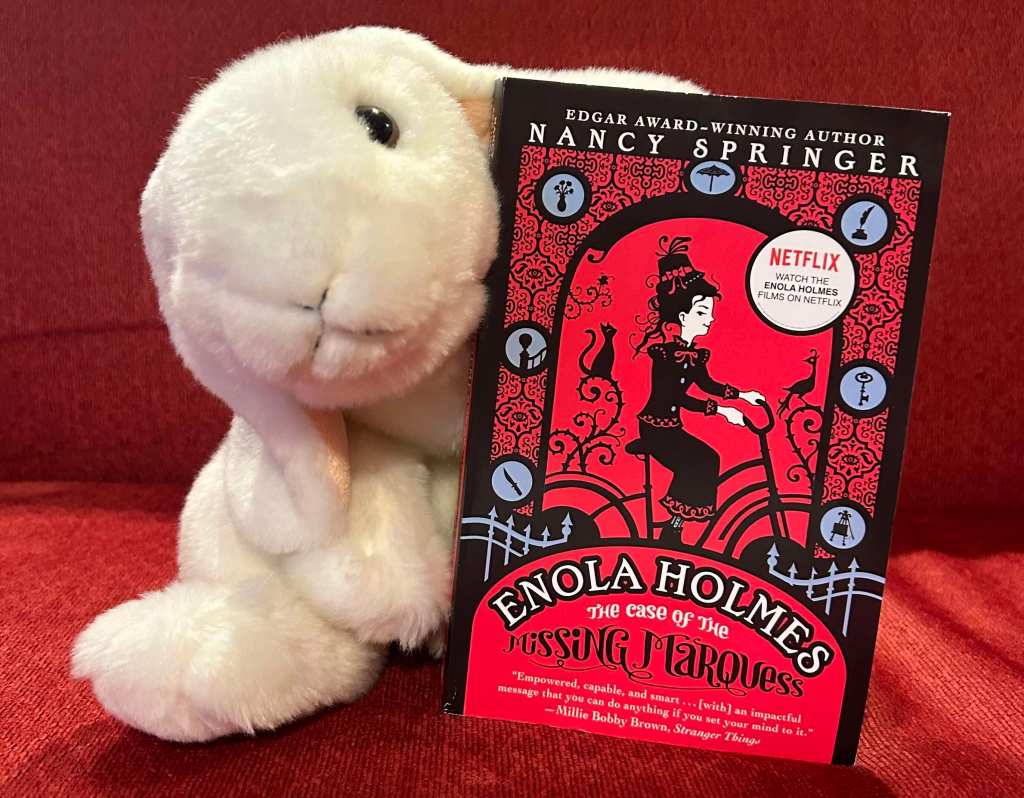
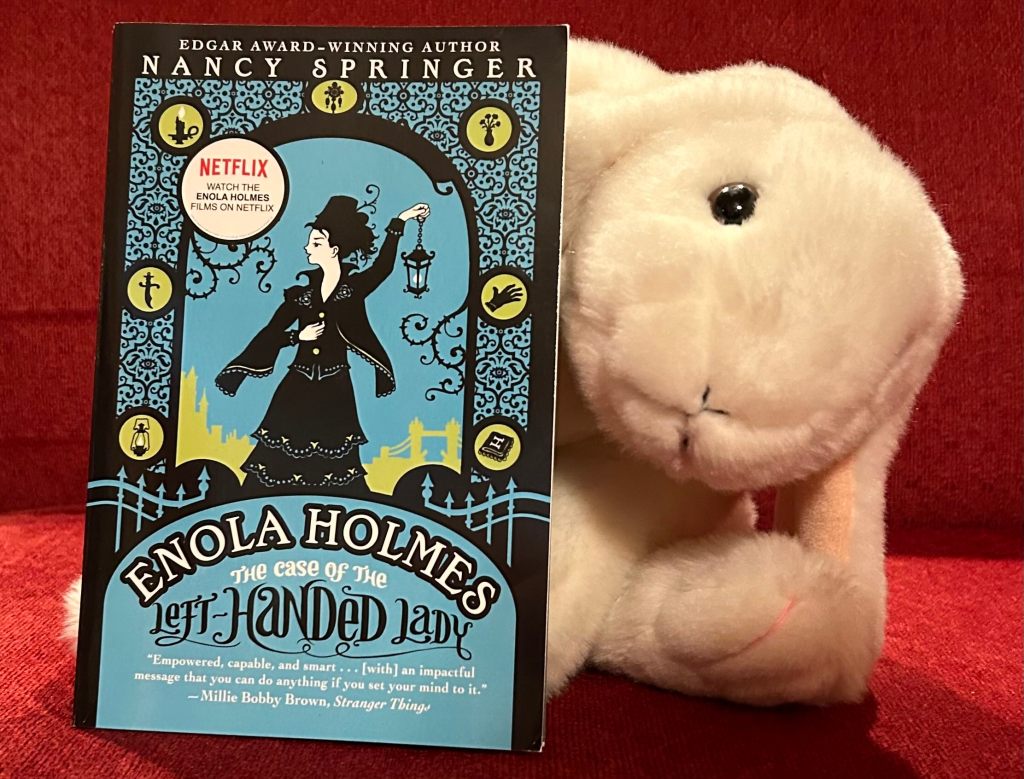
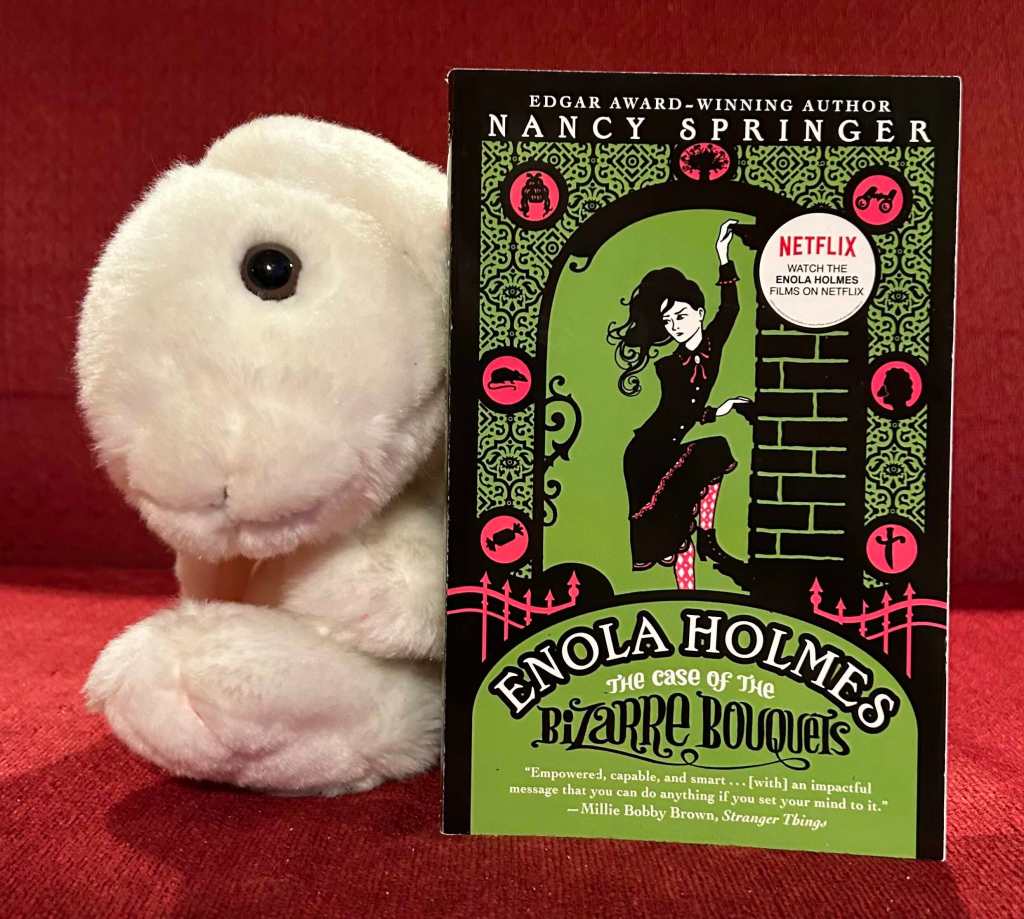
M: Maybe they should! The third series I have begun this year is the Enola Holmes series. I originally presumed these books to be easy and basic because the cover was not what I would characterize as a serious, intriguing mystery would look like. However, these books really take you to an entirely new time period, and the adventures of Enola Holmes never fail to excite, delight, and inspire.

S: You have only read and reviewed three of the books though, right?

M: Yes. So far, I have only read and reviewed The Case of the Missing Marquess, The Case of the Left-Handed Lady, and The Case of the Bizarre Bouquets.

S: So you might be reading and reviewing a few more in 2025?

M: Yes, I sure hope so.

Sprinkles: So Caramel, maybe you can tell us a bit about your favorite series from this year.

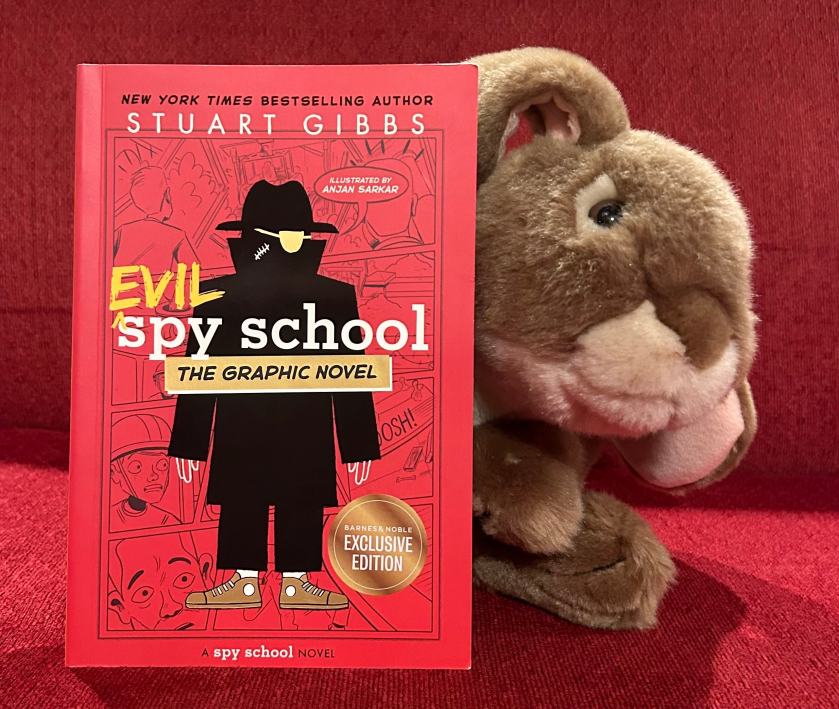
Caramel: Why not? I read more Spy School books this year and finished that series. So I read Spy School Project X, Spy School Goes North, and the last one in the series, Spy School Goes Wild, which was published this year. I also read the graphic novel version of the third book: Evil Spy School: The Graphic Novel. And I loved them all!

S: That is neat! So you have continued with a well-loved series this year. But you also discovered and read a couple other series this year, too.

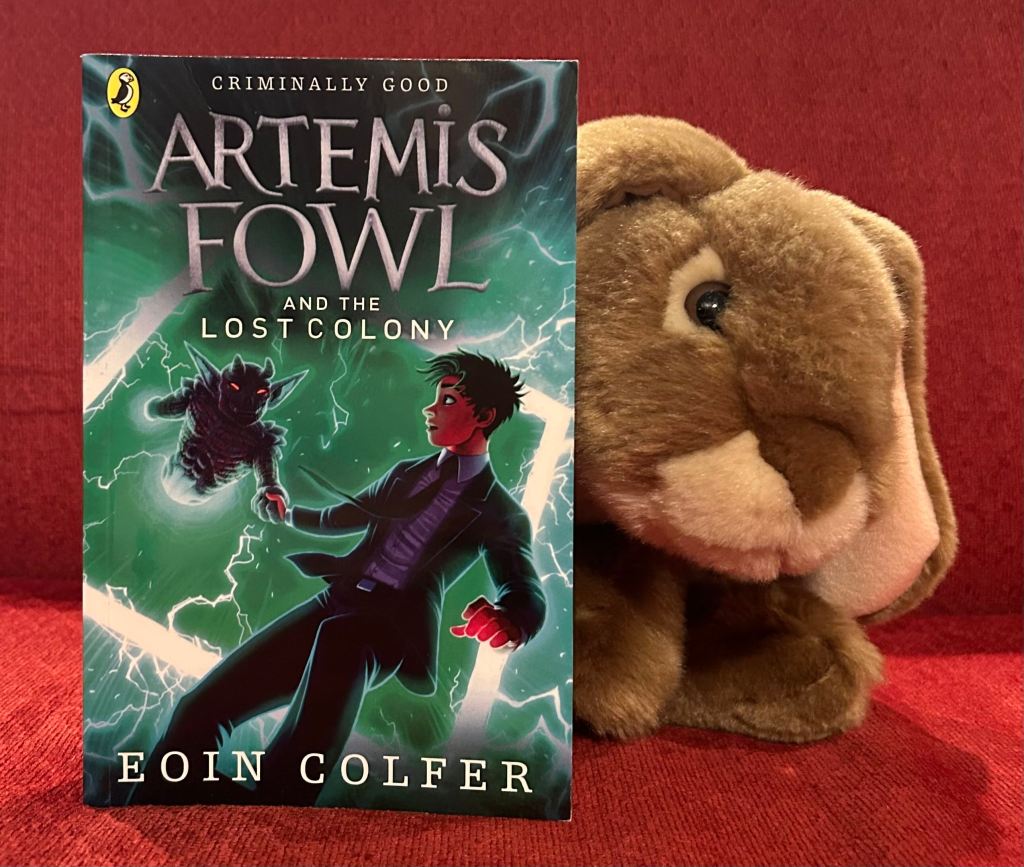
C: Yes, I read all the Artemis Fowl books! Artemis FowlArtemis Fowl: The Arctic IncidentArtemis Fowl: The Eternity CodeArtemis Fowl and the Opal DeceptionArtemis Fowl and the Lost ColonyArtemis Fowl and the Time ParadoxArtemis Fowl and the Atlantis Complex, and Artemis Fowl and the Last Guardian.

S: I think you really enjoyed reading about this evil boy genius and his adventures!

C: Yes, but he is no longer evil, remember?

S: Oh, yes, I do remember that.

C: I also read the Tristan Strong books: Tristan Strong Punches a Hole in the Sky,  Tristan Strong Destroys the World, and Tristan Strong Keeps Punching. I also read  the graphic novel adaptation of the first book.

S: I remember those.

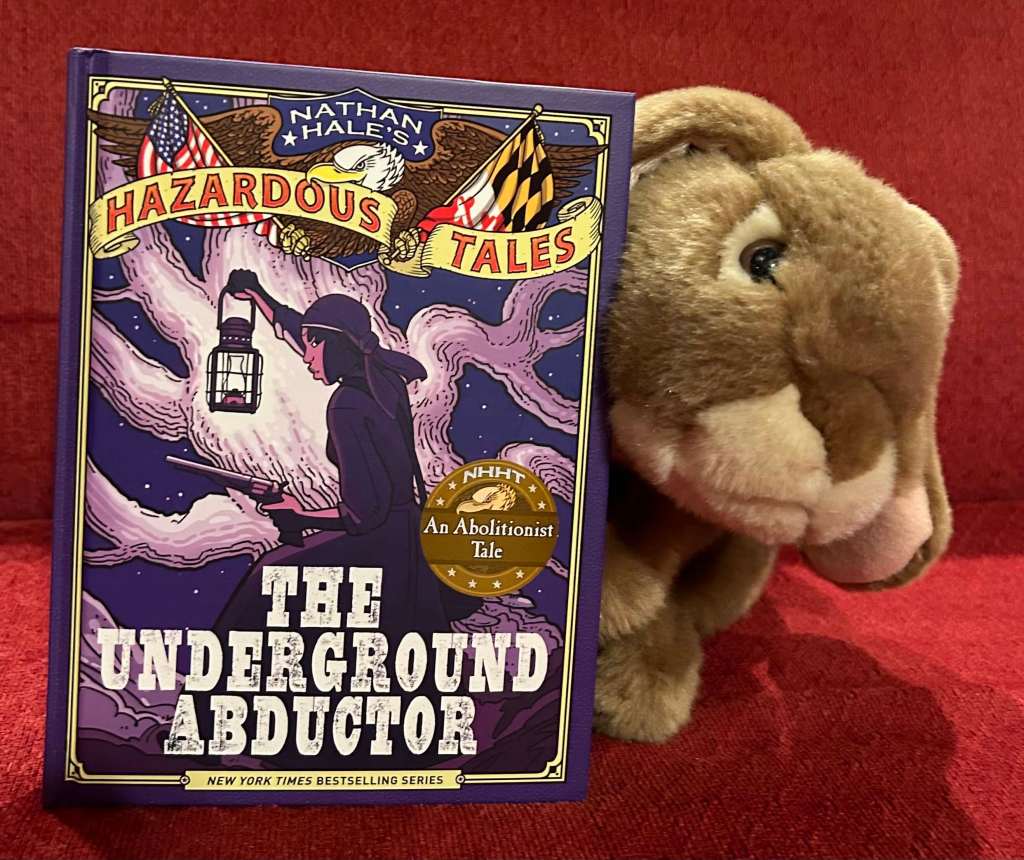
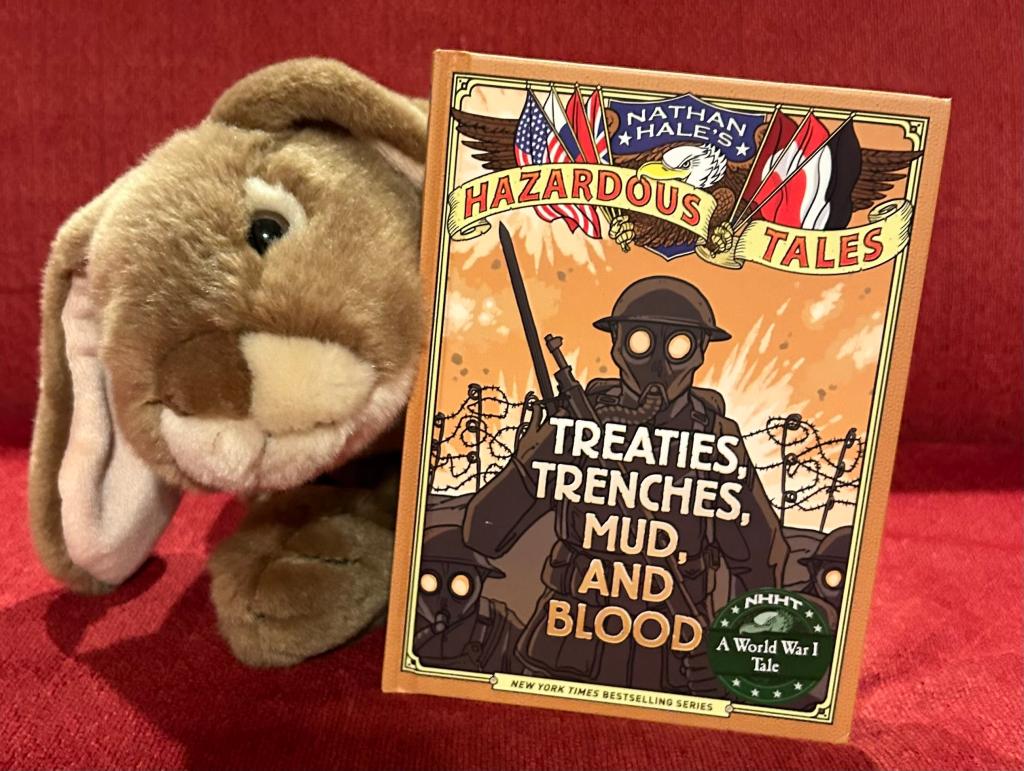
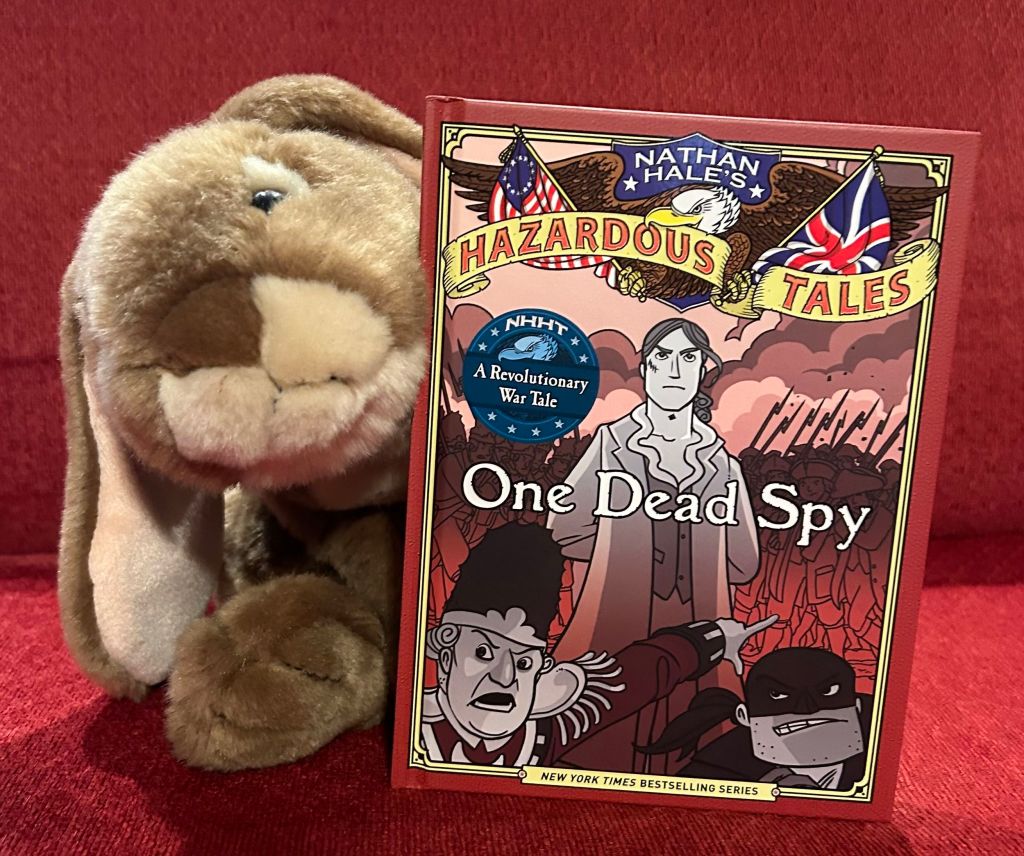
C: But I think my most favorite recent series is the Nathan Hale books! I did not finish those. I only reviewed One Dead SpyTreaties, Trenches, Mud, and Blood, and The Underground Abductor. And I loved them all.

S: Because they put together a few things you like. History, graphic novel format, humor-

C: Yes, what is there not to like? But there are many more books in the series, and I really hope to continue with those in 2025. And of course you know that my all-time favorite series is still Tui T. Sutherland’s Wings of Fire?

S: How can I forget?

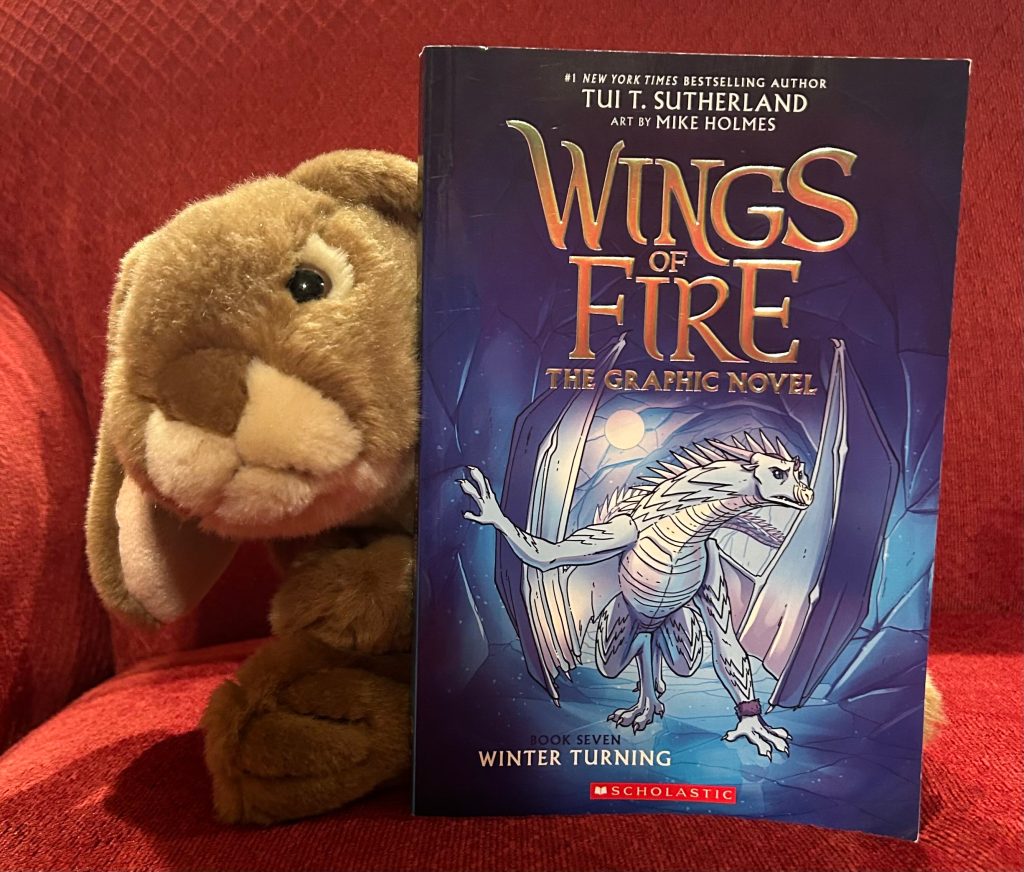
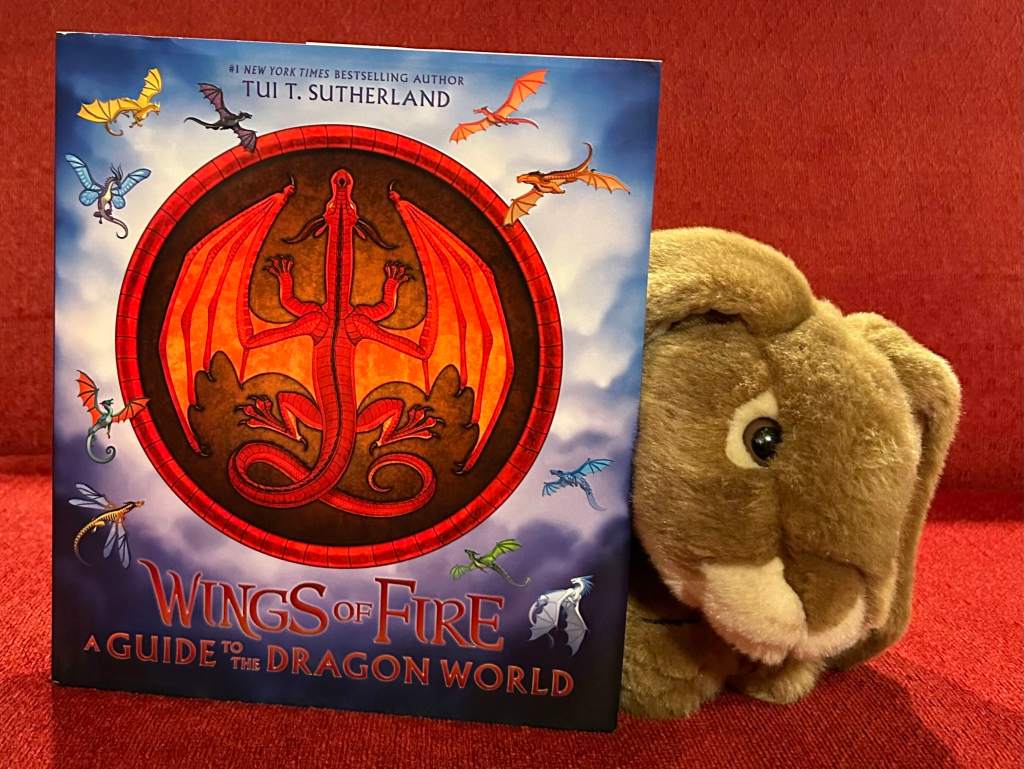
C: I got to read and review two books from that series too, this year. I reviewed the graphic novel version of Winter Turning (Book Seven of Wings of Fire) and Wings of Fire: A Guide to the Dragon World. And I am still hoping she will write more books for the series some day…

S: I know. One can only hope.

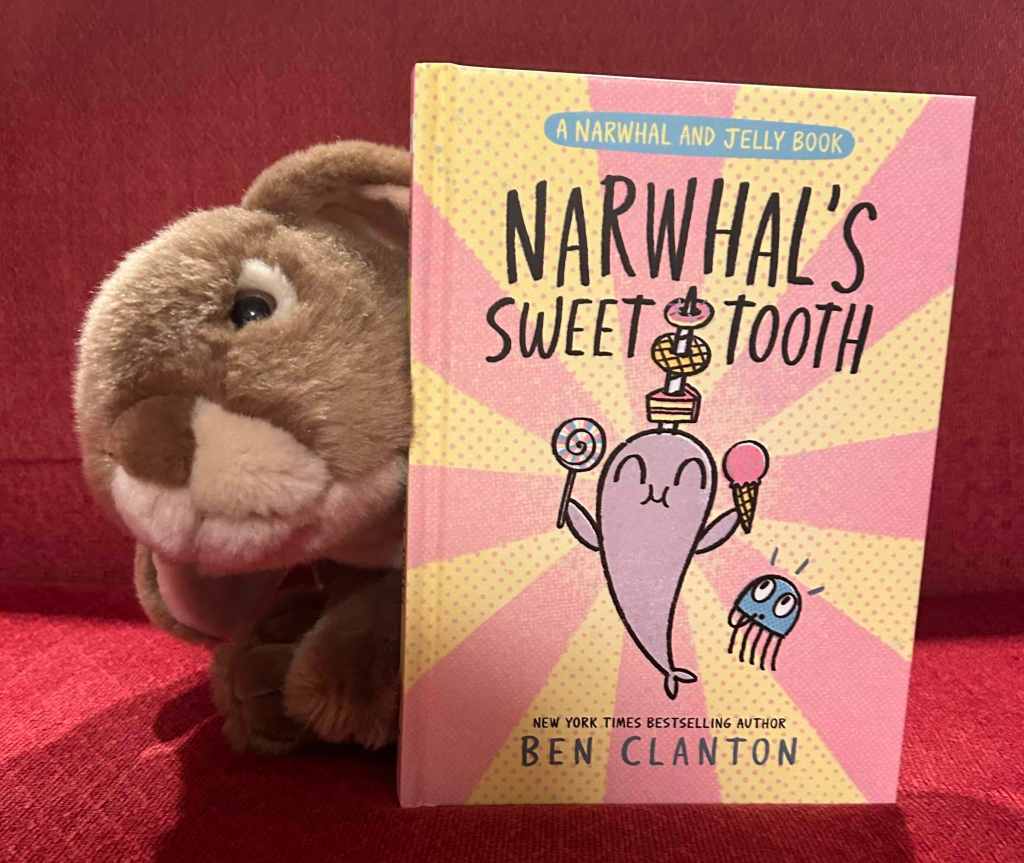
C: And let us not forget that I also read Narwhal’s Sweet Tooth by Ben Clanton this year. That is also a book from a series I love.

S: Yes, that is true. and you loved that one, too!

C: Yep.

Sprinkles: So Marshmallow, you have read many other books this year. Maybe you can tell us about the highlights. Maybe we can begin with the fiction?

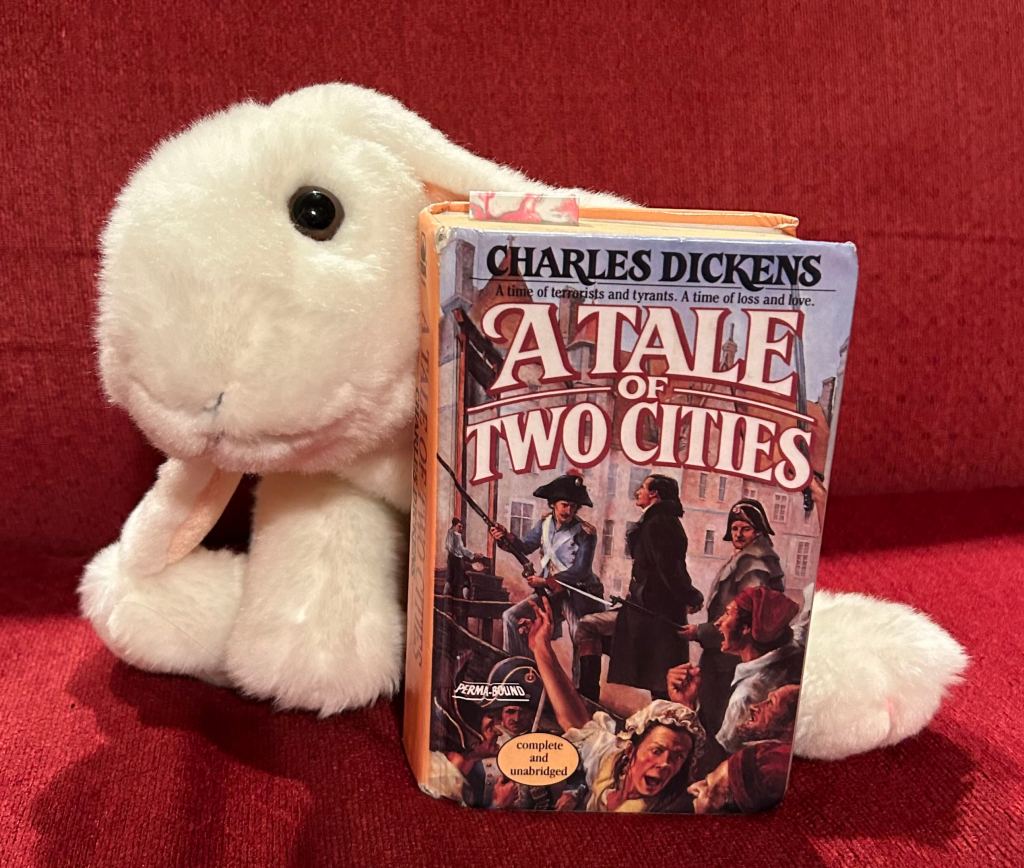
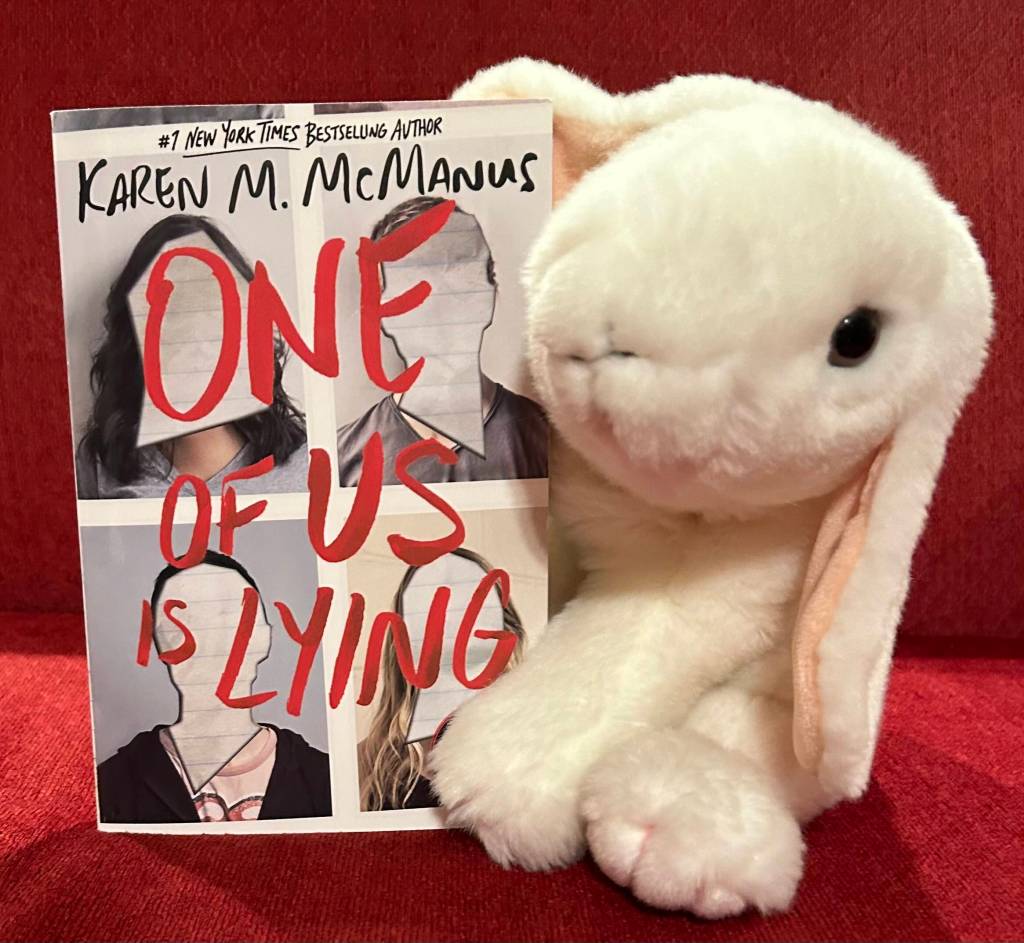
Marshmallow: Sure. I read a lot of fiction this year, as always. And some of the books I read were really good. I really liked Long Way Down by Jason Reynolds, One of Us is Lying by Karen M. McManus, and The Bluest Eye by Toni Morrison, for example. I also really liked Little Fires Everywhere by Celeste Ng though I think I still am taken more by Our Missing Hearts from the same author, which I had read last year. And I think the most impactful one for me was the classic, A Tale of Two Cities by Charles Dickens.

S: You have also read several graphic novels this year. What can you tell me about those?

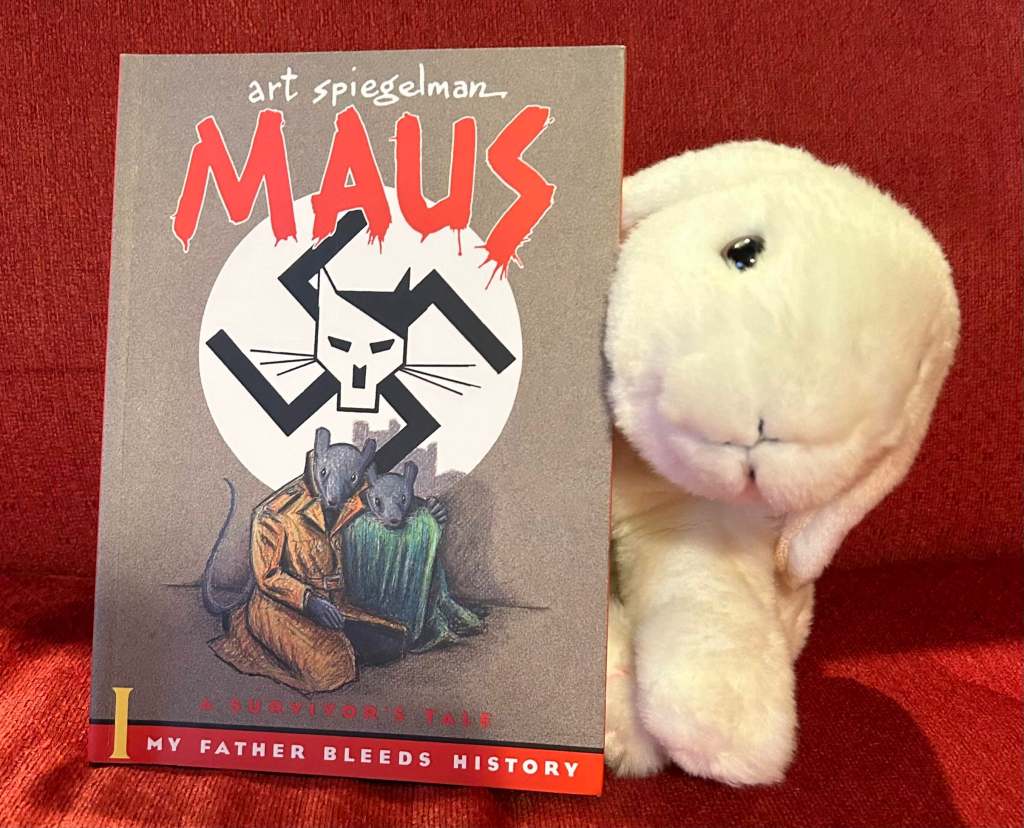
M: I found Maus: A Survivor’s Tale by Art Spiegelman to be very compelling. It tells of a harrowing time in recent history, and the book is really impactful. I also read Evil Eyes Sea by Özge Samancı a few graphic novel adaptations of various myths, for example, The Iliad: A Graphic Novel Adaptation, The Odyssey: A Graphic Novel Adaptation, and Beowulf: A Graphic Novel Adaptation, all by Gareth Hinds. But I think besides Maus, the graphic novel I read this year that I liked most was Sapiens – A Graphic History: The Birth of Humankind by Yuval Noah Harari, David Vandermeulen, and Daniel Casanave.

Sprinkles: So Caramel how about you? Which books of fiction did you enjoy reading most this year, other than those that belong to the series we talked about already?

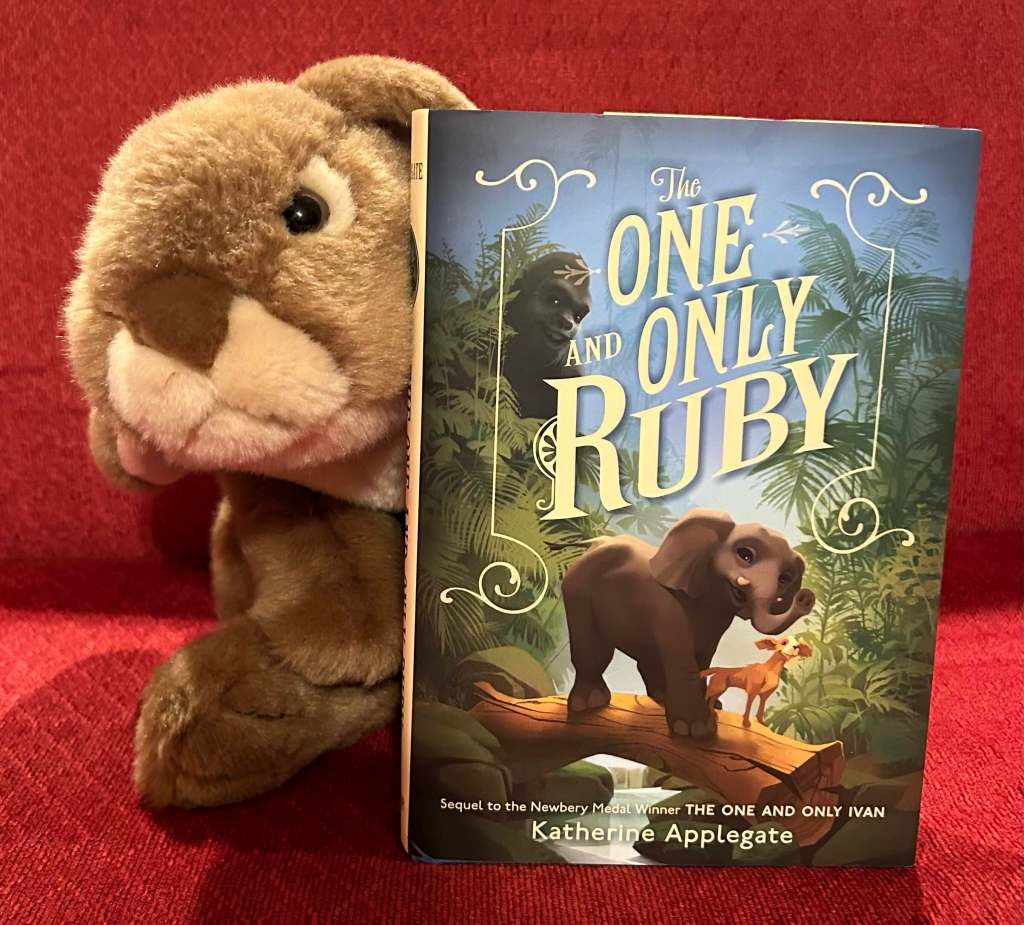
Caramel: Well, we forgot to talk about The One and Only Ruby and The One and Only Family, both by Katherine Applegate. Those are good books I read and they belong to a series but maybe we can mention them now?

S: Sure. I agree. Those were lovely books.

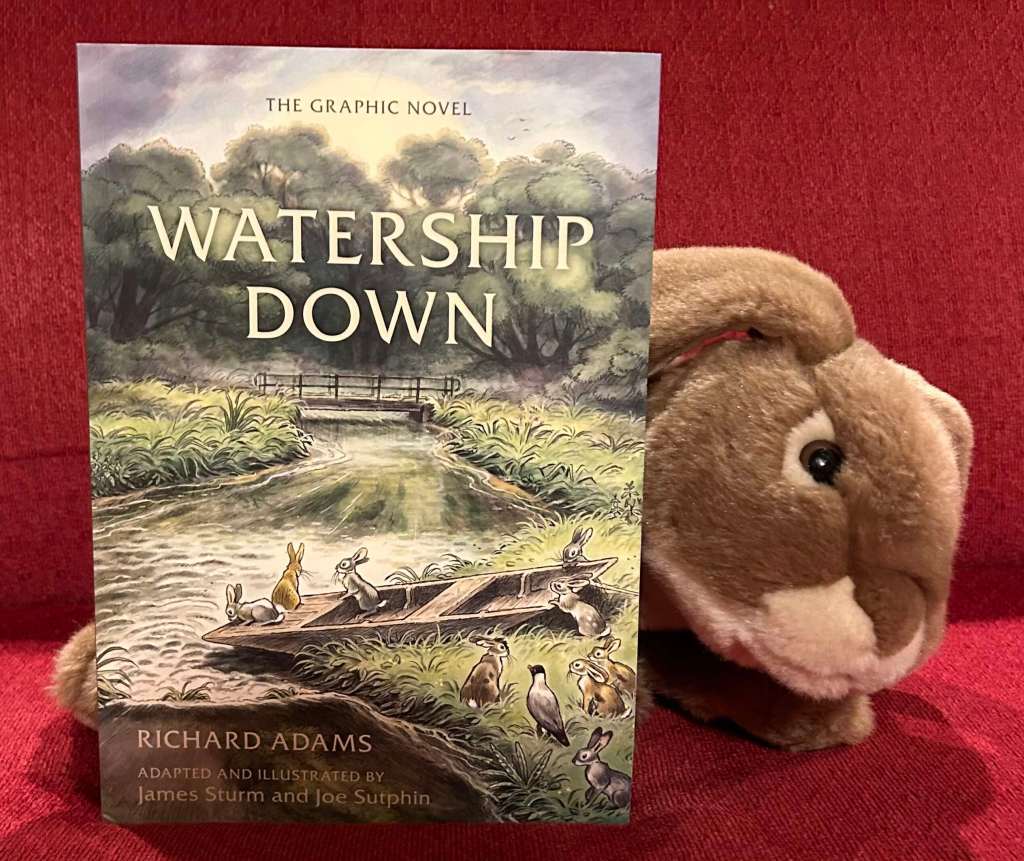
C: I also really liked Watership Down: The Graphic Novel by Richard Adams, James Sturm, and Joe Sutphin.

S: That was s more recent one, and I know you are still rereading that.

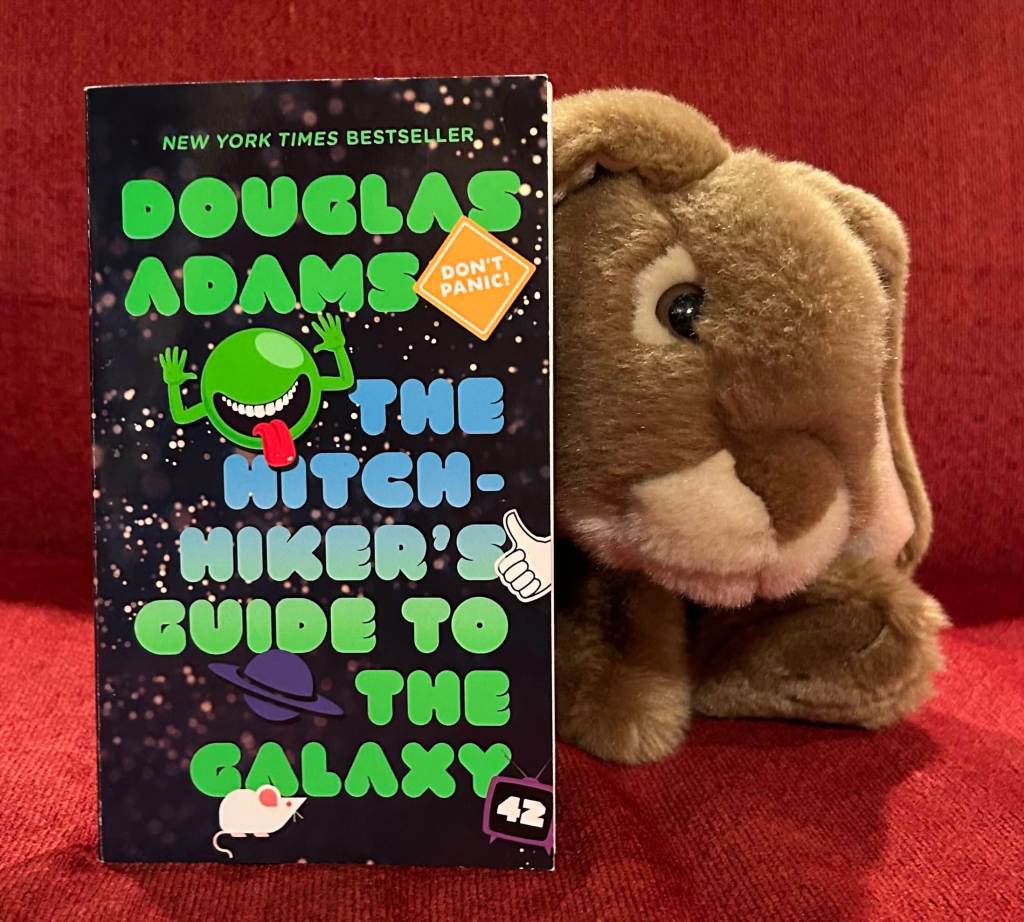
C: Yup. And I also read The Hitchhiker’s Guide to the Galaxy by Douglas Adams and that was fun, too.

S: Yes, I think those books are really funny.

Sprinkles: You have also read many nonfiction books this year, right, Caramel?

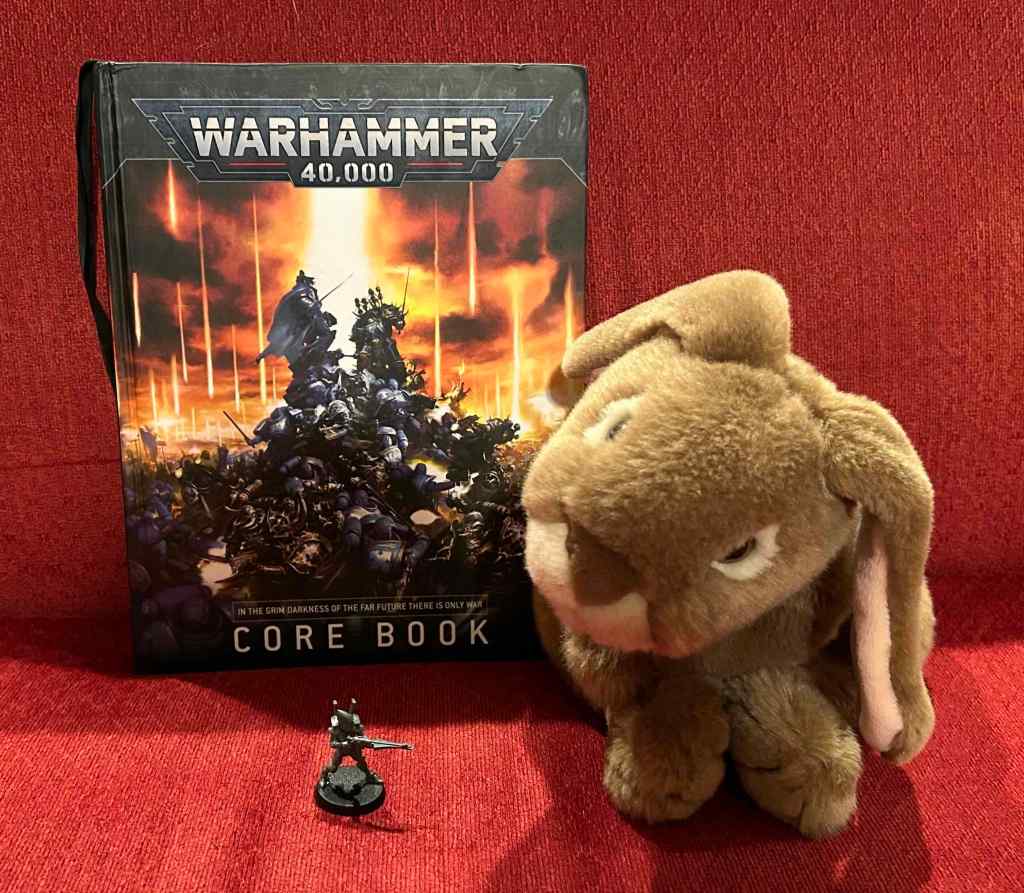
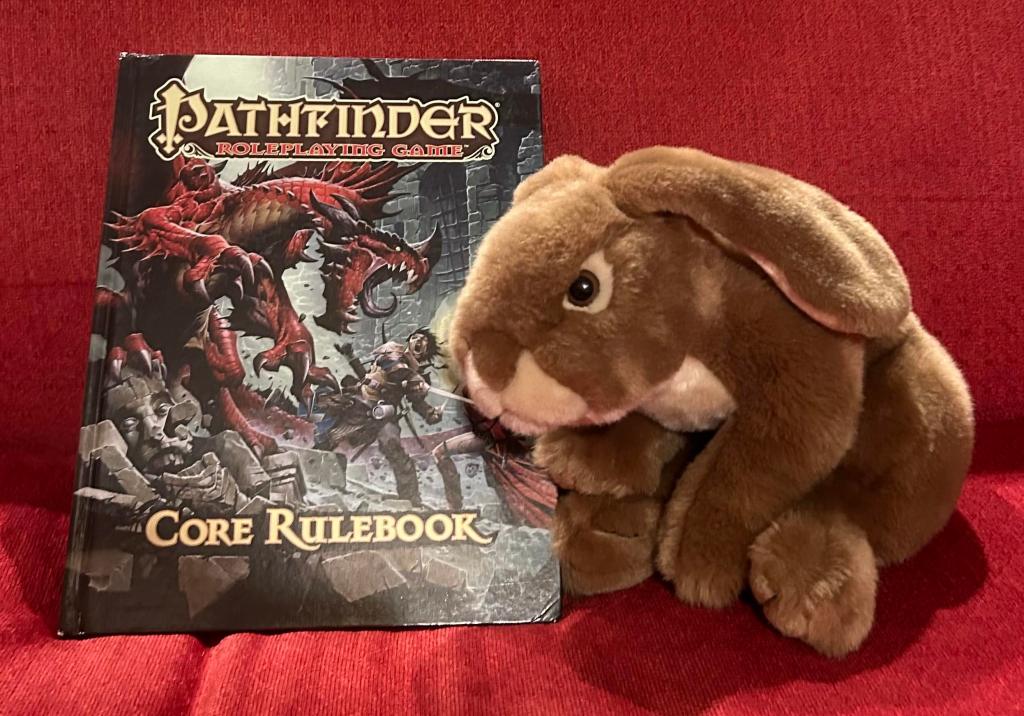
Caramel: Yup. I read Warhammer 40000: Core Book and Pathfinder Roleplaying Game: Core Rulebook for example. And you know I liked them!

Sprinkles: Of course! And Marshmallow, how about you?

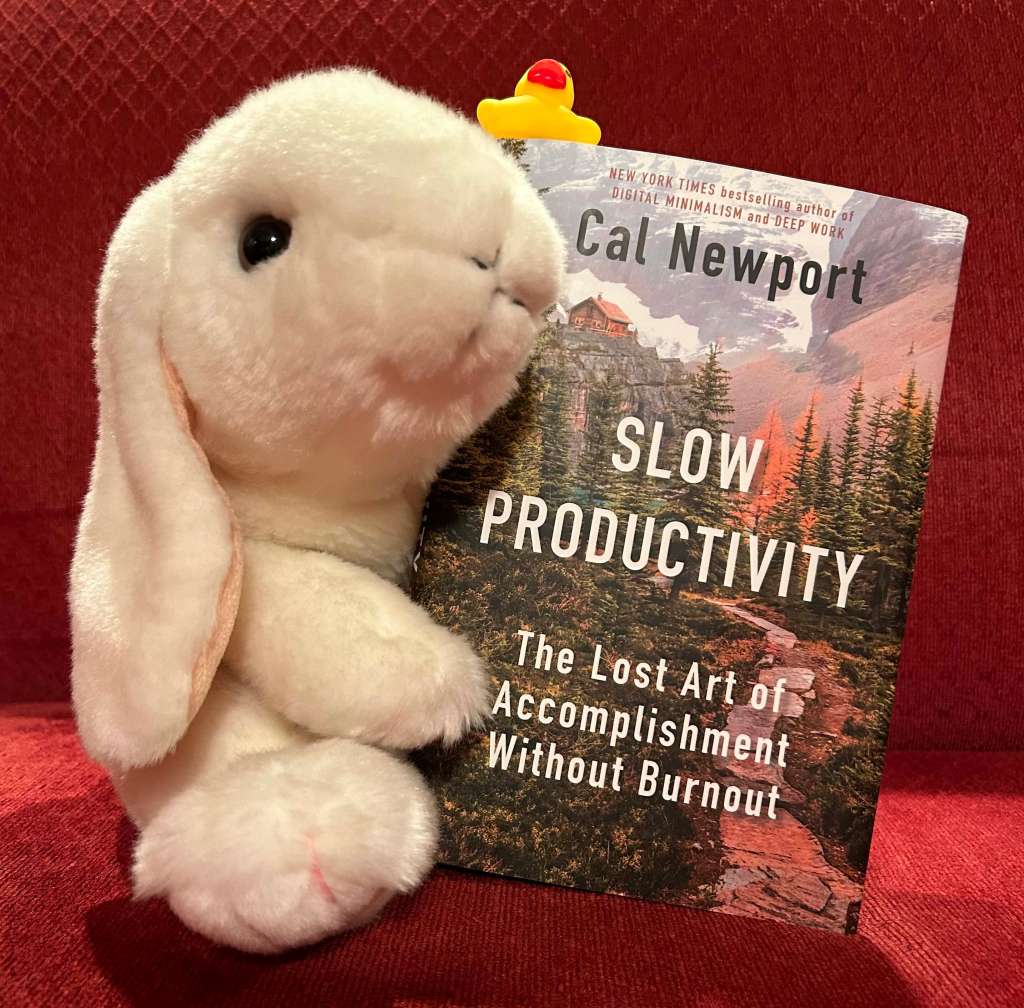
Marshmallow: Yes. I read Slow Productivity by Cal Newport, The Illustrated Happiness Trap by Russ Harris and Bev Aisbett, Guinness World Records 2024, We Should All Be Feminists by Chimamanda Ngozi Adichie, How to Speak Emoji by Fred Benenson, Philographics: Big Ideas in Simple Shapes by Genís Carreras, and An Illustrated Book of Bad Arguments by Ali Almossawi.

S: This might be the most nonfiction you have reviewed, Marshmallow!

M: True. And I have to say I appreciated all of them. I in particular enjoyed Slow Productivity, Guinness World Records 2024, We Should All Be Feminists, and How to Speak Emoji.

Sprinkles: We also all read many books of, or about poetry. Right?

Marshmallow: Actually, I read only The Lost Words: A Spell Book by Robert Macfarlane and Jackie Morris, but I really loved it. It is a beautiful book! And the poems in it are poignant and touching.

Caramel: I think I also only read one poetry book, and it was This is a Poem That Heals Fish by Jean-Pierre Siméon and Olivier Tallec. I did really like it though. But wait. I also read The Red Book by Barbara Lehman, which was kind of like poetry, except that it had no words!

S: You are right! Maybe I read more poetry this year, and that is what I was thinking. And among all those I read, I only reviewed one book, a family favorite: A Child’s Garden of Verses by Robert Louis Stevenson and Tasha Tudor.

Sprinkles: I also read and reviewed several children’s books about puberty. There were so many and those were all split between girl books and boy books, that I needed to have two reviews for them.

Marshmallow: We read most of those books, too, but I am glad you were the one who ended up reviewing them.

Caramel: I did peek into some of them, but I agree with Marshmallow, that it was good that you were the one who had to review them.

S: But all in all, we all read quite a lot of good, fun, and informative books this year, right?

M: And thought-provoking!

C: Yep. And I think we will be reading a lot more books next year!

M: But first, we have our month off!

S: Yes, we will take the month of January off.
C: And we are all really happy about that!

S: Well, we will continue to read, and we will get back to reviewing them in a month. And till then we just take a short break.
C: We deserve it!

M: Everyone deserves a break. And we are lucky to get one!

S: True. Okay, so what do you want to tell our readers Marshmallow?

M: I want to say: Happy new year everyone! We wish you a happy hoppy new year in 2025!

S: With lots of good books and many friends, old and new!

C: Yes! And stay tuned for more book bunny reviews, coming to you in February 2025!

The book bunnies, and new friend Moose, wish all bunnies around the world a happy hoppy new year in 2025, with lots of good books and many friends, old and new!